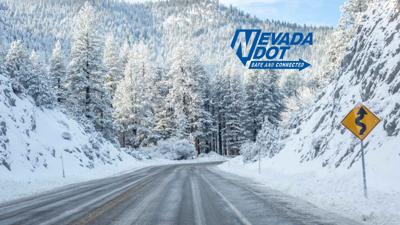
Winter weather can turn a familiar drive into a dangerous one, and thousands of crashes across Nevada last winter show just how quickly conditions can become a problem. With another winter season approaching, state and local agencies are preparing snowplows, treating roads, and reminding drivers that slowing down and giving other vehicles more space can make a difference.
Preliminary data show that about 1,500 crashes occurred statewide during inclement weather between Oct. 1, 2025, and April 30, 2026. Seven of those crashes involved fatalities.
Many of the crashes involved drivers going too fast for conditions, following other vehicles too closely, or failing to stay in their lanes on snow, ice, and wet roads.
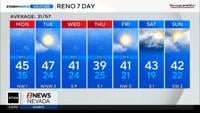
The National Weather Service in Reno says several climate models, along with a high likelihood of a strong El Niño winter weather pattern, point to the possibility of a wet winter. However, the amount of rain and snow, along with individual storm patterns, will ultimately determine how the season unfolds.
As agencies get ready, they also want drivers to understand who maintains which roads, where to check conditions, and what they can do before heading out.
Who takes care of the roads?
Snow removal responsibilities are divided among the state, county, and cities. That means the agency handling a road depends on where you're driving.
Nevada Department of Transportation
The Nevada Department of Transportation maintains nearly 1,400 miles of state roads across northwestern Nevada, including major interstates and highways. The agency does not maintain residential city streets or county roads.
NDOT prepares for winter throughout the year, getting snowplows and other snow and ice equipment ready before storms arrive.
Crews monitor weather forecasts and use more than 70 weather stations along northwestern Nevada highways to track air and pavement temperatures and identify areas that may need brine, salt, sand, or snow removal.
During major winter storms, maintenance crews work rotating 12-hour shifts to keep snow removal going around the clock.
Drivers can check highway conditions, including traffic camera views, at NVRoads.com.
Washoe County
Washoe County handles roads in unincorporated areas outside Reno and Sparks that are not maintained by NDOT.
The county divides snow removal into three priority levels:
Priority 1: Major arterial and collector roads, bridges, overpasses, steep grades, school bus routes, emergency vehicle routes, RTC bus routes, and access to essential facilities such as hospitals and fire stations.
Priority 2: Secondary arterial and residential roads.
Priority 3: Other streets, including unpaved roads, cul-de-sacs, dead-end roads and industrial streets.
The county may apply brine up to seven days before a storm as a preventive measure. Salt and sand may also be used during and after snowfall.
Residents in Incline Village and Crystal Bay can use the county's "Where's My Plow" app to track snowplow routes. They can also call the Roads hotline at (775) 328-2180 to report an issue.
City of Reno
Reno maintains approximately 2,361 lane miles of city streets, divided into 20 snow and ice removal routes.
Crews prioritize major arterial and collector streets, school zones, and emergency service locations. Residential streets are addressed as resources become available.
The city uses salt, sand, and salt brine to improve traction and help prevent snow and ice from sticking to roadways. When conditions warrant, brine is applied to priority streets, bridges, and inclines before snow or ice arrives.
During large storms, crews are scheduled to work around the clock.
Residents can use the city's interactive snowplow coverage map to see whether and when a street has been plowed. Snow and ice concerns can also be reported to Reno Direct at (775 )334-4636.
More information, including snowplow maps and the city's Snow and Ice Control Plan, is available at Reno.gov/Snow.
City of Sparks
Sparks divides its streets into six snow routes, with crews focusing first on major arterial and collector roads and school bus routes.
Those priority routes include Vista Boulevard, Sparks Boulevard, El Rancho Drive, Rock Boulevard, Baring Boulevard, Los Altos Parkway, La Posada Drive, Hubble Drive and Prater Way.
Residential streets generally are not plowed or sanded because crews and equipment must remain focused on higher-priority roads.
Before a storm, crews may apply brine to major arterial streets to help prevent snow and ice from bonding to the pavement. The treatment is typically not used when rain is forecast because it can wash away.
Residents are responsible for clearing snow from their own driveways and sidewalks. The city also asks people not to shovel, blow, or push snow into the roadway.
More information about Sparks' snow and ice operations is available at SparksNV.gov.
What drivers should know before heading out
Road crews can prepare for winter weather, but drivers also have a responsibility to adjust to changing conditions.
Nevada State Police troopers enforce traffic laws and promote safety on state highways. Major Anthony Munoz said drivers should pay particular attention to speed limits and road conditions, especially around work zones.
“Troopers with the Nevada Highway Patrol work daily across the state to ensure safety on our roadways, and that includes work zones,” said Nevada Highway Patrol Major Anthony Munoz. “Please slow down, focus on the road, and follow the work zone speed limits. We all share the road – so let’s work together to keep it safe for everyone.”
Drivers are required by law to slow to a reasonable and proper speed for current conditions, even when that means driving below the posted speed limit.
Before leaving, agencies recommend that motorists:
Check weather and road conditions at NVRoads.com, through the Nevada 511 app, or by calling 511 within Nevada.
Travel only when necessary during winter weather and allow extra time to reach their destination.
Clear snow and ice from windows, mirrors, lights, turn signals, and license plates.
Buckle up, turn on headlights, and keep extra distance between vehicles.
Turn off cruise control and avoid sudden starts, stops and turns.
Use proper traction devices when required and make sure tires are in good condition.
Watch for snow removal equipment and use extra caution on bridges, ramps, overpasses and shaded areas, which can freeze first.
Avoid relying only on GPS for alternate routes, as it may direct drivers onto unmaintained or hazardous roads.
Drivers should also keep their fuel tanks well supplied and carry emergency items such as chains, a flashlight, an ice scraper, a small shovel, warm clothing, blankets, first-aid supplies, food and water.
A little help goes a long way
Agencies are also asking residents to help make winter road operations easier for everyone.
Parked vehicles and other obstacles can prevent snowplows and emergency vehicles from safely getting through neighborhood streets. Residents are encouraged to move vehicles off the street when snow is expected and keep trash cans and other objects out of the roadway.
When clearing driveways and sidewalks, snow should be placed on private property rather than pushed or blown into the street. Property owners are also responsible for clearing sidewalks next to their property when possible.
Residents should be patient during larger storms, when crews focus on major roads and emergency routes before moving into residential neighborhoods. Washoe County also reminds residents that snowplows may leave berms along driveways as they clear heavy snowfall.
And when significant rain arrives, drivers and pedestrians should stay out of flooded roadways. Just 6 inches of water can reach the bottom of most passenger vehicles and cause drivers to lose control or vehicles to stall. It can also be difficult to tell how deep standing water is or whether the road beneath it has been damaged.
Winter preparations are underway, but agencies say staying safe will take more than snowplows and road treatments. Drivers will need to stay informed, prepare their vehicles, and adjust their driving to whatever conditions the season brings.