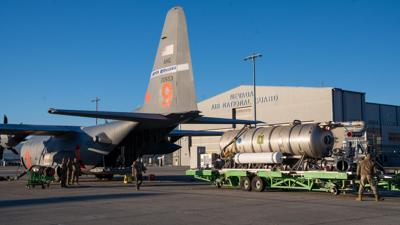
A Nevada Air National Guard C-130 is trading its usual mission for a role on the wildfire front, with an aerial firefighting system aboard that can release up to 3,000 gallons of retardant in a single drop.
The 152nd Airlift Wing will activate the aircraft Wednesday, August 19, and send it from the Nevada Air National Guard Base in Reno to the Klamath Falls Airtanker Base in Klamath Falls, Oregon. Nevada Airmen will integrate with personnel from the Wyoming Air National Guard’s 153rd Airlift Wing, based in Cheyenne, Wyoming.
The aircraft is equipped with the Modular Airborne Fire Fighting System, known as MAFFS. The system provides an aerial firefighting surge capability when civilian air tanker resources are committed, and additional aircraft are needed.
“We’re proud to have the opportunity to support our neighbors during a difficult time,” said Col. Shaun Cruze, Maintenance Group Commander of the 152nd Airlift Wing. “The High Rollers are always ready to answer the call at a moment’s notice, whether that means supporting our combatant commanders overseas or our domestic partners, such as the U.S. Forest Service, here at home. Wildland firefighting is a mission our Airmen know well, and when the call comes, we’re ready to go.”
Military wildland firefighting assets can be requested through the National Interagency Fire Center and must be approved by the Secretary of War. The response is part of U.S. Northern Command’s Defense Support of Civil Authorities mission, which calls for the assets to respond to protect lives, property, critical infrastructure and natural resources.
Air Forces Northern, U.S. Northern Command’s air component, oversees the MAFFS Air Expeditionary Group when it is activated. The group includes four airlift wings.
Other participating units include the Wyoming Air National Guard’s 153rd Airlift Wing, the California Air National Guard’s 146th Airlift Wing and the Air Force Reserve Command’s 302nd Airlift Wing in Colorado.
How long the Nevada aircraft remains on the mission and where it operates will depend on wildfire activity and the needs of the agencies directing the federal response.