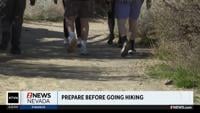
Reno Fire Department's Urban Search and Rescue Rapid Module team, also known as the REM team, did some training up in the mountains in south Reno Monday.
The winds were blowing strong during the training, serving as a stark reminder of the real conditions the team will face during rescues.
In strong wind events, the fire department can't run any aircrafts, so they have to deploy the REM team - especially in difficult terrain.
"So we use this training... primarily we mobilize for wildland fire incidents throughout the entire United States, and we send a component of this team out to help extract injured firefighters," said Pete Briant, a Division Chief at Reno Fire Department.
The team works both locally and across the west coast.
"The team went out nine times last year to various fires throughout the west; Idaho, California, we had people in Utah. And then in addition to that we had about five or six rescues in the valley; but we've already had two this year," Briant said.
The Division Chief says this training is crucial.
"So this is the annual refresher training all the members of the team go through," he said. "The refresher training is once every year in addition to the real world experience when they do mobilize. To become part of the team initially, it's about three weeks' worth of training that they have to go through."
Briant says this training is good to build back those key reminders, while also learning how to use new gear.
"The remedial refresher, which is more of a 'hey let's just dust off the cobwebs' in addition to getting trained on new technologies," he said. "We have some lightweight, low rescue gear to kind of ease the burden on them since they have to hike this equipment in, and then we have the newer style ATVs and the driving component of that."
Briant says that carrying enough gear to both fight wildland fires and for the rescues is the most challenging part.
"It's very strenuous," he said. "It's often in steep country with fire activity going on and a lot of weight on their backs."
The training entails three parts.
The first is learning how to operate the ATV vehicle to navigate the terrain. Then, there are two types of rescues.
"Another component is a high angle rescue scenario," Briant said. "So, we have a 40-foot cliff that they're rappelling down to extract injured firefighters or civilians. We also have a low angle rescue that doesn't require rappelling."
RFD says this training will continue this week.