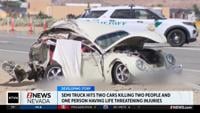
Earlier this week a person died after hitting a horse in the road in the North Valleys.
Wildlife wandering into the roads is dangerous for everybody, so we wanted to find out what's being done to reduce these crashes.
Fencing along highways is largely meant to prevent animals from getting on the road because that can get dangerous quick.
There are some local groups that also keep an eye on damaged fences and fix them until more help arrives.
"We do not install fences, but we do repair fences," said Larry Whitney, training captain for the Least Resistance Training Concepts. "We work very closely with NDOT as most of the areas we work in are state areas. We will come in, make a temporary repair once we get the horses back to safety and then refer to NDOT who will then come in and make a final repair."
NDOT says they have installed more than 30 wildlife crossings and structures along with more than 500 miles of fencing statewide to help reduce car crashes involving animals.
Last year the Nevada State Legislature passed an assembly bill funding a wildlife crossing account with $5 million.
Whitney hopes that some of that funding goes towards patrolling.
"The only thing that we could probably suggest is if they had any additional funding to be able to patrol the fence line more than they are now," he said.
NDOT tells us they will be using this money to investigate the feasibility of potential future crossings and other safety improvements along U.S. 395 in the North Valleys where the community continues to grow.
"All the way around the Virginia Range in particular, development and population is ever increasing so fences are really important to keep them in their natural habitat and to protect them from the effects of the public," says Whitney.
NDOT says crashes involving horses are the most dangerous to drivers. They recommend wearing your seatbelt, obeying speed limits, and paying close attention to animal warning signs.