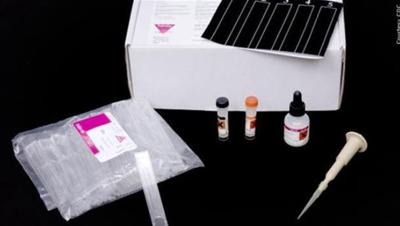

In honor of National HIV testing Day, the Washoe County Health District (WCHD) encourages community members to get tested for HIV, know your status and to get linked to care and treatment.
"It's an issue that hasn't gone away but we are on the verge of ending the epidemic and to end the epidemic, we need people to know their HIV status," Jennifer Howell, Sexual Health Program Coordinator at WCHD said.
WCHD says it’s also imperative that people ask their providers for an HIV test, along with testing for other sexually transmitted infections (STIs). Providers are also encouraged to follow changes to Nevada Revised Statutes by offering HIV and STI testing to patients in primary care, emergency departments, and obstetrics and gynecology settings.
"It's something that your physician should be able to say to you 'Hey, how do you feel about getting your HIV test status checked?' and it shouldn't even be a question," Michelle Wagner, Director of Clinical Services for Northern Nevada HOPES said.
National HIV Testing Day is observed annually on June 27, and started in 1995. While the HIV epidemic continues to affect our communities, services are available to make HIV testing and HIV care accessible, affordable and routine.
According to the Centers for Disease Control and Prevention (CDC), Nevada ranks fourth in the nation in rates of HIV diagnoses per 100,000 people at 19.8, trailing only Florida, Georgia and Louisiana.
"Us, being high in our HIV rate, number four in the country does say that we do have an issue," Howell said.
WCHD offers rapid HIV testing in its Family Planning and Sexual Health Clinic as well as free, confidential testing opportunities in the community.
Testing information and provider assistance are available by calling 775-328-2470. More information about our Sexual Health Program, including clinic, community and STI/HIV information, can be found on our website at www.washoecounty.gov/sexualhealth.
The CDC recommends that everyone between the ages of 13 and 64 get tested for HIV at least once. People who have condomless sex, multiple partners, inject substances or have partners with higher risk should get tested at least once a year or more often.
"It's important to get tested so you'll not only keep yourself safe but your partner safe as well," Wagner said.
The CDC’s HIV testing guidelines provide comprehensive information on who should get tested for HIV and how often. Yet, despite these recommendations, 1 in 8 people with HIV in the United States still do not know they have the virus and nearly 40 percent of new infections are transmitted by people with undiagnosed HIV. For people who are unaware of their status, HIV testing is the pathway to engaging in HIV prevention and treatment services.
(Washoe County Health District)