






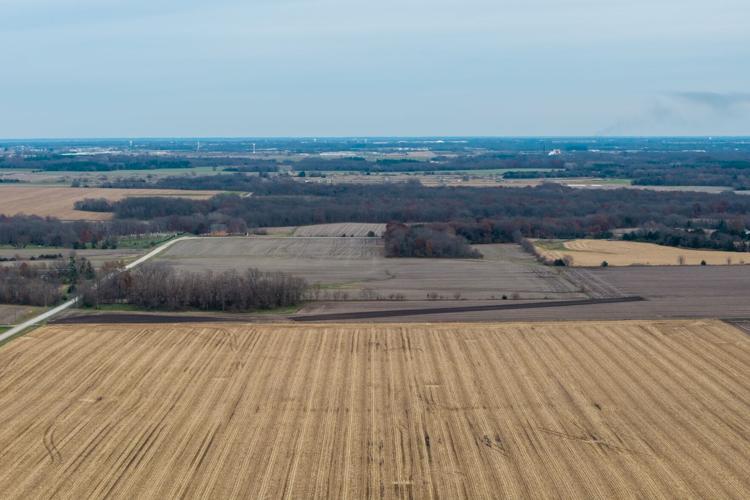
MIDDLETOWN, Iowa (AP) — Iowa residents who could be in the path of a dangerous lead dust plume from the planned detonation of bomb-making chemicals sealed their windows and doors Tuesday and prepared to stay home from work.
Boxes of painter's tape and masks were scattered outside government buildings for those wanting to protect their homes and themselves. Shops and businesses planned to close after the U.S. Army announced the detonation would occur Wednesday morning, the day before Thanksgiving.
Others seemed to shrug off concerns as government officials warned those closest to be ready to evacuate to avoid lead in the air, while also assuring residents that barriers around the blast zone should limit much of the plume.
“It concerns me, but not overly,” said Chris Fullenkamp, 62, who has lived his whole life near the plant.
“There’s a lot on edge, but I think they’re just jumping to conclusions or they want to get worked up about something,” added Fullenkamp, whose house in West Point is 15 miles (24 kilometers) from the detonation site but still in the plume's likely path.
After days of delays, the Army plans to detonate the nation’s entire stockpile of lead azide around 9 a.m. local time Wednesday, saying that waiting longer could cause the dangerously degrading chemicals to explode on their own at any time.
“Inaction is no longer an option,” said Maj. Gen. Eric Shirley, the Army’s leader of the operation.
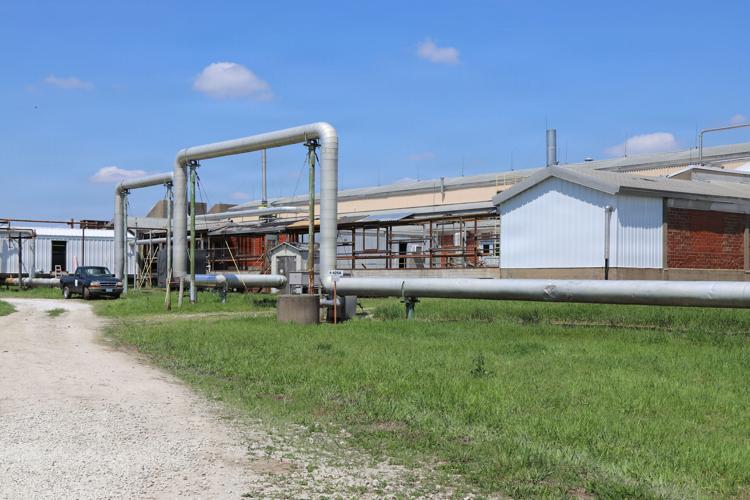
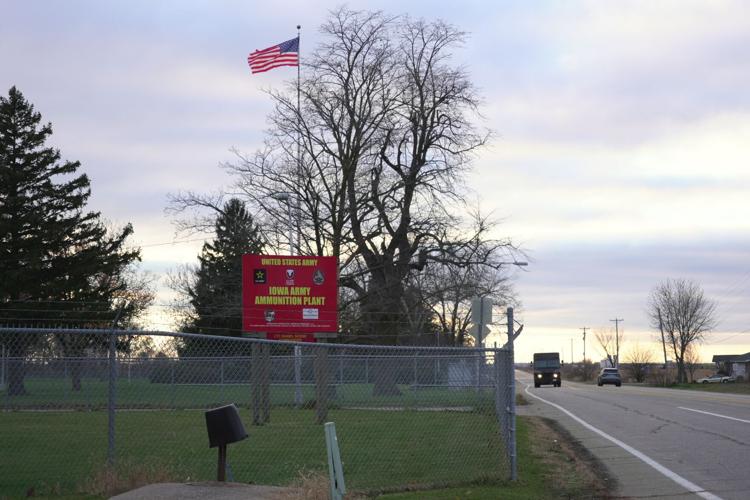
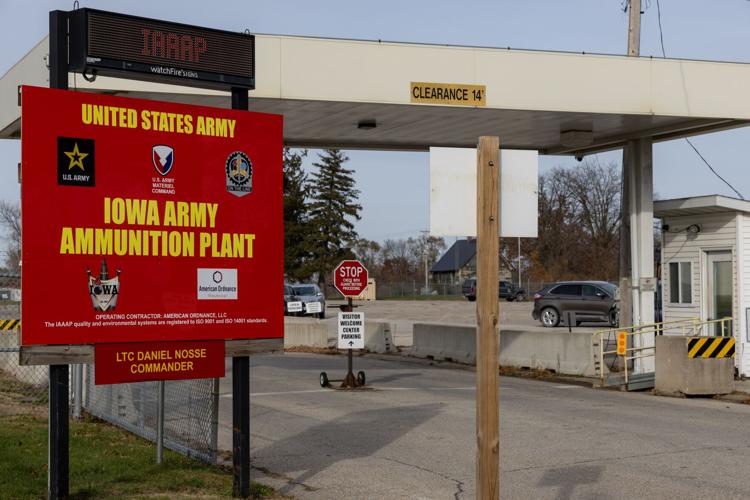
The controlled detonation of roughly 5 tons of the degraded lead azide inside 68 barrels at the Iowa Army Ammunition Plant in Middletown has set off concerns about potential health and environmental effects, and frustration over lack of information.
“We don’t believe that the public should be in a panic,” said acting Secretary of the Army Adam Telle. “Our goal is to keep as much of it as we can here on our Iowa Army Ammunition plant to prevent it from traveling.”
Iowa residents are preparing for detonation
Officials overseeing the detonation say the wind on Wednesday is expected to blow southwest and away from nearby Burlington, a city of just under 25,000 people that sits along the Mississippi River.
The Army released new maps Tuesday showing the likely trajectory of the plume traveling southwest toward Missouri. Extensive modeling shows that most of the rising cloud is expected to consist of non-toxic substances, including nitrogen gas, water vapor, clean sand and soil, Army officials said. They added that a small fraction of the cloud will consist of fine lead oxide dust from the original compound.
The U.S. Department of Agriculture projected that 350 farms could be impacted based on the expected path of the plume and said it would make sure that no heavy metals or lead enter the food chain. Farmers were encouraged to move their animals indoors and protect hay bales and water tanks.
An “imminent threat alert” sent to cellphones Tuesday morning said some people within 5 miles (8 kilometers) southwest of the ammunition plant may be evacuated. Others farther out were told to remain indoors with their windows closed. Some residents covered their air conditioners with tarps.
Randy Welding, the city administrator in West Point, said he plans on being the only person in City Hall to monitor developments.
“We just don’t want people out,” he said. “Other than that, we’re just going to wait and see what happens.”
He said most people aren’t too worried, “but we’ve never been through it before.”
Still, the detonation and warnings of possible lead pollution were testing the resolve of rural Iowans who often pride themselves on their independence and stoicism.
Brett Moravec, a truck driver who lives about a half-mile (800 meters) from the plant, said the timing could have been better given it’s happening the day before Thanksgiving. But he said the stockpile needs to be dealt with now.
“Delaying is just going to endanger more people,” he said. “The government knows what it’s doing. I know a lot of people don’t think so.”
Army takes steps to limit plume
The Army rescheduled the detonation to Wednesday because of more favorable wind conditions and to allow more time for extra safety measures.
Experts have advised that the stockpile will become more volatile as temperatures cool in the coming days.
The detonation was initially planned for last Friday. The Army said they need to blow up the stockpile to prevent a possible chain-reaction explosion, which would be more dangerous.
The Army has set up additional “blast barriers” around the bunkers where the stockpile will be detonated and will use ballistic gels and foams to absorb the lead dust. It also plans to douse the materials with thousands of gallons of water.
“We’ve taken every viable solution and considered it,” Telle said. “In every instance, the answer is controlled detonation is safest.”
Lucy Giehl, who lives about 5 miles (8 kilometers) from the site, said Tuesday that she's worried about letting her dogs outside if “I have raining lead tomorrow on my property.” Beyond that, she's concerned about the potential long-term effects on the environment.
“I don’t know if we’ll be able to swim in the pond or if our dogs can drink out of the pond," she said. “We have bald eagles that fly by out here. There’s so much wildlife, and it’s all in danger.”
Court says government addressed safety concerns
The Army got final approval to carry out the detonation in a ruling late Monday that said the U.S. Environmental Protection Agency adequately incorporated safeguards to minimize the dispersal of dust.
Environmental groups had sued to stop the detonation.
The judges said the Army evaluated “a full range” of alternatives, including using other chemicals to neutralize the lead azide and thermal treatment, but determined detonation was safest.
The Army changed the detonation date three times following an outpouring of public concern.
Officials said the greatest risk of lead exposure was to children and pregnant women.
A team from the University of Iowa was deploying air monitors, collecting soil samples and positioning to measure the extent of any contamination, said David Cwiertny, director of the Center for Health Effects of Environmental Contamination.
“The things we are hearing a lot about are playground equipment, furniture, high-touch areas,” he said.
Iowa leaders say residents needed more information
Iowa Republican Gov. Kim Reynolds said Tuesday that after speaking with military leaders she supports the planned detonation.
But U.S. Sen. Joni Ernst, a Republican, said Iowans “are right to be frustrated” that more information, such as the risk of lead contamination from the blast, wasn’t shared earlier.
The Army told her the detonation will last “only seconds” and the dust will dissipate within an hour. Air, soil, surface water and lead residue were sampled before the detonation and will continue to be sampled after to measure changes and guide cleanup, she said.
Telle, the acting secretary, said the Army is reviewing all of its weapons storage facilities to ensure something like this never happens again.
What matters now, he added, is “getting this operation right.”
Montoya Bryan reported from Albuquerque, New Mexico. Contributing were Associated Press writers Scott Bauer in Madison, Wisconsin; Dave Collins in Hartford, Connecticut; Michael Phillis in Washington, D.C.; John Seewer in Toledo, Ohio; and Christopher Weber in Los Angeles.