




DUBLIN (AP) — Europe will send a team of diplomats from across the continent to Ukraine peace talks, the European Union announced Friday.
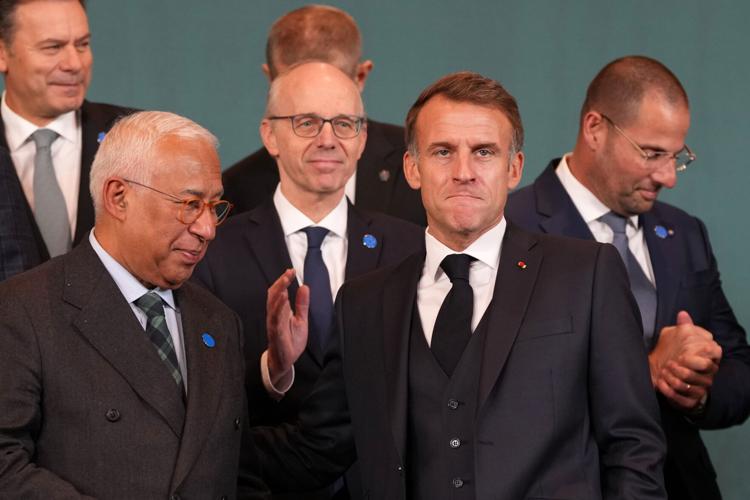
European Council President Antonio Costa said the continent would be represented by the EU and five members of the “coalition of the willing” that backs Ukraine: the U.K., France, Germany, Italy and Poland.
He spoke at the end of a summit of EU leaders in Dublin dominated by how Europe can play a role to bolster Ukraine, and protect its own security, in U.S.-backed negotiations with Moscow and Kyiv on ending the almost five-year war.
European leaders have been concerned that a U.S.-backed process will leave them sidelined and Kyiv vulnerable as Moscow and Washington decide the fate of a conflict that has roiled the continent.
Ukraine is eager for support from its European allies. It's reluctant to leave the talks solely in the hands of a U.S. administration that has often seemed to lean toward Moscow’s views. Russia does not want European countries involved in direct negotiations, complaining they are financing and supplying Ukraine’s military effort.
European leaders also distrust U.S. President Donald Trump to negotiate on their behalf after a series of tense standoffs over trade, Greenland and conflicts in Iran and Ukraine.
“Without Europeans, there is no support for Ukraine,” French President Emmanuel Macron said Thursday at a meeting of the European Political Community in Dublin. “There is no more U.S. support.”
“At the end of the day, we will be the ones to define and decide for our future security as Europeans,” he said.
After Thursday’s meeting of the EPC, a larger group than the EU with members including the U.K. and Ukraine, Macron's office published what he called a “historic declaration” by 40 European nations affirming support for Ukraine and the continent’s collective security.
It affirmed that “the path to peace in Ukraine should be decided with Ukraine and that any matter affecting European security should be decided with the Europeans.”
Europe is broadly aligned but not unified
European leaders fear Russian President Vladimir Putin will press Trump to back a peace settlement that weakens not just Ukraine but broader European security. Putin has demanded NATO troops be pulled back from Russia’s borders and that no European forces be deployed in Ukraine.
As envoys from Washington, Moscow and Kyiv met in Abu Dhabi, several European countries, including the U.K., France and Germany, attended discussions nearby.
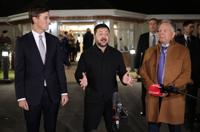
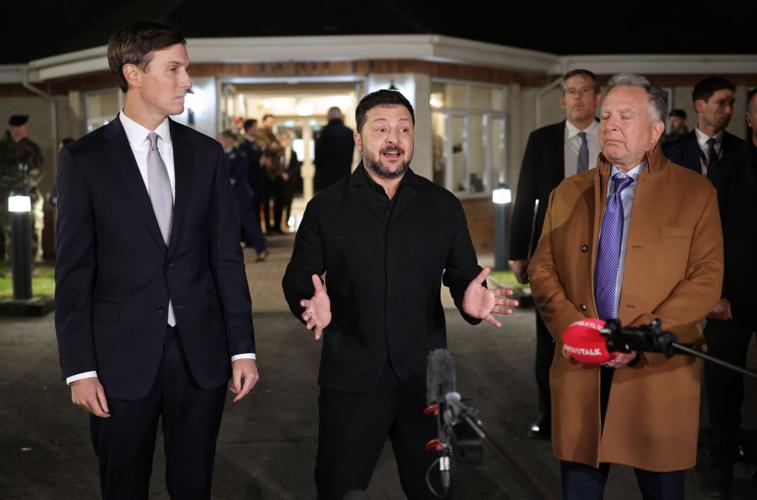
U.S. envoy Jared Kushner and Ukrainian President Volodymyr Zelenskyy said after they met in Dublin late Thursday that Europe would be part of the next round of talks. Zelenskyy said Europe would send a negotiating team, adding, “They will have a voice.”
“We cannot conclude this deal without the Europeans being at the table,” Kushner said. He said Putin “is willing to give it a try.”
Kremlin spokesperson Dmitry Peskov said Thursday that Europe must first name a representative. “The Europeans squabble like spiders in a jar.”
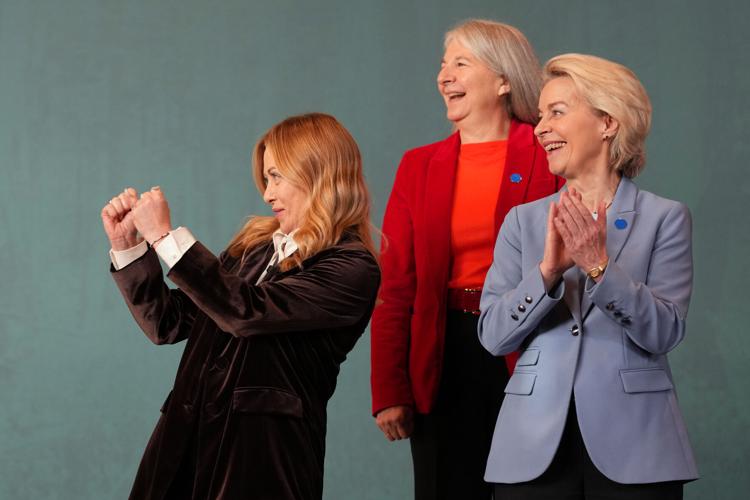
Supporters of a single envoy, such as Italian Prime Minister Giorgia Meloni, argue that the absence of a united European voice has allowed individual countries or small groups to engage in freelance diplomacy.
“There are too many different groupings discussing the issue,” she said.
Meloni has criticized a series of seemingly uncoordinated initiatives, including an October call to Putin by Finnish President Alexander Stubb and Norwegian Prime Minister Jonas Gahr Støre, that she said could undermine European interests.
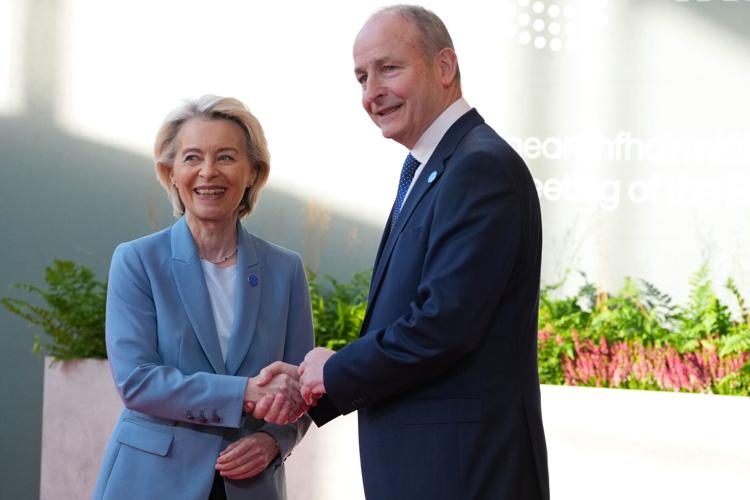
Martin said that European representation at the negotiations “can't just be European Union.”
“It's a European continentwide issue,” he said, pointing to the role of Norway and Britain in supporting Ukraine.
An old question with no clear answer
The question of who represents Europe is an old one. Europe itself is loosely defined. Is it the 27-nation EU, the 32-nation NATO military alliance made up mostly of European countries, the 29-nation Schengen zone, or the 47-nation European Political Community?
That has long frustrated Washington.
After this week's U.S.-brokered talks between Ukraine and Russia in the United Arab Emirates, Kushner said that “if Europe could identify one person to speak on their behalf, that would be a bigger achievement than getting the Russians to include them in the negotiation.”
That echoes the famous question often misattributed to former U.S. Secretary of State Henry Kissinger: “Who do I call if I want to call Europe?”
Potential candidates from within the EU
France, Germany and the U.K., the region’s top three economies, collectively known as the European trio, or E3, have so far been the most engaged European group in negotiations. But while London is deeply involved with Ukraine, the U.K. left the EU in 2020.
An E3 envoy would leave out the other 25 EU nations and rankle smaller nations, like those bordering Russia and Belarus on the bloc’s eastern flank, which face constant hybrid threats, including influence campaigns and disruptive drones.
Some back a top EU official for the job. Even inside Brussels, however, there are two leading contenders: European Council President Antonio Costa and the EU's top diplomat Kaja Kallas.
“European security cannot be discussed without a European voice at the table,” Costa said in Dublin on Thursday. “That European voice needs to be a team effort between European nations, the European Union and NATO.”
Earlier this year, Costa faced criticism within the EU after his office set up a hush-hush back-channel with Moscow.
Kallas, a former prime minister of Estonia, laid claim to the envoy role Friday, saying, “I’m the one who is representing Europe in the foreign and security policy.”
“I know that the Russians don’t want me, but, you know, do we have a say, who is representing Russia?” she said. “We can’t send any person that has no institutional role like the Americans are sending.”
Another name that has been floated is Stubb, the Finnish president. He has warm relations with Trump and met in Oslo last month with Witkoff and Kushner.
But some leaders deeply distrust the U.S.-brokered talks.
“In my opinion, calling them negotiations is an exaggeration,” Polish Prime Minister Donald Tusk said Thursday. “We will not build a new security architecture simply because the Russian president, or someone in the United States, wishes it.”
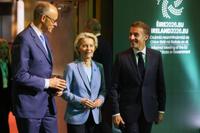
With Trump due to head to Beijing next week to meet Putin, German Chancellor Friedrich Merz said European leaders feared another “Anchorage moment,” a reference to the Alaska summit where they were stunned by Trump's overtures to the Russian leader in the absence of Ukrainian or European envoys.
“Please, no surprises,” Merz said. “Continue to play in team Europe and in the team with Ukraine.”
Latvian Prime Minister Andris Kulbergs noted that Europe is larger than Russia in population, economy and military might.
“We as Europe have to grow some bigger balls," he said.
Associated Press writers Geir Moulson in Berlin, Lorne Cook in Brussels and Colleen Barry in Milan contributed to this report.