
UPDATE - FEBRUARY 18:
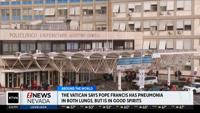
Pope Francis has developed bilateral pneumonia, the Vatican said Tuesday, after new tests showed a further complication in the condition of the 88-year-old pope.
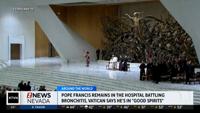
The Vatican said Francis’ respiratory infection also involved asthmatic bronchitis, which required the use of cortisone antibiotic treatment. “Laboratory tests, chest X-ray, and the Holy Father’s clinical condition continue to present a complex picture,” the Vatican said.
Nevertheless, the pope is in good spirits and is grateful for the prayers for his recovery, Vatican spokesman Matteo Bruni said in a late update.
The Vatican on Tuesday canceled papal audiences through the weekend and delegated others to cover for Pope Francis, who remained hospitalized with a multi-pronged respiratory infection.
While other Vatican operations proceeded as normal, the cancellations put a damper on upcoming events of the Vatican’s big Holy Year, the once-every-quarter-century celebration of Catholicism that is aimed at encouraging pilgrims to come to Rome to participate in special Jubilee activities. Expected to draw some 30 million people to Rome, the Holy Year is packed with special papal audiences and Masses throughout 2025, some of which have now been put into question given Francis’ illness.
Francis was admitted to Rome’s Gemelli hospital in a “fair” condition on Friday after a weeklong bout of bronchitis worsened. On Monday, medical personnel determined that he was suffering from a polymicrobial respiratory tract infection, meaning a mix of viruses, bacteria, and possibly other organisms had colonized his respiratory tract.
The Vatican has not indicated how long he might remain hospitalized, only saying that the treatment of such a “complex clinical picture,” which has already required two changes in his drug regimen, would require an “adequate” stay.
ORIGINAL STORY—FEBRUARY 17:
Pope Francis’ respiratory tract infection is presenting a “complex clinical picture” that will require further hospitalization, the Vatican said Monday as concerns grew about the increasingly frail health of the 88-year-old pontiff.
Vatican spokesman Matteo Bruni said the results of tests conducted in recent days and Monday indicate the pope is suffering from a “polymicrobial respiratory tract infection” that has necessitated a further change in his drug therapy. Scientists say polymicrobial diseases are caused by a mix of viruses, bacteria, fungi, and parasites.
There was no timeframe given for his hospitalization, which has already sidelined Francis for longer than a 2023 hospitalization for pneumonia. Bruni said the complexity of his symptoms “will require an appropriate hospital stay.”
Francis, who had part of one lung removed after a pulmonary infection as a young man, was admitted to Rome’s Gemelli hospital in a “fair” condition on Friday after a weeklong bout of bronchitis worsened. Doctors confirmed a respiratory tract infection and prescribed “absolute rest” alongside unspecified drug therapies. Subsequent updates said his slight fever had gone away and that he was in “stable” condition.
Bruni said Francis ate breakfast and read the newspapers Monday morning after a third peaceful night. In a sign that Francis was still keeping up with some of the essentials of his routine, the parish priest of the Catholic Church in Gaza, the Rev. Gabriel Romanelli, revealed that Francis had maintained his daily video call to the church on Friday and Saturday nights and sent a text message on Sunday.
“We heard his voice. It's true, it was more tiring,” Romanelli told Vatican News. “But we heard his voice clearly, and he listened to us,” said the Argentine priest, whom Francis has phoned every day since the war began.
As people age, their immune systems decline, making doctors especially concerned when elderly patients develop multiple problems. A decline in lung function and muscle strength can accompany old age and impair the body's ability to effectively clear respiratory secretions, increasing susceptibility to infections like pneumonia.
The Argentine pope is a known workaholic who keeps up a grueling pace despite his increasingly precarious health. In addition to his frequent bouts of respiratory infections in winter, he uses a wheelchair, walker, or cane because of bad knees and suffers from sciatica nerve pain. In 2021 he had 33 centimeters (13 inches) of his colon removed because of a narrowing and then had further surgery in 2023 to remove intestinal scar tissue and repair an abdominal hernia.
When he had a bad case of pneumonia in 2023, he left the hospital after three days and only acknowledged after the fact that he had been admitted urgently after feeling faint and having a sharp pain in his chest. This time around, Francis insisted on finishing his morning audiences Friday before leaving the Vatican, even though he was having trouble speaking at length because he was short of breath.
Francis' continued hospitalization has already forced the cancellation of some events connected to the Vatican's Holy Year and put others in question. The official Vatican calendar online has no more papal appointments or activities for February and picks up only on March 5, Ash Wednesday. This week's weekly general audience was canceled.
Francis was supposed to have gone Monday to Rome’s Cinecitta film studios to meet with artists as part of the Catholic Church’s Holy Year celebrations, but the Vatican canceled that event. Beyond that, he had been scheduled to preside on Sunday at the ordination of deacons as part of a Holy Year weekend dedicated to deacons. While he is still listed on the Jubilee calendar as the main celebrant, his participation is not listed on the Vatican calendar.
When he missed the Jubilee Mass dedicated to artists this past Sunday, a cardinal stood in for him.
(Copyright 2025 The Associated Press. All rights reserved. This material may not be published, broadcast, rewritten, or redistributed without permission.