

NEW YORK (AP) — The average price for a gallon of gasoline jumped 11 cents overnight in the U.S., and drivers in Europe waited in line to fill their tanks with fuel, as war engulfed the Middle East and shipments of oil and gas were stranded in the Persian Gulf.
Depending on the duration of the war, the pain of higher prices could increase in the coming weeks, and may be felt more heavily in areas reliant on imports.
“Right now, the worst of it is centered on Europe, because Europe is a net importer,” said Susan Bell, senior vice president of commodity markets at Rystad Energy. Diesel prices spiked 27% in Europe since Friday, rising about 62 cents per gallon, she said. “It’s gone up substantially, because Europe is so constrained on diesel supply."
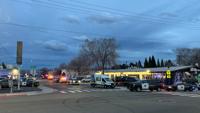
In the U.S., a gallon of regular was selling for $3.11 on average, according to motor club AAA, surprising some drivers at the pump. Gasoline prices were already rising before the U.S. launched strikes on Iran as refiners switch over to summer blends of fuel. Summer blends of gasoline are more expensive because additives are included to help keep the gasoline from evaporating in the heat, and prices tend to increase as demand for fuel rises in the summer months, said Aixa Diaz, AAA spokeswoman. Adding to the pressures, crude prices rose sharply in recent days because of the war.
Anne Dulske paid $15 more than usual to fill up her tank at a Jackson, Mississippi gas station on Tuesday.
“It’s going to affect everything in our lives,” she said. “It’s very scary, and it does hit closer to home than people think.”
Dulske, who said she had previously noticed gas prices slowly going down, called the increase surprising and said she was caught off guard when she learned the United States and Israel had attacked Iran over the weekend.
“We are knee-deep into the gas price increases," said Patrick DeHaan, head of petroleum analysis at GasBuddy, a technology company that helps people find cheap gasoline. DeHaan estimates gasoline price could rise further, but he doubts the price would reach $4 a gallon in the U.S. “Many Americans seem very panicked that prices could hit multiple dollars higher than that, which at this point, I wouldn’t say anything’s impossible, but certainly it’s quite improbable based on the current developments."
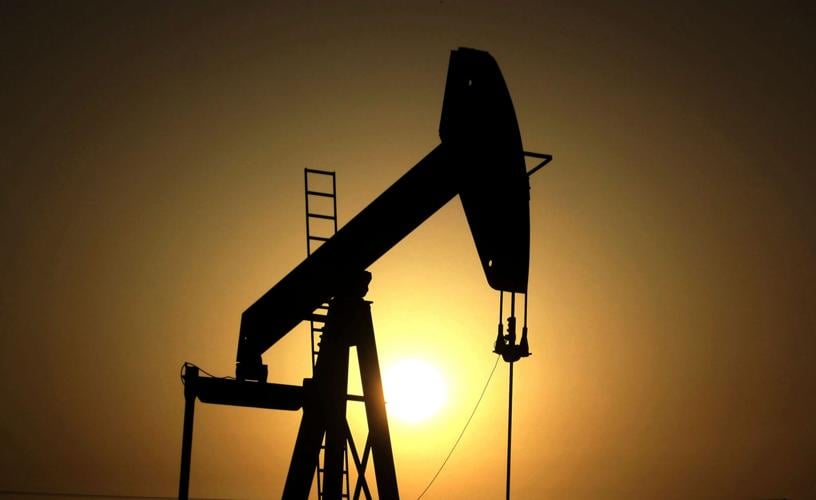
While the U.S. is a net exporter of oil, which is a key component in gasoline, that doesn't make the country or its consumers immune to higher prices. Oil is traded on a global market, so price increases are felt even within the U.S. Plus, the oil produced in the U.S. is mostly light, sweet crude, and refineries on its coasts are typically geared to process heavier, sour crude, so imports are needed.
States that rely heavily on imported oil and gasoline are having a more painful experience with the rising cost of fuel, said Shon Hiatt, director of the Zage Business of Energy Initiative at the USC Marshall School of Business. California imports refined fuels such as gasoline, diesel and jet fuel from South Korea, China and sometimes the Middle East, he said.
“We have an energy security problem in California. It’s not looking good for us,” Hiatt said. China buys oil from Iran and other parts of the Middle East, and with those supplies constrained, “if push came to shove, they’re going to cut off any refined fuel sales to California for sure.”
In a suburb of Paris, drivers waited in a queue of 15 cars to fill up at seven pumps, which were charging about 1.846 euros per liter (7 euros per gallon) of diesel Tuesday.
“I’m heading out to the countryside and I’m almost out of fuel," said Laurence Rihouay, a customer at a petrol station. "But there are a lot of people here. There’s never usually this many.”
On Tuesday, oil prices soared to levels not seen in more than a year as Iran launched a series of retaliatory attacks, including a drone strike on the U.S. Embassy in Saudi Arabia.
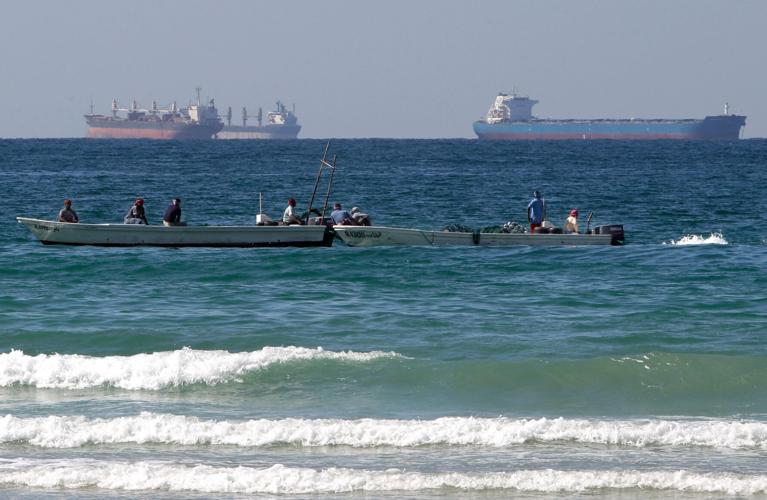
Iran has also struck energy facilities in Qatar and Saudi Arabia, and disrupted tanker traffic through the Strait of Hormuz, the narrow mouth of the Persian Gulf through which a fifth of all oil traded passes, sending global oil and natural gas prices soaring.
In France, drivers were taking precautions.
“With Iran and the Strait of Hormuz effectively blocked, it is causing alarm everywhere and driving up oil prices,” said Abdelilah Khalil, who was getting gasoline at a station outside Paris. “It’s panic on board, everyone is worried, and I think that’s why many people are rushing to gas stations to fill up.”
President Donald Trump addressed the rising prices in remarks in the Oval Office Tuesday. “We have a little high oil prices for a little while, but as soon as this ends, those prices are going to drop, I believe, lower than even before,” he said. He later said on social media that, if necessary, the U.S. Navy would escort oil tankers through the Strait of Hormuz. He also ordered the U.S. International Development Finance Corp. to provide political risk insurance for tankers carrying oil and other goods through the Persian Gulf “at a very reasonable price.”
In Jackson, Mississippi, Brody Wilkins was filling up gas canisters when he noticed prices had increased to $2.99 a gallon. Wilkins, who works for a landscaping and construction company, said he’s concerned about how the increase will impact the business.
“We use gas nonstop,” Wilkins said. “I don’t know how long this is supposed to last, but I hope not very long.”
Benchmark U.S. crude jumped 8.6% to $77.36 a barrel Tuesday. Brent crude, the international standard, added 6.7% to $81.29 a barrel. Global oil prices jumped to start the week over concerns that the war will clog the global flow of crude.
The price of crude is the single largest factor in how much U.S. drivers pay for fuel. And higher oil prices are usually felt at the pump within a couple of weeks at most.
In Burlington, Massachusetts, prices at one gas station neared $4 on Tuesday.
Erin Kelly called the price tag “hefty” and said she paid more than $5 for premium gas. She was driving her father’s car Tuesday while hers is getting repairs and said she hopes to get her car back soon so she can go back to paying for regular gas.
“We already are paying more in the grocery store,” she said. “We’re paying even more than we were paying before at the gas pump. So, I don’t know, it’s a little concerning.”
Associated Press journalists Nicolas Garriga in Paris, Sophie Bates in Jackson, Miss., Rodrique Ngowi in Burlington, Mass. and Seung Min Kim, Fatima Hussein and Konstantin Toropin in Washington contributed to this report.