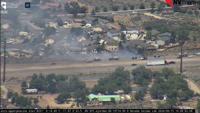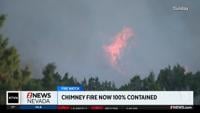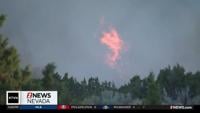
In the west we see a lot of wildfires, and according to NV Energy they've been seeing an increase in fires and an increase in their severity leading to loss of homes, buildings and loss of lives.
NV Energy says they do a lot of preventative work so wildfires don't spark.
“We’ve done a great job over the last five years to really step up our inspections, our patrols, our maintenance," said Ryan Bellows, the Vice President of Government and External Relations at NV Energy. "We’ve undergrounded sections of line that are in the highest wildfire risk areas. We’ve added weather cameras and are really taking measures to make sure we’re not the cause of any wildfires.”
But no matter how much they prepare there is a missing link. They noticed insurance levels are not adequate.
Their current insurance levels are $400 million in traditional coverage which they say isn't enough.
The first route is to try and find an insurance product on the traditional market to provide that coverage, but they say these products are not available and if they are they're really expensive.
So instead, they can up with another proposal that Bellows explains.
“Here in Nevada, we have the benefit of seeing what has happened in surrounding states," he said. "And other states, California, Hawaii, Oregon, have faced these devastating wildfires and we’ve seen the consequences of what’s happened to customers who have lost homes.”
NV Energy says a self-insurance policy is structured so those in higher wildfire risk areas would pay more.
Since northern Nevada is a higher risk area, customers here would see a bigger increase compared to the southern part of the state.
NV Energy estimates bills would rise about $2.40 a month for the average residential customer from this change.
Bellows goes on to mention “The way we structured this policy is really through the advice of industry experts and looking at what surrounding states have done just to find a level of coverage we think is appropriate for the state. And so we think that increasing this coverage by $500 million is the right way to go about it. But we also wanted to be sensitive to customers, and it can’t be funded all in one shot, so this is going to be funded over a 10-year period to make it affordable for customers.”
Right now, this is just a proposal, and it hasn't been approved yet.
The Public Utilities Commission of Nevada will have several months to review the policy, and NV Energy does expect a decision to be made by summertime and if approved it will take effect on October 1st of 2025.