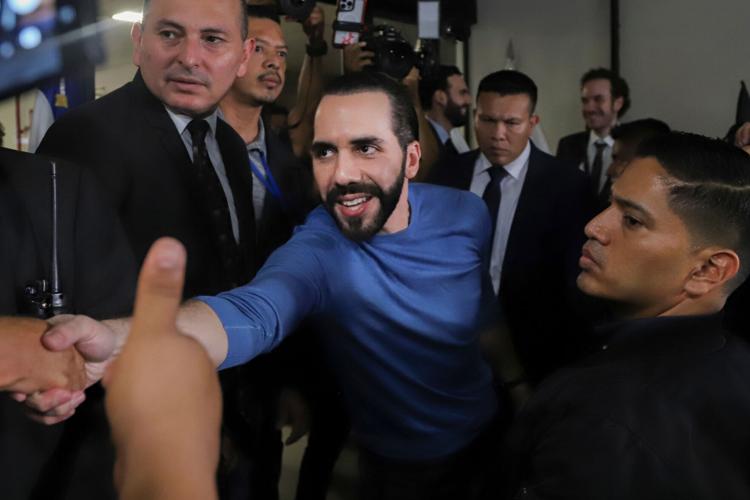




SAN SALVADOR (AP) — El Salvador President Nayib Bukele on Thursday night officially launched his candidacy for a third term in office after years of paving the way to stay in power indefinitely.
With virtually no political opposition, the highly popular leader is positioned to coast easily into a third term in office in the February elections. Recent polls put his approval ratings around 90%, largely due to his war on the country’s gangs. The crackdown, which began in 2022, has largely debilitated the criminal groups and sharply reduced violence but fueled accusations of mass human rights abuses.
The firebrand populist submitted his presidential candidate paperwork to the country’s Supreme Electoral Tribunal. His New Ideas party, which holds a supermajority in the country’s congress, cleared the way for him to be the party’s candidate in July and remain in power.
Crowds carrying “Bukele 2027” signs cheered his arrival in a fleet of police cars at the electoral tribunal building, where candidates for 60 congressional seats and 44 municipal council seats also submitted documentation ahead of the Thursday night deadline.
“In El Salvador there is total, complete open democracy,” an impassioned Bukele told roaring supporters. “We’re sending a message to the world that El Salvador will never return to the past.”
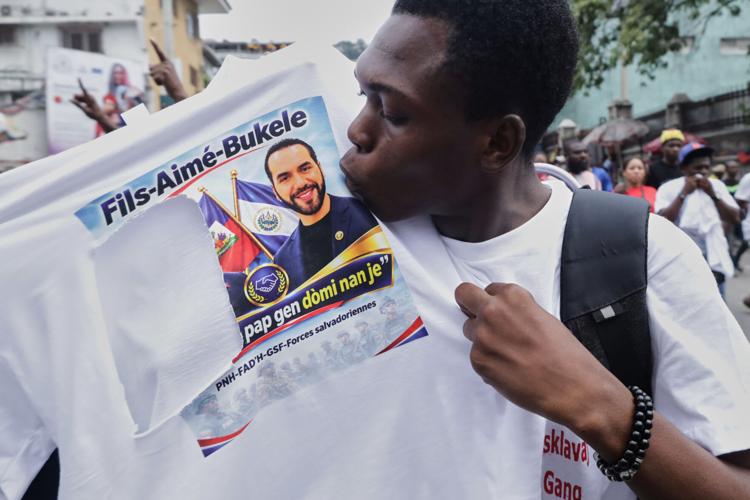
The reelection bid comes as Bukele has taken his crime offensive to Haiti. He deployed around 2,500 troops to fight gangs after the disappearance of four Salvadoran aviation technicians in an October gang attack.
Critics have described the offensive as a way to offset international scrutiny, rally domestic support ahead of elections and solidify Bukele’s long-term political project. But Bukele, a former communications strategist, often seems to relish political spectacles.
Democratic concerns hang over the February vote. El Salvador’s Constitution has long prohibited consecutive reelection, in part because of the Central American nation’s fragile democracy. But a ruling by the Supreme Court stacked with Bukele loyalists allowed him to seek a second term in 2024.
Bukele has spent years whittling away checks and balances and concentrating power. The country's congress, dominated by his party, pushed through a congressional reform in 2025 that eliminated presidential term limits and moved up national elections from 2029 and 2027.
His government also has gone after the opposition, watchdog groups and journalists, fueling the greatest exodus of civil society since the Salvadoran civil war decades before.
Political opposition figures and international observers have said Bukele's plan to continue in office is illegal, but don't deny the leader's popular support.
“Bukele is running for a third consecutive term after packing the court, rewriting the constitution to his liking and jailing or forcing into exile those who dare criticize him. The absolute concentration of power in his hands has been the defining feature of his administration,” said Juan Pappier, Human Rights Watch deputy director of the Americas.
The country's political opposition has been rendered virtually irrelevant, in part because of years of corruption and political failures by traditional parties, which helped catapult Bukele into office in 2019.
Many Salvadorans have said they prefer giving up democratic freedoms to suffocation by the gangs.
Janetsky reported from Mexico City.