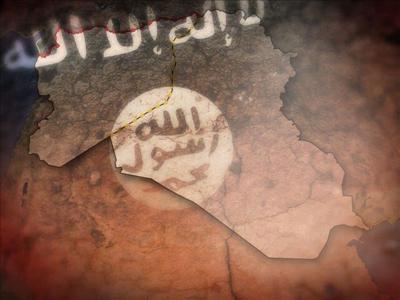

If the Islamic State militants aren't stopped, President Barack Obama says, they could pose a threat to the U.S. homeland.
He makes that assertion in his request to Congress to formally authorize military force against the group -- which is imposing violent rule in parts of Iraq and Syria and has killed U.S. and allied hostages. Obama plans to speak about his request this afternoon from the White House.
The resolution that would clear the way for the use of the U.S. military against the Islamic State would not authorize long-term, large-scale ground combat operations like those that were seen in Iraq and Afghanistan in recent years. The president says those battles should be left to local forces, rather than the U.S. military.
He says he's instead asking for "the flexibility to conduct ground combat operations in other more limited circumstances" -- like rescue efforts, or the use of special operations forces against Islamic State leaders.
His spokesman, Josh Earnest, says it's "impossible to envision every scenario where ground combat troops might be necessary."
Obama is proposing a three-year time limit on the authorization for the use of force.
Meanwhile, some Democrats are criticizing the resolution proposed by the White House.
Adam Schiff, the top Democrat on the House intelligence panel, says he wants "more specific limits" to make sure there won't be "another major ground war."
The House Democratic leader, Rep. Nancy Pelosi of California, issued a statement that refrained from endorsing Obama's proposal. It said Congress should act judiciously and promptly to pass legislation "narrowly tailored" to the fight against the Islamic State.
Republicans are also voicing concerns. House Speaker John Boehner says he doubts it would give the needed flexibility and authority to military commanders. He says changes are likely before it comes to a vote.
Republican Sen. Bob Corker, who chairs the Foreign Relations Committee, is promising to hold "rigorous hearings."
There's no timetable for Congress to act on the president's request. It triggers the first war powers vote in Congress since President George W. Bush sought and won an authorization in 2002 before the U.S. invasion of Iraq. (AP)