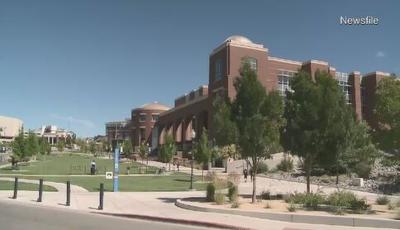


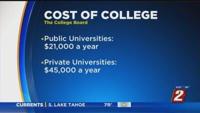

The cost of college is on the rise. According to the College Board, the average annual cost for a public four-year college in 2018-2019 was $21,370. For private universities, that number jumps to $48,510 a year. There are some opportunities that can help with higher education. Some investments are college-specific.
"There are different investment vehicles that people can set up for their children through different types of accounts," said Kelli Tampio, a Financial Planner with Edward Jones. "There are different contribution limits and tax implications so those people can start the saving process, grow their money, and keep up with inflation costs of education."
She says it's never too early to start saving.
"The sooner you start, the more assets willl be available," Tampio said. "So starting those college plans when they're born is a great gift. A lot of families will give that gift when they have a grandchild, or niece or nephew. It's a great way to give them something of value that wil help with those astronomical costs in the future. Every little bit helps and with a lot of those plans, you can have multiple people in the family participate to grow the money at a quicker and more substantial rate."
Students may not realize all the scholarship opportunities that are available to them.
"A lot of times you think just the University-specific scholarships are available," Tampio said. "Reach out. Sometimes parents have scholarship opportunities through their employer. There are community organizations, civic groups and different foundations. Using your guidance counselors is a great resource as well as well as going to the U.S. Department of Education website."
When it comes to financial aid, Tampio says it's important to apply early.
"You want to fill out a FAFSA form in October of the previous year," she said. "That form is submitted to the Government and it is received in the order and determined by what the child's financial need is and a lot of it is awarded on a first-come, first-served basis."
Another option is starting a four-year degree at a community college.
"I always encourage students to look at the community college route for the first two years," Tampio said. "Those costs tend to be a lot more affordable and you can get a lot of those general classes out of the way without the expenses of a bigger college."
More information: https://studentaid.ed.gov/sa/