From the Regional Transportation of Commission:
Today, the U.S. District Court for the Eastern District of California dismissed the lawsuit that had sought to stop construction of the SouthEast Connector. The Upper South East Communities Coalition filed the suit, claiming that the U.S. Army Corps of Engineers and RTC of Washoe County did not adequately examine the project’s environmental impacts and violated both the National Environmental Policy Act (NEPA) and the Clean Water Act. On Nov. 18, the Coalition filed a stipulation for dismissal, seeking to voluntarily dismiss its lawsuit. The dismissal comes in the wake of two recent major federal court decisions that denied the Coalition’s requests for an injunction.
In June, U.S. District Court Judge John A. Mendez denied the Coalition’s motion for a preliminary injunction to stop construction of the SouthEast Connector. Then, on November 2, a unanimous panel of the U.S. Court of Appeals for the Ninth Circuit upheld Judge Mendez’s ruling. The panel explained, “The record before us does not suggest that the district court here relied on an erroneous legal premise, made clearly erroneous factual findings, or abused its discretion in concluding that [the Coalition] failed to show a probability of success on the merits.”
Judge Mendez determined, despite the Coalition’s claim to the contrary, that the Corps had adopted mitigation measures in response to identified environmental impacts, properly involved the public in accordance with its procedures, and effectively compared alternatives and “did properly conclude that the project was the least environmentally damaging practicable alternative,” as required by federal law. The Judge stated that comments from the public were “extensive” and that the Corps responded to the comments “at length”.
The RTC conducted a comprehensive public outreach process, with nearly 200 open meetings, throughout the development of the SouthEast Connector project. The process included extensive input from the Coalition.
The district court determined that the Coalition’s argument “overlooks the fact that, as part of the required mitigation effort upon which the Corps conditioned approval of the permit, this project will actually result in a net increase of wetlands”. Similarly, the court characterized the Coalition’s claims regarding mercury to be “belied by the record in this case”, finding the Corps’ mandate that mercury deposits be excavated and sequestered to be “well-reasoned”.
With finding the Coalition had no likelihood of success on the merits of its claim that the Corps violated federal law, Judge Mendez denied the Coalition’s request to enjoin the RTC.
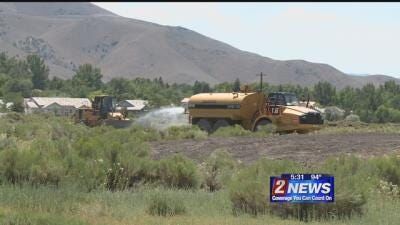
RTC has been and is moving forward with construction of the Southeast Connector. Executive Director Lee Gibson said “All throughout this extensive permitting process, the Corps complied with NEPA and the Clean Water Act- that is their mandate and they do it very well.” Mr. Gibson further stated, “As a transportation project, the SouthEast Connector is going to make people’s commutes easier and support connectivity to new jobs throughout the region. The RTC took the environmental issues presented by this project very seriously – it is, after all, our area’s community and ecosystem. Anyone who thinks this area is currently pristine is just plain wrong. As part of the RTC’s construction efforts to date, we have removed approximately 4 million pounds of garbage – auto parts, refrigerators, tires and other solid waste; and will be removing 460 million pounds of whitetop and whitetop infested soil.
The RTC went well above the minimum mitigation standards to create a sustainable project that meets both environmental and regional congestion relief goals. After construction of the road, we will have also restored over 170 acres of wetlands and riparian habitat; provided for the removal and sequestration of potentially hazardous materials, and constructed a bicycle and pedestrian multi-use trail. This effort will, as the court recognized, provide a net environmental benefit to the area, carried out in compliance with applicable local, state, and federal law.”
Features of the project include a 5.5 mile roadway linking Sparks to south Reno; a paved multi-use path that will parallel the road; converting seven acres of unhealthy wetlands into an 80 acre self-sustaining wetland complex; and sequestering soil with high levels of mercury under the new roadway estimated to permanently remove 22,000 pounds of mercury from being exposed to the environment.
The project is on schedule to be completed in late 2017. For project information, go to http://southeastconnector.com.
From the Regional Transportation Commission
