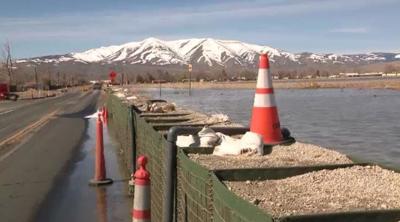

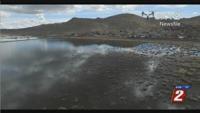

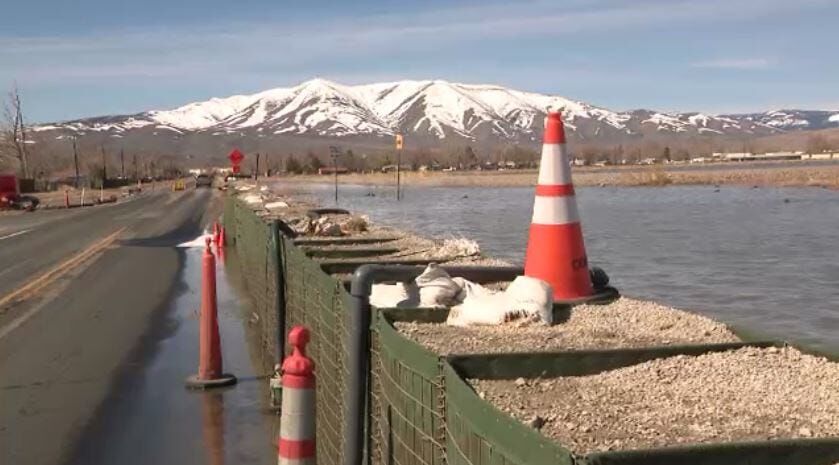
The Washoe County Board of Commissioners and Reno City Council held a joint meeting to learn more about the issues at Swan Lake. Now they are looking at ways to use the information. Swan Lake started flooding areas of Lemmon Valley in 2017 and it has caused problems ever since. This year's wet winter has also contributed to the problem.
"The residents are frustrated and we fully understand that but the roads are safe to travel on and their houses are dry," Dave Solaro, Assistant (Washoe) County Manager said.
Solaro says the next step is to find solutions to the problems. Residents say the biggest problem is development and effluent water.
"Development causes storm water runoff," Tammy Holt-Still, Lemmon Valley resident said. "Development causes effluent. You bring water in but you have no place for it to go, you've got a problem."
Officials say about 16 percent of the lake is treated waste water, or about a foot of current lake levels. That is why they are focusing most of their attention on storm water.
"We're trying to get some action around there, trying to get to the point where we can start taking down those HESCO barriers but still provide the same amount of protections that we have today," Solaro said.
Councilwoman Jenny Brekhus wants a moratorium on future development until they can study the impacts it will have on the Swan Lake.
"It's very complicated but the development, any water hookups, anymore sewer generation is an add to the problem," Brekhus said.
Brekhus says she thought the discussions were important but now it is time to take action. However, she says they have to be careful with their future decisions because it could impact the entire region.
"I see big price tags that are going to be born regionally whether they're from road construction budget that's required, whether it's TMWA that's regional, or a big sewer investment," Brekhus said.
Holt-Still says along with effluent water, sewage treatment plants should also improve water quality so they do not have to release it into Swan Lake.
"Once they have the water to A-plus, then they can figure out it can go anywhere," Holt-Still said. "The tribals want it. It could go down the Truckee River."
Some leaders are asking for barriers around Lemmon Valley Elementary School, where water is already up to its playground.
Solaro says finding the right solutions are difficult because they don't have a budget for it and some options could be expensive. One idea is to use nearby land for farming crops that require a lot of water, using Lake Swan as an irrigation source.
"We're checking this with the experts to go create some large water pivots and grow alfalfa," Solaro said.
Some mentioned a partnership with the BLM, allowing them to use the alfalfa as feed at its wild horse facility.
Other ideas include raising Lemmon Drive to create a levy or pumping water into a reservoir. Solaro says pumping the water out, altogether, is difficult because of water laws, lack of places to move it, and possible ownership of the water. Another idea is to allow construction companies to fill their water trucks with water from Swan Lake, which they can use for dust control.
"It sounds really good to go get these things but I think there are other consequences associated with that as well, increased traffic, increased fuel usage for a very small benefit," Solaro said.
Solaro says about 2.5 feet of water evaporate each year. If they don't do anything, it would take about five years for the lake to dry up. These options could help speed up the process.
Brekhus is hoping for an interlocal agreement between Washoe County and the City of Reno to help make the best decisions. They are also hoping for more FEMA funding, which would reimburse about 75 percent of local expenditures.