

You look around and see smartphones everywhere you look. They're so useful and convenient, you may wonder why anyone even uses HAM radios to communicate anymore.
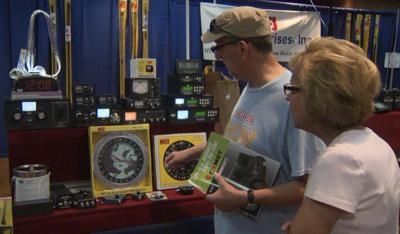
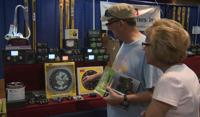
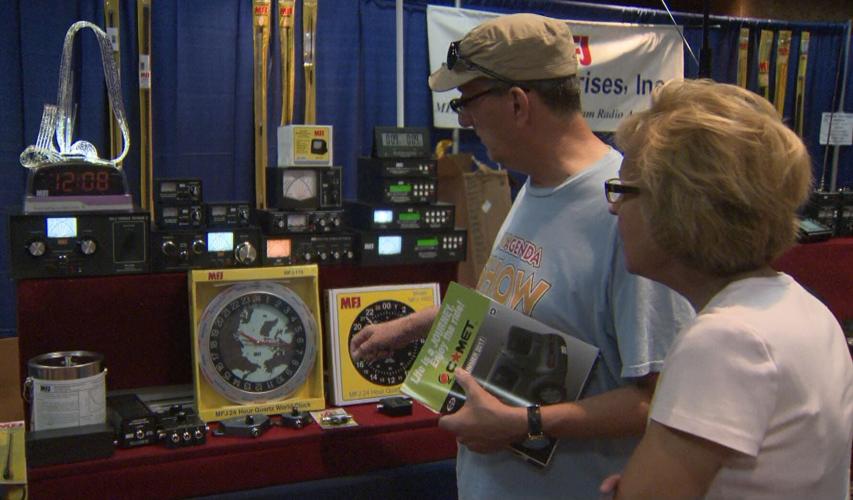
This weekend the Sierra Nevada Amateur Radio Society hosted its fourth annual Amateur Radio Convention in Boomtown, which brings out hundreds of HAM radio operators. Most of them attend because of their love for the groundbreaking device for communication, but it's a valuable skill that can potentially save lives.
"So you go over a cliff you break a U-joint," Chuck Farnham, Public Relation Coordinator for the American Radio Relay League You're in the middle of nowhere with no cell service. Well... the HAM radio always works."
If the cell tower stops working, there's no cell service. But as long as you can send out radio waves, someone else can pick them up. That's because the ionosphere, which sits 50-100 miles above Earth's surface, takes the waves that are being sent up, and sends them right back down.
"The ionosphere acts as a mirror for ham radio waves," Gordon West, well-known HAM radio instructor, says. "And ham radio operators were the first to use the ionosphere to beam signals thousands of miles away."
While getting in an accident like Farnham's example could happen, you could still have a need for it in case of a natural disaster like a hurricane or wildfire.
"HAM radios have helped out in major disasters," West says. "HAM radio is not only as a hobby, but the HAMs are always prepared to be able transmit signals in a devastated area in an emergency without AC power."
This convention is regional, meaning it's so big people come from all over the country to attend. Still, it's one of the better ways for someone who knows nothing about HAM radios to get exposure.
"We teach them about the technology," Farnham says. "Maybe something they don't know about maybe something new, maybe someone doesn't know how to use a radio."
He says there are a lot of retirees looking for a hobby or a group to spend their time with who become licensed operators. Younger operators tend to discover the trade through a loved one.
"Somebody will call up and either their grandfather did it or their brother did it," Farnham says.
"My Dad," Samuel Case, 14-year old PIO for ARRL, says. "I saw him doing it and I just asked. What I like about it is there's a lot of creativity in it. There are a lot of people out there building stuff and just using it how they want."
To learn more about the Sierra Nevada Amateur Radio Society, you can visit their website here: https://snars.org/home/
The convention runs through July 22 at Boomtown Casino.