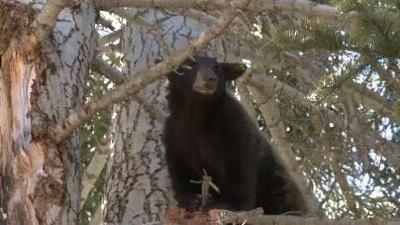
Beginning in late March, a string of black bear sightings have occurred in the South Lake Tahoe region. Black bears have been staying in hibernation longer in 2017 compared to other recent years.
According to Chris Healy with the Nevada Department of Wildlife, it’s because of the long and cold winter that occurred in the Sierra. Healy says for the folks who live in bear country, it's important to stay bear aware.
"Bears belong in these areas and it's up to us to make sure that the bears don't get into trouble," says Healy.
Healy’s tips include locking car doors, being conscious of trash and never leaving food outside.
“Don't invite the bears in and if we don't invite the bears in there's a good chance we can have a nice quiet year where bears remain wild and people remain safe," says Healy.
Luckily, the number of human to bear conflicts is on the decline according to Healy. With a 70% decrease of complaints from 2015 to 2016, it could again decrease in 2017 because of an abundance of natural foods that will grow for the bears later this spring.
“The nut and berry crops that will come from all of this, we're hoping that those are really big and fruitful and that way bears can remain wild and eat foods they're supposed to eat," says Healy.