
Sierra Nevada Corporation
The cause of a helicopter crash that killed Kobe Bryant, his daughter and seven others is still under investigation. That will likely last about a year. In the meantime, many speculate that the fog caused the crash, or at least played a role in the tragedy.
"Hearts are broken so many ways, no one's more so than their friends and family but it also breaks our hearts because we know that technology exists now that could've prevented an accident like that," Brooke Hart, Vice President of Communications for Sierra Nevada Corporation said.
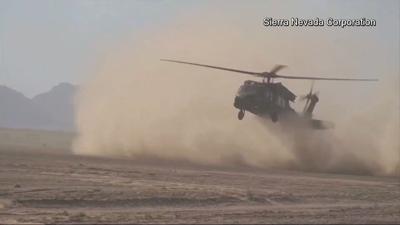
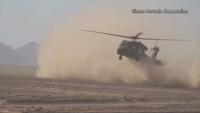
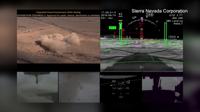
It is called Degraded Visibility Environment (DVE) Technology. Sierra Nevada Corporation is producing it for the U.S. Department of Defense. The Sparks company hopes it will eventually be used on all helicopters.
"It allows pilots to see through all kinds of hazardous weather conditions, whether it's fog or snow, sleet or even sandstorms," Hart said.
Officials say the military will have the systems by the fall, which will allow helicopter pilots to fly more safely in poor visibility. The original purpose was to make flying in sand storms safer.
"A lot of times, we had to land in locations that weren't necessarily suitable for landing," Dean Heitkamp, Senior Director of Business Development for Sierra Corporation said. "You land, you kick up all kinds of dust, rocks, there's debris, there's obstacles around you."
The technology uses sensors to create a real-time fused imagery to the pilots.
"It's going to bring in enhanced situational awareness," Heitkamp said. "You'll be able to see and detect obstacles that maybe you couldn't see with your eyes.">
Heitkamp was in the U.S. Army for 28 years where he flew helicopters. He says visibility is crucial for any helicopter pilot to recognize terrain, power lines and other structures.
"You lose visibility, you start to get the potential for spacial disorientation, you start to lose focus on where hazards are," Heitkamp said.
The U.S. Department of Defense says 58 percent of its helicopter losses in the wars in Iraq and Afghanistan happened in poor visibility, including 52 percent of its helicopter fatalities.
"It's a big problem," Hart said. "The Army, over 10 years, said that it was a $1 billion problem for them because they lost so many aircraft and that's not even accounting for the lives that are endangered as a result of bad visibility."
The technology is new but SNC believes it will be a valuable tool and will save lives.
"It's sort of like the equipment of night vision goggles when night vision rolled out a few decades ago," Hart said. "Then, it allowed pilots to own the night. This technology of our allows pilots to own the environment."
The goal is to eventually put the DVE Technology in civil and commercial helicopters, both new and old. It could aid pilots in emergency operations, too, helping in heavy smoke during wildland fires.
"The folks that are fighting the fires could make use of this technology, folks that are flying out to oil platforms, all the rescue helicopters," Heitkamp said.
Heitkamp says future advancements in transportation could include the DVE Technology, including autonomous vehicles.
"We envision a time when air taxis will be able to take you into the city," Heitkamp said. "You're going to need technology that allows you to operate in amongst buildings, in close proximity to wires and towers."
We will never know if the use of this technology would have prevented the crash in Calabasas, Calif., but SNC officials say it would have been a valuable tool that could have saved nine people.
"Our technology really saves lives and there's no reason why it should only be deployed on military aircraft and not on civil and commercial aircraft, too," Hart said.
Hart says the technology is ahead of the regulations. The next step would be discussions with the Federal Aviation Administration to make sure the rules will allow pilots to rely on this tool to navigate in bad weather.