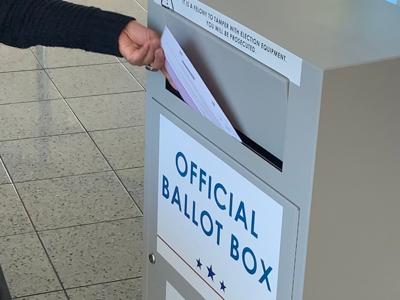
There are six days left in the 2021 legislative session. There are still some election reform bills that could pass by then, including AB321. The bill would make universal mail ballots permanent in Nevada's elections.
"I'm all about making sure that people have the freedom to choose whatever works best for them. I think this is a start in that direction," Assem. Jason Frierson, D-Las Vegas said.
Nevada implemented AB4 during the 32nd Special Session because of the pandemic. 1.8 million mail ballots were sent out to voters. 48 percent of all ballots cast were on the paper ballots and the state had a record voter turnout of 78 percent. That was 1.4 percent higher than the 2016 election.
"For me, the cost of mailing out these ballots did not equal the small percent increase in voters that actually responded to these with the ballots," Assem. Robin Titus, R-Smith Valley said.
Titus says there are too many questions and concerns surrounding mail ballots that many say threaten election integrity.
"We didn't have a system that was broken," Titus said. "There wasn't a need to fix them and now we're just expanding the mistrust."
The cost to set up the all-mail election was $3.9 million in 2020. The Secretary of State's Office says that would cost $6.8 million in fiscal year '21/'22, $6.3 million in the following fiscal year, and increase to $11.3 million in future biennia. Money would go towards ballots and postage, dropboxes and election workers.
"We identified 121 ballot dropboxes in our initial fiscal note," Mark Wlaschin, Deputy Secretary of State for Elections said. "That number would more realistically go over 221 and again, estimated at $1,500 each just to purchase and not even install."
Wlaschin says the price of each ballot was $1.46 in 2020 but that the rising costs in postage and vending will increase the cost to $2.97 apiece.
Frierson says the projections are likely higher than the actual cost because there are unknown variables.
"I don't think we know the costs of implementing it permanently," Frierson said. "We've created an opt-out option so that people that aren't interested can opt out. That would result in a savings."
Many testified in support of the bill, saying increasing access to voting is worth the investment. Others say the return does not match the investment.
"This is the exercise of an individual's most sacred constitutional right," Holly Welborn, ACLU of Nevada Policy Director said. "The fundamental right to vote. The state should invest in making it as easy as possible."
"The Office of the Secretary of State is opposed to this bill due to the negative fiscal impact it will have on the state," Wlaschin said. "If AB321 is passed, the state and counties would incur significant costs each election cycle."
AB126 would replace Nevada's presidential caucus system with a presidential primary election, and schedule it in February, making our state's vote the first in the country. The legislation appears to be getting support from both sides of the aisle.
"I think Nevada is one of the most diverse states in the country," Frierson said. "Nevada's small enough to be manageable and I think that Nevada is more reflective of where the country is going than a New Hampshire or an Iowa, per se."
"I felt that more voters could actually be engaged in the primary process and if we really want to expand it and have people engaged and be able to vote, I think going to a primary is good," Titus said.
The Secretary of State's Office says the move would cost about $5.6 million dollars every four years to put on the election, which is separate from the June primary races in Nevada.
"Now we're going to have a presidential primary early on and the regular in June, so my wish was to consolidate them," Titus said.
Frierson is also the sponsor of AB422, which would require the Secretary of State to clean up the voter rolls instead of that going through the county clerks.
"This is something across party lines," Frierson said. "Everyone has said that they're interested in and we're on of the few states that don't do it this way. It makes it more centralized, it makes it more efficient and provides a response that's faster."
"If we all want honest and clear and good voter rolls and clean voter rolls, that top-down is really important," Titus said.
SB292 passed the Senate by a 12-9 party line vote. The bill would give people an option to vote a straight ticket for a party instead of each candidate. The Assembly Committee on Legislative Operations and Elections heard testimony during its Tuesday meeting.