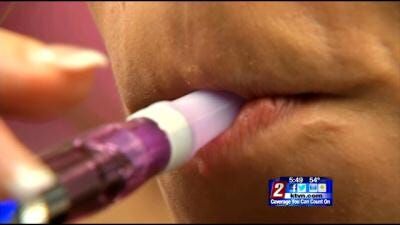
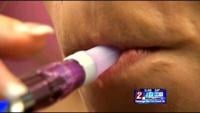
The Food and Drug Administration announced that teen use of e-cigarettes is an epidemic and says it will crack down on the sales and marketing of vaping products to minors. It says it could even halt the sales of flavored e-cigarettes.
"They treated these issues like a public relations challenge rather than seriously considering their legal obligations, the public health mandate, and the existential threat to these products," Scott Gottlieb, FDA Commissioner said.
Nathan Evans is the owner of The School of Vape in Reno. He says banning flavored e-cigarettes is the wrong move because adults use those products too. He says many of the industry's companies have already taken steps to market to adults, rather than to kids.
"Many companies harm changed their product labels, boxes, the way that they market to get away from that," Evans said.
Evans says flavored e-cigarettes are a valuable tool to help people quit smoking, and that more regulations will hurt the industry more than it will help kids. Especially, the ones who follow the guidelines.
"Anything can be an epidemic," Evans said. "Kids are going to do anything that's taboo. We try to check everybody's ID that walks through the door, we have multiple signs on the door, on our register, there's even a little calendar there that tells you how old they can be to buy the products."
E-cigarettes are not allowed on campus in the Washoe County School District but many students go off school grounds to vape.
"I vape because it really helps because I have a lot of stress going on," Isaac Amezcua, 17-year-old student said. "I have a lot of stuff going on at home and I have a lot of stuff going on outside of home."
Amezcua and his friends say vaping is a good alternative to smoking.
"It is but it's no different," Tino Tavita, 19-year-old student said. "Vape still has nicotine in it so it's no difference."
"I used to smoke two or three packs a day and it ain't cool and I don't like doing that," Amezcua said. "Vaping really does help a lot because it does have the nicotine. At the same time, you don't smell the cigarettes all the time."
The Centers for Disease Control and Prevention says tobacco use is on the decline among teenagers. Its studies show that vaping is the most popular use of nicotine products, with 12 percent of high school students using them. Mike Nakashima is the Assistant Principal of Student Services at Wooster High School. He says he agrees that companies should do more to keep kids from using their products. Especially, since flavored products are so popular among teens.
"When you have these vape juices that taste like candy, it makes it a lot easier to consume," Nakashima said.
The CDC says nicotine can be harmful to teens and young adults because their brains are still developing until age 25. It says nicotine can be harmful to brain development and could possibly damage lungs in the long-term.
"Those health concerns are also connected to mental health concerns," Nakashima said. "So many times, we see that substance use or abuse is connected to a change in the way students react to different crises in their life. Because vaping is so new, I don't think the education is out there as far as the negative effects that it has on a person's body."
Students who are caught with vaping products in school or within the line of sight of campus can face a variety of consequences, including suspension. If the substance has illegal drugs, officials will try to get the student help for substance abuse.
"There are those kids that there is a clinical dependency and we work to get those kids connected to the resources that they need to address that," Nakashima said.
Vaping devices also come in a lot of shapes and sizes. Many students prefer smaller devices because they can hide them easier. Some can be as small as a USB thumb drive or a smart watch.
"A student looks like they're talking into their Fitbit and they might actually be smoking on some sort of vape," Nakashima said.
Officials estimate that more than 2 million middle school and high school students used e-cigarettes last year, nationwide. The FDA sent out about 1,300 warning letters and fines to companies who sold to minors during an undercover sting, earlier this summer.