April 4 UPDATE:
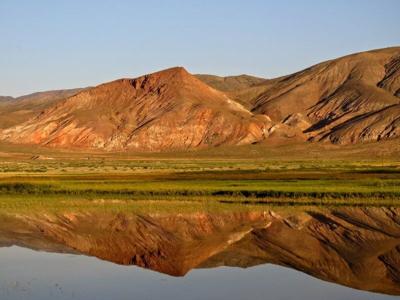
The U.S. Fish and Wildlife Service announced today it would immediately protect the rare Dixie Valley toad under the Endangered Species Act on an emergency basis. The toads face the possible threat of extinction from the construction of a geothermal power plant adjacent to their only home at Dixie Meadows, a hot spring-fed wetland in Churchill County, Nevada.
“This decision comes just in the nick of time for the Dixie Valley toads, which are staring down the barrel of extinction,” said Patrick Donnelly, Great Basin director at the Center for Biological Diversity. “We’ve been saying for five years that the Dixie Meadows geothermal project could wipe out these tiny toads, and I’m thankfully those concerns have been heard.”
The listing comes after five years of advocacy on behalf of the toad by the Center, including an endangered species petition and multiple lawsuits, one of which resulted in a settlement that led to today’s announcement.
Emergency listing is a rare step by the Service, which has only issued an emergency listing for one other species in the past two decades. Emergency listing takes effect immediately upon publication in the Federal Register and lasts for 240 days. Concurrently, the Service will publish a proposed rule to extend the listing beyond the initial period.
The proposed rule will be finalized within 12 months.
In November the Bureau of Land Management approved the Dixie Meadows geothermal project and the Center sued the agency shortly thereafter. A federal judge imposed a preliminary injunction to halt construction of the project by developer Ormat. In February the 9th U.S. Circuit Court of Appeals overturned the lower court. That case is pending.
“Ormat may be politically well-connected and have high-dollar lobbyists, but company officials can’t lobby their way past science,” Donnelly said. “The science is clear. This project poses a threat of extinction to this species. The Bureau of Land Management can’t be trusted to protect Dixie Valley toads, but the life-saving protections of the Endangered Species Act can save these animals from extinction.”
The Dixie Valley toad is one of more than 200 species of plants and animals that live in Nevada and nowhere else in the world.
-----------------------------------------------------------------
February 8 UPDATE:
A federal appeals court has lifted a temporary ban on construction of a geothermal power plant in Nevada opposed by a tribe and conservationists.
U.S. District Judge Robert C. Jones in Reno had granted the 90-day injunction last month sought by opponents of Ormat Technologies' project at the high-desert site bordering wetlands fed by hot springs.
They say the site is sacred and home to a rare toad being considered for endangered species protection.
Ormat said in its appeal last month it might be forced to abandon the project if it couldn’t begin construction by Feb. 28 about 100 miles east of Reno.
------
January 4th UPDATE:
A federal judge today halted the start of construction on the Dixie Meadows geothermal energy project in central Nevada. The judge found that the project posed significant risk of harm to the Fallon Paiute-Shoshone Tribe and the ecosystems there.
Today’s ruling from U.S. District Judge Robert Clive Jones responds to a Dec. 16 lawsuit filed by the Tribe and the Center for Biological Diversity against the Bureau of Land Management for approving the project. The lawsuit says construction of the geothermal energy project threatens to dry up hot springs that are sacred to the Tribe and form a huge wetland ecosystem that is an oasis in the Great Basin Desert.
“This project presents unacceptable risks to the Fallon Paiute-Shoshone Tribe and the Dixie Meadows ecosystem, and we’re thrilled the judge agrees,” said Patrick Donnelly, Nevada state director at the Center. “This injunction is the result of Ormat and the BLM playing fast and loose with the law to try to ram this project through.”
The wetlands at Dixie Meadows support a variety of wildlife, including the Dixie Valley toad, which lives nowhere else on earth. In 2017 the Center petitioned the U.S. Fish and Wildlife Service to protect the toad under the Endangered Species Act. That petition still awaits a final determination.Jones granted a 90-day preliminary injunction today, pausing the BLM’s approval of the project long enough for any appeals to be heard by the circuit court.
“This injunction means the bulldozers set to start demolishing Dixie Meadows this week have been quieted,” said Donnelly. “Tribal members, the Dixie Valley toad and everyone who loves Nevada’s biodiversity can breathe easier.---
RENO, Nev. (AP) — Conservationists and tribal leaders are suing the U.S. government to try to block construction of two geothermal plants in northern Nevada’s high desert that they say will destroy a sacred hot springs and could push a rare toad to the brink of extinction.
The lawsuit filed by the Center for Biological Diversity and Fallon Paiute-Shoshone Tribe says the project would turn a “pristine and unique location of ecological value and spiritual significance” into an industrial site.
It’s the latest public lands conflict pitting green energy production against potential harm to wildlife habitat or cultural resources in the biggest U.S. gold producing state, where legal challenges traditionally target things like hard-rock mining.
Environmentalists nationally have rallied around President Joe Biden’s ambitious renewable energy agenda, which embraces solar, wind and geothermal production.
Geothermal plants pump water from beneath the earth to generate steam to make electricity. The deeper they drill, the warmer the water is. The power plants produce significantly fewer greenhouse emissions than plants that burn natural gas or coal.
The lawsuit filed Dec. 15 accuses the Bureau of Land Management of illegally approving Ormat Technologies Inc.’s project in the Dixie Meadows about 100 miles (160 kilometers) east of Reno without the necessary environmental analysis.
It also says the agency is violating the Religious Freedom Restoration Act.
A judge has scheduled a Jan. 4 hearing in U.S. District Court in Reno to consider the groups' subsequent request for a restraining order to temporarily block initial construction work Ormat planned to begin as early as Jan. 6.
(Copyright 2022 The Associated Press. All rights reserved. This material may not be published, broadcast, rewritten or redistributed without permission.)