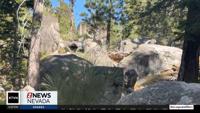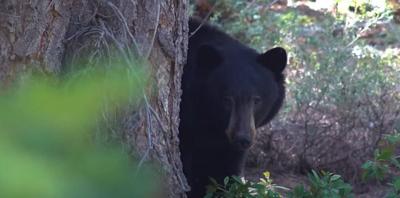
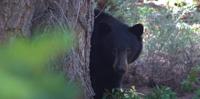
You may have noticed a lot more bear sightings over the last month or so. Some are coming into neighborhoods to find food before winter. Bears are going through hyperphagia, which is when they pack on the weight before hibernation.
"All bears care about is food,” Ashley Sanchez, Public Information Officer for the Nevada Department of Wildlife said. “Especially, this time of year. They are opportunistic. They're very food-driven and that's really all that's on their mind. They don't really want to see people or care about people who are around."
Bears are usually in search of fruit trees, garbage and even bird feeders. That draws them into urban areas. There were a higher number of calls for bear-sightings this year, partly because of a dry year.
"We had a drought year,” Sanchez said. “We were seeing a lot more bears in neighborhoods because not only were they trying to escape wildfires but, in general, food was just a lot harder to find."
Another possible reason for more sightings is the emergence of home security cameras and Ring doorbells. Wildlife is always around but people do not necessarily see it.
"What happens is people catch them on their Ring doorbells, so where people usually wouldn't know that wildlife was there, we're getting a lot more calls as people get Ring doorbells,” Sanchez said.
Approximately 10,000 bears live in the Sierra. One bear entered a 7-Eleven in Olympic Valley, California over the weekend. An employee caught the incident on camera and made noises to scare it away.
"She absolutely did what she was supposed to do,” Sanchez said. “She doesn't make the bear feel welcomed at all. She actually screamed at the bear. It sounds like she may have been making herself appear big. She was moving a lot. That was obviously a highly habituated bear where it was just being driven by food and it didn't have a whole lot of fear of humans."
Unfortunately, the increase of bears in urban areas has had deadly consequences for the animals. 41 bears have already been hit by cars in 2021. Last year, 24 bears got hit by cars.
"Be sure to be cautious while you're driving,” Sanchez said. “Especially, after dark. Even a huge bear is hard to see in the dark."
Some of the bears have collars and tags because wildlife agencies caught them in the past. Collars help learn more about the number of bears in our region, where they move around and what triggers them to some areas. The collars also give them data about how many are still roaming around. There are still a few in south Reno and there is activity in west Carson City.
"Our calls are starting to quiet down and we've noticed from our collar data that bears are starting to den but there are some that are still active,” Sanchez said.
Officials say residents should pick the fruit from their trees and secure their trash to keep bears away. Nevada’s bears can live in many places, including from Verdi through Douglas County.