As the seasons change and temperatures cool, motorists traveling on state highways throughout District 3 may experience a variety of challenging weather conditions from fog and rain in the valley to heavy snow in the Sierra.
Caltrans is providing travel tips for a variety of winter weather conditions anticipated in the coming months.
Dense Fog:
- Reduce your speed to ensure a safe stopping distance.
- Drive with headlights on low beam. Never drive with only the parking lights or fog lights on and avoid using high beams in fog.
- Use extra caution when crossing traffic or busy intersections, especially in dense fog. Lower your window and listen for traffic you can't see.
- Use windshield wipers and your defroster to improve visibility.
Rain or Flooded Roadways:
- Reduce your speed to avoid losing traction and ensure a safe stopping distance.
- Always drive with headlights on to improve visibility.
- Make sure your windshield wipers are in good condition.
- Don’t drive in water if you can’t see road markings. A vehicle can float in just one foot of water. It’s safer to turn around and find another route.
- Try to stay in the middle lane where flooding is less likely.
- Drive in the tracks of the vehicle in front of you. The vehicle ahead can displace standing water that’s on the road.
Snow:
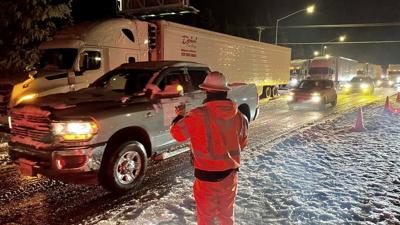
- Make sure your brakes, windshield wipers, defroster, heater and exhaust system are in top condition and fill your gas tank before entering chain control areas.
- Check your antifreeze and be ready for colder temperatures.
- Check your tires. Make sure they are properly inflated and the tread is in good condition. A minimum tread depth of 6/32” is recommended for driving in snow.
- Always carry chains and make sure they are the proper size for your tires and are in working order. Practice installing chains before you encounter snowy highway conditions.
- It is also a good idea to take along water, food, warm blankets and extra clothing for unanticipated travel delays.
During winter months, motorists may encounter chain controls in mountain areas.
When chain controls are established, signs will be posted along the road indicating the type of requirement.
There are three types of chain controls:
- Requirement 1 (R-1): Chains are required on all vehicles except passenger vehicles and light-duty trucks under 6,000 pounds gross weight and equipped with snow tires on at least two drive wheels. Chains must be carried by vehicles using snow tires. All vehicles towing trailers must have chains on one drive axle. Trailers with brakes must have chains on at least one axle.
- Requirement 2 (R2): Chains or traction devices are required on all vehicles except four-wheel/all-wheel drive vehicles with snow-tread tires on all four wheels.
NOTE: (Four-wheel/all-wheel drive vehicles must carry traction devices in chain control areas.) - Requirement 3 (R3): Chains or traction devices are required on all vehicles, no exceptions.
(Caltrans assisted in this report.)