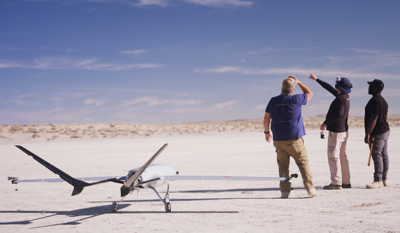
On behalf of the City of Reno and the Reno Fire Department, Iris Automation has received Federal Aviation Administration’s (FAA) approval to fly a small drone autonomously beyond the pilot’s line of sight, without any visual observers or the use of additional ground-based detection equipment.
The waiver covers a rural, unpopulated area south of Reno for the use of Iris Automation’s Casia X, an advanced detect and avoid solution that has more situational awareness than a human pilot. The drone uses Iris Automation’s patented technology to detect, alert and avoid non-cooperative aircraft.
Reno Fire conducts approximately 41 Water Entry Team (WET) rescues each year. Approximately 10% of these calls occur in the dark and require first responders to enter the water.
Using unmanned aircraft systems in a beyond visual line of sight (BVLOS) capacity will have a significant, positive impact on saving lives and reducing the resources required for these operations, putting fewer fire department personnel at risk.
Reno is a participant in the FAA BEYOND program, which is designed to assist the FAA in establishing safety and performance standards for BVLOS operation.
The City and Iris Automation have collaborated since 2019, first in the FAA’s Integration Pilot Program (IPP) and now in the BEYOND program, to test the use of autonomous drones during river rescue missions.
Comments Jon Damush, CEO, Iris Automation, “The BEYOND program is an important example of constructive government and industry cooperation, and a testament to the forward-thinking leadership of the City of Reno. We’re thrilled to work side by side with the FAA and our home city, delivering our technology to enhance the daily lives of our community and beyond. We appreciate the FAA leadership of this program and the many areas it is involved in to advance the industry.”
“We have been working with the FAA and our partners for years to develop our technology as a critical safety layer, helping to mitigate the risk of mid-air collisions and enable the integration of uncrewed aircraft into our national airspace. These efforts have led to the development of our 360 degree field of view Casia X on-board system - designed to provide an effective additional layer mitigation against mid-air collision risk at a size, weight and price point that enables our industry. We expect to see more of these waivers as the industry adopts autonomous flight and we look forward to leading the way and helping to realize this future vision.”