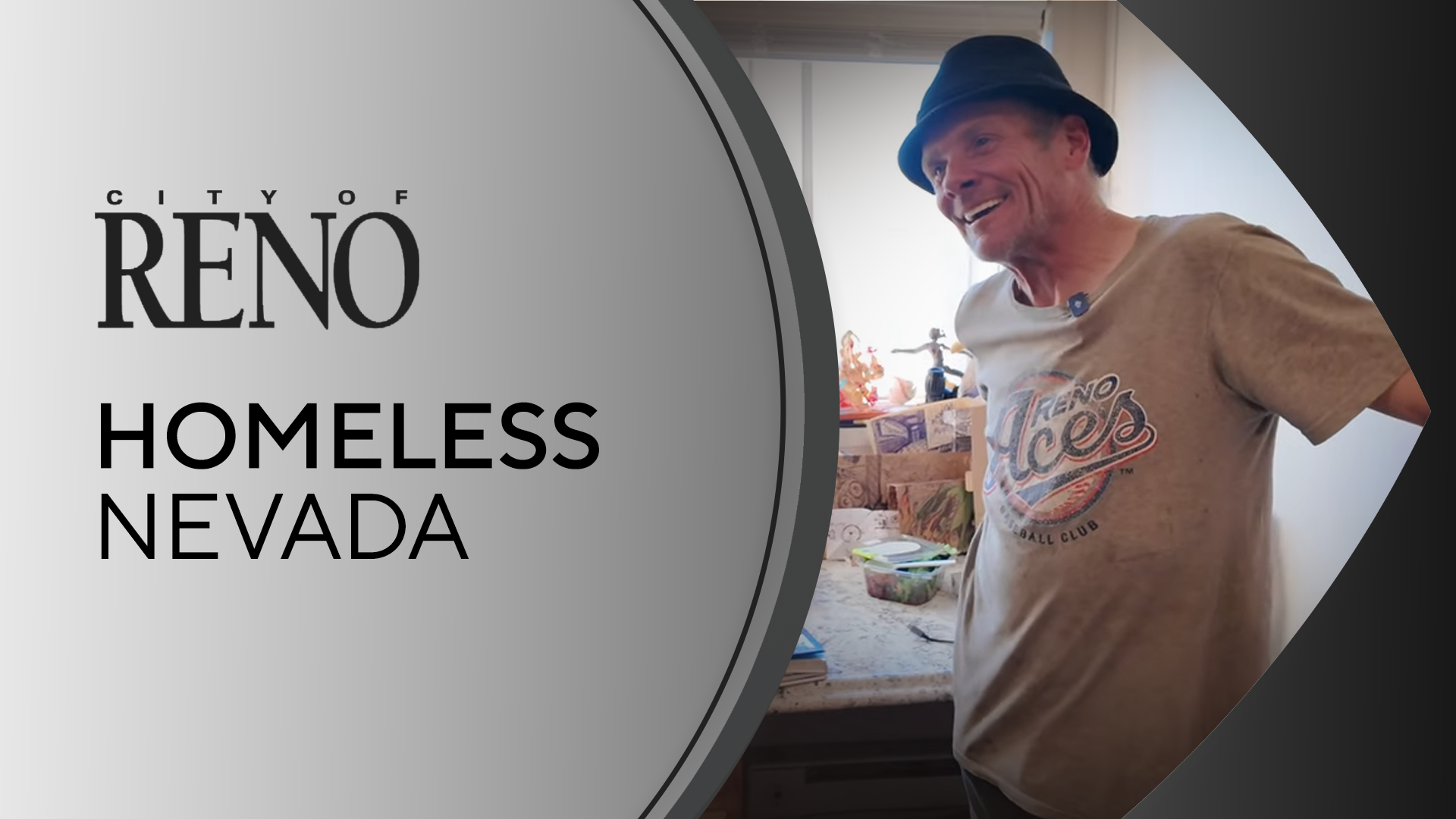
While covering Homeless Nevada, we often focus on the lack of low-income housing and how it makes it even harder for people to get into housing after they've become homeless.
This week we are airing a series of stories from the City of Reno – today we look at housing programs.
The City of Reno's annual report on homelessness looks at programs like housing and neighborhood development, which help with emergency rental and deposit assistance. This is for people who are about to become homeless to help them stay in their homes.
There's also the senior supplemental rental assistance program. It was approved in the 2023 legislative session and gives seniors up to six months of assistance if they are paying more than 30% of their income towards rent.
In the first year 1,084 seniors in Reno, Sparks, and Washoe County received money to help with rent.
The Reno Housing Authority supports the rapid re-housing pilot program which includes several steps to getting people into temporary and permanent housing - and essentially back on their feet.
This story is produced by the City of Reno:
---
Monica (M): "Hi, I'm Monica Kirk. I am the Director of Housing and Neighborhood Development for the City of Reno. The Rapid Rehousing pilot program is a program that the City of Reno started in coordination with Volunteers of America and the Reno Housing Authority."
Devin (D): "Programs like the Rapid Rehousing pilot program are important to Volunteers of America, because it gives us an opportunity to catch individuals who are otherwise potentially falling between the cracks as far as services go."
Heidi (H): "The Reno Housing Authority assists nearly 15,000 Washoe County residents through its traditional housing programs. Yet we know there are many more who need assistance. The Reno Housing Authority supports the Rapid Rehousing pilot program in two ways.
The first way is through a financial contribution to support half the salary of the service coordinator, who works directly with clients at Village on Sage. The second way that we support the program is by ensuring that clients are on one of our HA's waitlists prior to being housed at Village on Sage."
M: "[The] program is new and we just started housing people within about the last month. We have several folks now staying at the Village on Sage working with a service coordinator."
H: "Partnerships like this give RHA the opportunity to assist more families outside of our traditional programs. And it's these innovative partnerships that create a stepping stone from temporary housing into long term permanent housing."
D: "So specifically, this program works with individuals who are on a fixed or low income—who can't afford conventional rent—and they're eligible for a housing voucher, but they still have to take the time to wait for that voucher. So it allows us to support them in that intermediary time frame, so they can stay housed and have access to services.
I know specifically with this program, a lot of our folks are coming directly from the street and haven't had a rental in a very long time. Specifically, Mikey hadn't paid rent in over a decade, and so it was really exciting for him to come to the office with his money, and just celebrate that new experience that he got to have."
Mike: "Hi, I'm Mike, and, welcome to Village on Sage. Where - come on, let's go and look around. Oh, hello. Welcome. And just what we get, I got a brand new television. It's an Element. This is one of the finer, finer televisions. You're welcome to bring your transportation inside with you. Nobody cares as long as you keep it neat and tidy.
What can I tell you? The door's open, the train's right there, you know, so if you like trains - excellent. And this is where all the magic happens. This is where the happiness, you know, where we come to ground out. And this is just where, you know, we can be ourselves.
I know it's already a step up. It's cold out there. It's cold. And you don't want to be homeless in the high desert. Guys, if you don't have a room, you want to get a room. Think about Village on Sage. I know it doesn't look like all that from the entrance way, but you'd never judge a book by its cover, right?"
D: "The Village on Sage Street is ideal for the Rapid Rehousing Program because we're in a transitional setting. By means that they're month to month units. So they have their own space where they can find and build their comfort, and also build community while having access to a multitude of supportive services."
H: "[The] Program Service Coordinator ensures that clients receive the assistance they need as they transition out of homelessness and into Village on Sage, and then ultimately will help them through—navigate through our admissions process. The program also helps clients prepare for permanent housing and the adjustments that they're experiencing as they move out of homelessness and eventually into permanent housing."
M: "My hope for the future of this program is that we get folks housed and off the street, and they're into safe, permanent housing that they can afford in the long run."
H: "RHA hopes that clients assisted through the program can find respite from living on the streets; and ultimately find long term, safe, permanent, affordable housing."
D: "On top of just having that a unit here at the Village on Sage Street of their own, they also have access to community resources. Those resources include a community fitness room, a conference room, community lounge, a mail room, computer room, on site laundry, and onsite vending."
M: "A unit here at the Village - they're $555. So in this instance that somebody can afford $300, the program would fill in the $255 monthly, and that would keep them housed until their permanent unit came open. That would be subsidized to the amount of money that they make."
H: "RHA is always looking for opportunities to fill gaps in the affordable housing landscape, and it's a partnership like this where it's three community agencies came together to do just that."
D: "Volunteers of America is grateful to have the opportunity to partner with the City of Reno and Reno Housing Authority to run this pilot program and provide additional housing for folks who are on a fixed income and otherwise waiting for their permanent housing."
M: "The community can support this program through donating to Volunteers of America or making donations to the City of Reno. We have had a donation from some of our local housing champions of $20,000. That is going to help extend it a little bit also. So that's—those are the two ways that that folks can get involved and make donations to keep this program going."
---
Wednesday night on our 7:00 p.m. broadcast, we will look at the city's Community Court program. It helps people overcome obstacles like drug use and mental illness that may prevent them from having housing or employment.