
Medical student discovers rare kidney condition during an ultrasound class
What started as a routine classroom exercise turned into something far more personal for a medical student at the University of Nevada, Reno School of Medicine.
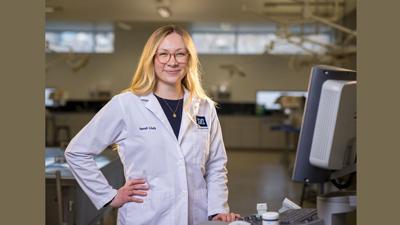
Hannah Schultz was in her second year at UNR Med when she volunteered as a practice patient during an ultrasound lab. Students, under faculty supervision, were learning imaging techniques by scanning one another. Schultz agreed to have her kidneys scanned.
Her right kidney appeared normal. When the probe moved to the left side, the image showed a large area of fluid buildup.
Faculty members took a closer look. Although the classroom ultrasound machines were not meant for diagnostic use, the image showed abnormal fluid accumulation. Schultz was advised to follow up with her primary care provider for additional imaging.
“I kept thinking, ‘Why am I 24 and just finding this out?’” Schultz said. “But sometimes it just doesn’t cause problems until it does.”
Schultz later learned she had a rare congenital kidney condition. Within weeks of that class, she underwent reconstructive surgery while continuing her preclinical coursework. The surgery was successful, but complications required an additional emergency procedure.
She continued her medical training while managing pain and recovery, studying for exams as she underwent treatment.
During her third year of medical school, with symptoms still present, Schultz chose to have a second, more extensive pyeloplasty. She spent several days in the hospital recovering.
Months later, she said her health has stabilized. The experience, she said, shifted her understanding of medicine.
“It completely changed my perspective,” she said. “Being on the patient side while learning how to be a doctor gives you insight you can’t get any other way.”
Before the diagnosis, Schultz planned to pursue microbiology and infectious disease, drawn to science and public health. Urology had not been a focus. That changed through her treatment and later during her surgery rotation, where she found she valued both procedural work and long-term patient relationships.
She credits her urologist, Christopher Tam, M.D., of Urology Nevada, as an influence during her recovery and exploration of the specialty. She also said Eric Kim, M.D., associate dean of clinical research and associate professor of surgery, supported her interest in the field.
Schultz said the experience reinforced the importance of self-care and gave her a perspective she believes will shape how she treats people in the future.
Looking back, she said volunteering that day altered the direction of her education and career.
“It never hurts to raise your hand and try something new,” she said. “You never know what you might discover about your health or about yourself.”