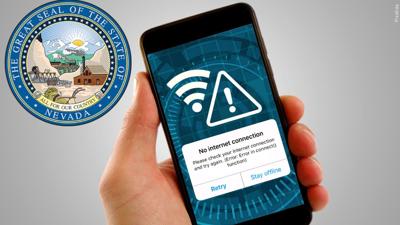




Nevada Governor Joe Lombardo has announced the state’s $375 million plan to expand reliable, high-speed internet access to every unserved and underserved area across the state.
The plan is outlined in Nevada’s Broadband Equity, Access, and Deployment (BEAD) Final Proposal, which has been submitted to the National Telecommunications and Information Administration for formal approval.
“Connecting every Nevadan to reliable, high-speed internet has been one of my top priorities since day one, and today we are delivering on that promise,” said Governor Joe Lombardo. “By making smart, targeted investments, we are ensuring that every family, every student, and every business has the tools to thrive in the 21st century. This is about keeping our word to Nevadans and building a stronger, more connected future for our state.”
The project, known as Phase III of the High Speed Nevada Initiative, is the result of broadband mapping, planning, and public input collected over several years.
Over the past 13 months, the Governor’s Office of Science, Innovation, and Technology (OSIT) conducted multiple open and competitive bidding rounds. More than 2,700 applications were submitted by 21 providers, leading to a process that officials say helped reduce costs and maximize taxpayer value.
“This plan ensures that every Nevadan, no matter where they live, will finally have access to reliable high-speed internet,” said Brian Mitchell, Director of OSIT. “Broadband is essential for economic development, public safety, work, education, healthcare, and opportunity. The investments we’re making today will pay dividends for decades, helping families, businesses, and entire communities thrive while ensuring taxpayer dollars are used wisely.”
The funding includes $170 million from BEAD, $100 million from the State Fiscal Recovery Fund, $52 million from the Capital Projects Fund, and $53 million in private investment. These dollars are in addition to the $275 million Nevada has already committed to middle-mile broadband infrastructure.
Construction on Phase III projects is expected to take place over the next four years. OSIT says a combination of technologies, such as fiber-optic, hybrid-fiber-coax, licensed fixed wireless, and satellite broadband, will be used to reach homes, businesses, and community institutions.
With BEAD award selections complete and the final proposal submitted, Nevada is now awaiting formal approval from the federal government, expected before the end of 2025.
More information on the proposal and a list of award recipients is available on the OSIT website at osit.nv.gov.