



Governor Lombardo has signed a bill that would help combat the threat of AI-generated child pornography and sexually explicit material.
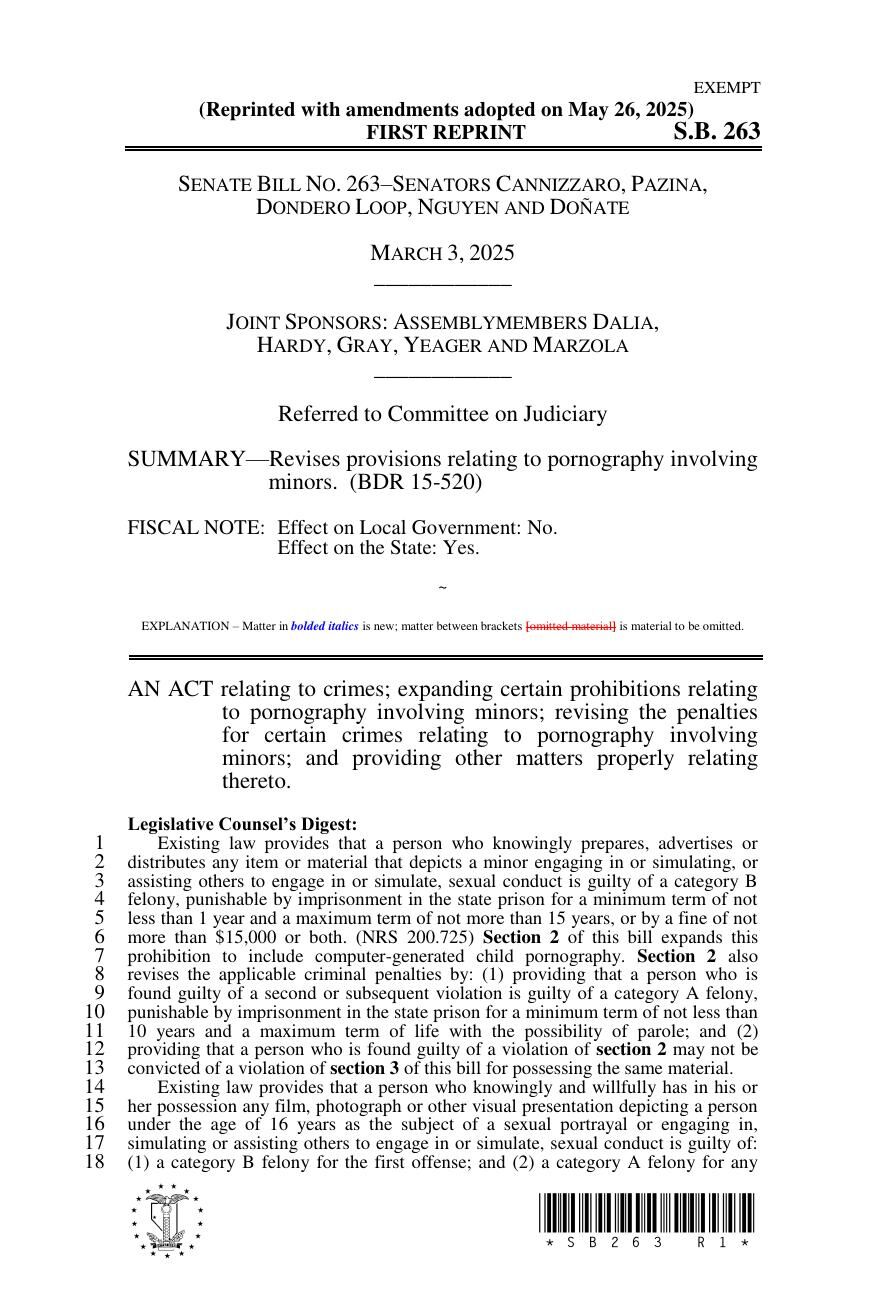
Nevada Senate Bill 263 also expands the definition of child pornography to include sexually explicit computer generated images of actual minors or the creation of such images where the subject is indistinguishable from a minor.
The bill was presented in both the Senate and Assembly Judiciary Committees by Senate Majority Leader Nicole Cannizzaro and Attorney General Aaron Ford. It passed the Senate 20-0 and the Assembly 35-4.
“I am pleased that Senate Bill 263 is now law, and I want to thank my bipartisan cosponsors and Attorney General Ford for their collaboration on this bill,” said Senate Majority Leader Nicole Cannizzaro. “This legislation will empower law enforcement to investigate and prosecute people who use AI technology to create pornographic and sexually exploitative materials involving children. We will now have better tools to go after bad actors and protect kids against abuse using rapidly evolving AI technology. This is a victory for children, families, and public safety.”
Lombardo signed the bill on June 6 - the legislation will take effect on October 1, 2025.
You can read the bill below -
MARCH 3, 2025:
Lawmakers introduced a bill today aimed at criminalizing child pornography and sexually explicit material generated by artificial intelligence.
Senate Bill 263 is being backed by Senate Majority Leader Nicole Cannizzaro as well as nine others.
Lawmakers say that AI generated child pornography is becoming a big issue in Nevada, and they think it will only get worse if it is not addressed now.
They are also looking to modernize existing laws, as they say some current laws are outdated.
"If we don't act now, we just won't have those tools to be able to protect children online, to make sure that children are not being exploited by AI technology for these purposes, and to allow law enforcement to go after the criminals who are pedaling this sort of material," said Senate Majority Leader Nicole Cannizzaro.
Senate Majority Leader Cannizzaro says current statutory definitions don't allow for the prosecution of AI child pornography.
By passing this bill, Cannizzaro and others believe it will make it easier on law enforcement to combat this activity, because it is becoming increasingly more difficult to determine what is real and what is fake.
Cannizzaro also wants punishments for possessing AI generated child pornography to match the penalties for possessing real child pornography.
"It should be equally illegal. It victimizes children, it exploits them for sexual purposes and absolutely should be against the law and this will allow for those same penalties to apply no matter where that image was generated," said Senate Majority Leader Nicole Cannizzaro.
Cannizzaro is confident this bill can pass as it is receiving bi-partisan support.
In order for Senate Bill 263 to become law, it has to be heard and voted on by the Senate Judiciary Committe, then passed on the Senate floor, passed on the assembly floor, and if it successfully makes it through those steps, it will reach the governor's desk for a signature.