




Carson City Health and Human Services is confirming a case of Hantavirus in the Quad-County region.
There is no current threat to public health.
To protect the confidentiality of medical information, CCHHS says it will not give any additional information about this case.
The Quad-County region includes Storey County, Lyon County, Douglas County, and Carson City.
Hantavirus is a respiratory infection that mainly occurs from breathing in particles of infected rodent droppings, urine, or saliva and can be fatal. According to the Centers for Disease Control & Prevention (CDC), 38% of people who develop severe respiratory symptoms may die from the disease.
Early symptoms of hantavirus infection can include fatigue, fever, and muscle aches. These may be accompanied by headaches, dizziness, chills, nausea, vomiting, diarrhea, and abdominal pain. As the infection progresses, later symptoms can develop, such as coughing and shortness of breath. If hantavirus is suspected, individuals should contact their healthcare provider immediately and inform them of any exposure to rodents, their waste, or nesting materials. Learn more about symptoms from the CDC.
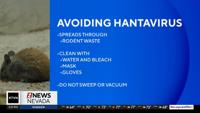
To reduce the risk of hantavirus, it is important to minimize contact with rodents and their habitats, especially when cleaning enclosed or infrequently used spaces.
* Do not sweep or vacuum the area if it contains urine, droppings, or nesting material.
* A solution of 1 part bleach to 9 parts water should be used when cleaning urine and/or droppings (1.5 cups bleach to 1 gallon of water).
* Spray the solution on areas with rodent droppings and leave for five minutes before wiping the area with disposable paper towels or cloth. Dispose of the waste in a sealed plastic bag.
* Wear gloves (i.e., latex, vinyl, rubber) and a face mask to avoid touching or breathing in viral particles.
* Identify areas where mice are, plug openings, and set traps; a deer mouse can fit through an opening the size of a nickel. Food should be stored in rodent-proof containers.
Rodents that can spread Hantavirus include the white-footed deer mouse, which inhabits Northern Nevada.
(Carson City Health and Human Services)