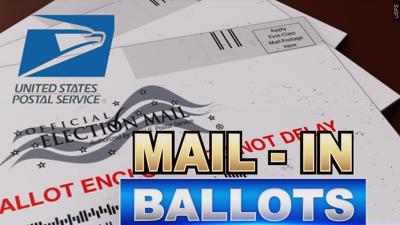
With Election Day approaching, the U.S. Postal Service says it is ready to handle ballots securely and on time, but voters who plan to mail theirs should not wait until the last minute.
The Postal Service recommends that domestic, nonmilitary voters mail completed ballots before Election Day and at least one week before they must arrive at their election office. The agency says its nationwide network is operating without major reported disruptions and that ballot delivery performance has been strong.
Through Oct. 9, 97.98% of ballot mail was delivered on time compared with the Postal Service’s service standards, according to the agency. During the 2024 general election, 99.6% of ballots mailed by voters reached election officials within three days.
“The Postal Service is confident and ready to deliver a successful Election Mail season,” said Postmaster General David Steiner. “[W]e share a common goal: instilling confidence in all Americans that their Election Mail will be handled securely – and delivered reliably.”
The Postal Service plans to begin additional measures Saturday, Oct. 24, to speed up ballot processing and transportation. Those efforts will continue through the last day each state's election officials will accept completed mail-in ballots as timely.
The measures include extra deliveries and collections, special pickups, dedicated sorting plans at processing facilities, and localized handling and transportation of ballots. The agency said the procedures are intended to move ballots more quickly when they can be identified as election mail.
Adrienne Marshall, the Postal Service's director of Election and Government Mail Services, said postal employees are preparing for the election and voters also have a role in getting ballots where they need to go.
“Our Postal Service employees are diligently working to process and deliver ballots on time, and we ask that voters do their part and mail early,” Marshall said.
Voters also should pay attention to postmarks. The Postal Service said its postmarking practices have not changed, but transportation adjustments can mean mail does not reach its originating processing facility on the day it is collected. Because postmarks generally are applied at those facilities, the date stamped on a ballot envelope may not match the day it was picked up by a letter carrier, dropped off at a post office, or placed in a collection box.
Voters who want the postmark date to match the day they mail their ballot can take the completed ballot-return envelope to a Postal Service retail location and request a manual postmark at the counter. The service is free.
The Postal Service also said it is not implementing or enforcing the Ballot Mail for Federal Elections rule for the 2026 general election. Its processes and procedures will remain consistent with those used in previous election cycles.
Security is another part of the effort. The U.S. Postal Inspection Service works with federal, state, and local agencies to protect election mail and election offices. Inspection Service personnel will observe ballot processing and delivery operations, review physical security and report concerns to postal leadership for possible corrective action.
“The Postal Service has a long and strong record of successfully delivering Election Mail,” said Postal Service Board of Governors Chair Amber McReynolds. “That record is not accidental, and it reflects extensive planning, close coordination with scores of stakeholders, and the training and commitment of hundreds of thousands of postal employees who understand the importance of this responsibility.”
Anyone who wants to report suspicious mail or a security incident involving election mail can call the Postal Inspection Service's national hotline at (877) 876-2455 or visit uspis.gov/report to file a report.
Voters can find additional guidance on election mail procedures and security at usps.com and uspis.gov/election-mail-security.