

Water used once doesn’t necessarily have to be water used up. In Northern Nevada, a project years in the making is now moving into construction with an ambitious goal: to give recycled water another life and eventually make it part of the region’s drinking water supply.
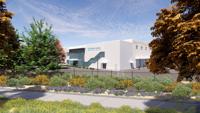
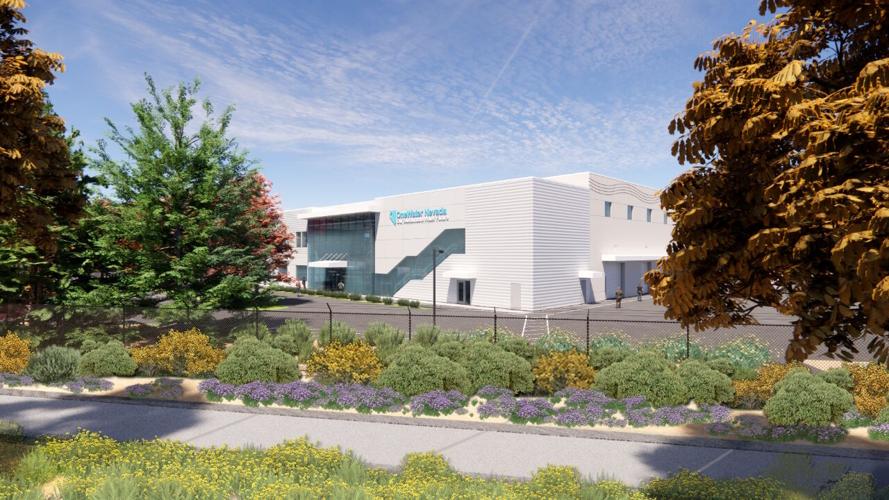
The City of Reno and Truckee Meadows Water Authority broke ground Aug. 31 on Nevada’s first indirect potable reuse facility, marking a major step for a project that has been more than 15 years in the making. According to the City of Reno, the Advanced Purified Water Facility will eventually be capable of producing up to 2 million gallons of purified water a day.
The $221 million facility is being built at the corner of Military Road and Lear Boulevard as part of OneWater Nevada, a regional collaboration involving Reno, Sparks, TMWA, the Truckee Meadows Water Reclamation Facility, Washoe County, the Western Regional Water Commission-Northern Nevada Water Commission, and the University of Nevada, Reno.
The basic idea is straightforward, even if the technology behind it is not.
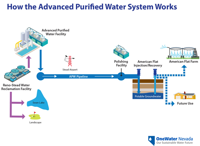
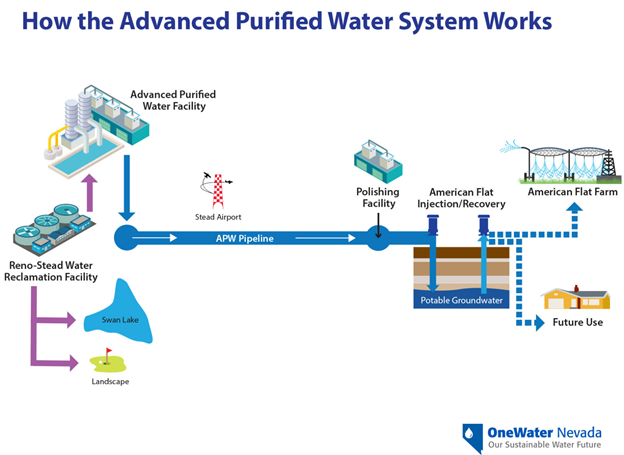
Recycled water from the Reno-Stead Water Reclamation Facility will be sent to the new facility, where it will undergo additional treatment using a series of purification processes. The system will use ozone-biological activated carbon, along with additional treatment designed to remove per- and polyfluoroalkyl substances, commonly known as PFAS or “forever chemicals.”
The purified water will then be pumped into an underground aquifer north of the Reno-Stead Airport, where it will be stored for future use.
Initially, the water will be used for irrigation and undergo additional testing before it can be incorporated into the regional water system.
That timeline is important because the project is not simply sending recycled wastewater straight to people's taps. The facility will produce A+ Advanced Purified Water, a designation from the Nevada Division of Environmental Protection, after going through the state’s regulatory review.
The project is intended to create a locally controlled water resource for the Truckee Meadows and reduce the region’s reliance on the Truckee River system. TMWA serves more than 475,000 people across Reno, Sparks, and Washoe County.
The technology was chosen with Northern Nevada’s inland location in mind. Unlike conventional reverse osmosis systems, the ozone-biological activated carbon process does not produce a brine concentrate that needs to be discharged. The city also says the approach offers lower capital and operating costs and reduced energy requirements.
The project’s roots extend well beyond the groundbreaking.
At the University of Nevada, Reno, environmental engineering Professor Krishna Pagilla and colleagues at the Nevada Water Innovation Institute spent nearly a decade researching water reuse and potable reuse technologies.
Pagilla joined UNR in 2016 and helped build the scientific foundation for the region’s efforts to develop a future drinking water source from highly treated wastewater.
That work also trained people who are now part of the region’s water industry.
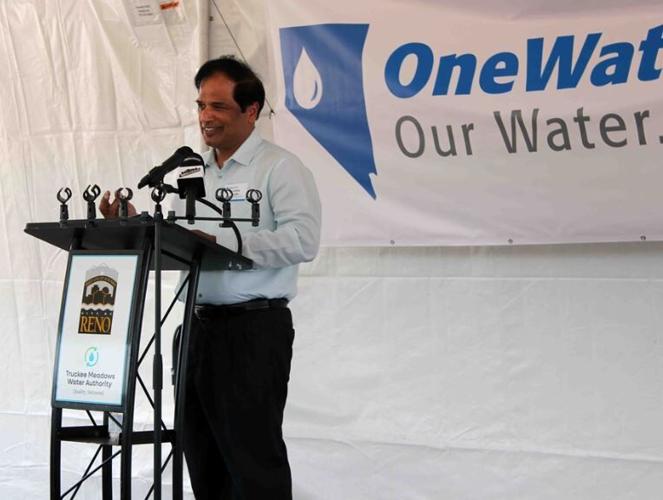
“We educated so many students on this project over the last 10 years,” Pagilla said at the groundbreaking.
“We had close to 40 students work on this project, and they are in the community making an impact,” Pagilla said.
Among those former students are Lydia Teel, TMWA’s emerging resources program administrator, and Angel Lacroix, a TMWA senior design engineer.
The project also received roughly $128 million in State Revolving Fund financing from NDEP. The state agency worked with the project team as Nevada developed its regulatory framework for advanced purified water.
“This project is poised to become Nevada’s first potable reuse facility, making today an important milestone for our entire state,” Sparks Councilmember Paul Anderson, who also serves on the TMWA board and the Western Regional Water Commission, said at the groundbreaking.
Construction is expected to continue through fall 2029. An on-site Education Center is planned to open alongside the facility, allowing the public to learn more about the purification process and its safety.
For now, the project is entering its construction phase. The years of research that helped make it possible are giving way to the next test: building a new water source that could eventually become part of how the Truckee Meadows gets its drinking water.
(The City of Reno and the University of Nevada, Reno’s Nevada Today, contributed to this story.)