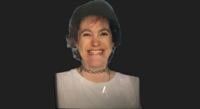
Judith Avilla's home base is Reno, but she travels the world with her husband Mike.
"I think I'm a gypsy at heart because I love to travel," she said. "We've been married for a little more than six years and we've made it our quest to go wherever we could go. We took a cruise that was 58 days through South America, we did the whole contour of the continent, stopped at 26 ports, it was absolutely beautiful."
A few years ago, she noticed her vision wasn't what it used to be.
"Doctors kept telling me I needed to have cataract surgery," she said. "Well, I wasn't about to do that, I only have two eyes and my eyes are precious. So I waited and waited until last year when I decided I think I should do it because things are not clear."
Her research led her to Dr. Matthew Mills at Eye Care Professionals in South Reno. He's been doing cataract surgery for decades and says technology just keeps getting better.
"That's the wonderful thing about ophthalmology, and one of the things that drew me to it as an up-and-coming medical student, was I saw the technological advancements that were ongoing and continue to this day," Mills said. "We have advancements in this field constantly being brought to our operating room, to our offering of what we can do for patients."
For the last year he's been using something called a Light Adjustable Lens.
"The thing that makes that special is it's the first lens ever in history that we have the ability to fine tune and adjust the power of that lens after it sits inside the eye after surgery," he said. "For years we've had success with standard lenses, but those lenses are fixed; once they're in, we've done the our calculations and we do the best math and measurements we can, but the outcome and the vision is fixed. This lens, we have the ability to set them in front of a machine that uses a special wavelength of ultraviolet light that reacts with the molecules inside the lens that we can adjust and fine tune the power."
The surgery, he says, usually takes no time at all.
"It's simple, it's easy, it only takes about 15 minutes," Mills said. "There's no pain; I have a very good anesthesiologist that works with me and everybody is relaxed and happy. The usual scenario is when we get finished with a case and go to remove the drapes and say and say we're done, the patients are generally saying okay, I was waiting for you to start."
He says twice as many patients are seeing 20/20 without correction with this new lens.
"The optical characteristics of this lens allows for greater depth of focus so we have patients that can see at distance but also can see at the computer and read," Mills said. That's a remarkable and unique property."
Avilla had her first surgery last October.
"It's it's been absolutely fabulous, I see so clear," she said. "I told him after the first eye, 'Dr. Mills, I can see the small letters in my bible, I'm so excited! I can see everything and everything is so bright and clear. No more contacts, no more glasses and I'm really happy.'"
Now the focus is on planning her next trip.
"I'm going to be 80 in December so we're planning a trip, probably to New Zealand or Kauai," she said. "I don't know where but we're going somewhere."
Not everyone is a candidate for this surgery but Dr. Mills is collecting data on the procedures he's done as part of a national study.
"This is one of the most successful surgeries in all of medicine," he said. "It's incredibly gratifying and it's not lost on me. The whole reason I went into this field is to take people that have impairment and to be able to restore that and give them back their best vision."
More information: https://renoeyecare.com/