
A new study reveals that lab-made dairy proteins may not behave the same as natural whey in the human gut, raising questions for the food industry.
Researchers at the University of Nevada, Reno, have identified structural differences between synthetic and cow-derived dairy proteins, calling into question claims that lab-grown versions are “identical to” natural milk proteins.
The findings, published in Microbiology Spectrum, could influence how the food industry communicates the nutritional equivalence of animal-free dairy.
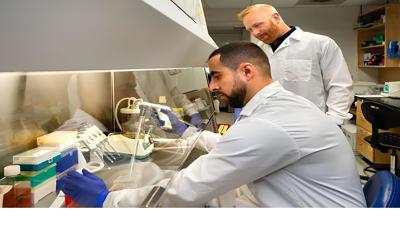
The study, led by doctoral candidate Matthew Bolino and assistant professor Steven Frese, found that although both lab-grown and cow’s milk whey share β-lactoglobulin as a main component, their overall protein composition and sugar structures differ. These molecular differences may influence how the proteins interact with bacteria in the human gut.
“Functionally, they behave like whey and taste like whey,” Frese said. “But at the molecular level, they are decorated differently, and those decorations, called post-translational modifications, appear to influence how our gut microbes respond.”
Lab tests showed that while cow-derived whey contained a mix of proteins including α-lactalbumin, albumin, and casein, the yeast-derived version was nearly 98% β-lactoglobulin, with little diversity.
When introduced into a simulated gut environment, cow’s milk whey supported a more diverse community of bacteria. The synthetic version led to lower microbial diversity.
“Lower diversity isn’t necessarily bad,” Frese said. “But what matters is that we now know these proteins are not identical in how they interact with our biology. That is a conversation the food and nutrition industry needs to have.”
The research team used a three-part methodology: analyzing protein composition with mass spectrometry, examining sugar molecules attached to proteins with the help of Turkish collaborators, and testing gut microbe responses using a fecal fermentation model developed at the university.
“This research wasn’t about saying one protein is better than the other,” Frese said. “It was about understanding whether they are truly interchangeable. If we are going to introduce novel proteins into the food supply, we need to understand how they behave once they are in the body.”
Bolino, the study’s lead author, conducted experiments tied to his doctoral research on how small molecular differences in food affect the gut microbiome.
“I’m incredibly grateful to have contributed to a study of this scale, working alongside such a multidisciplinary and international team of scientists,” Bolino said. “The experience not only deepened my scientific skills but also taught me the value of diverse perspectives.”
In addition to researchers from the University of Nevada, Reno, the study included scientists from Çanakkale Onsekiz Mart University, Hacettepe University, and Karabük University in Turkey. Support came from the National Institute of Food and Agriculture, the National Institute of General Medical Sciences, and several university departments and programs.