


















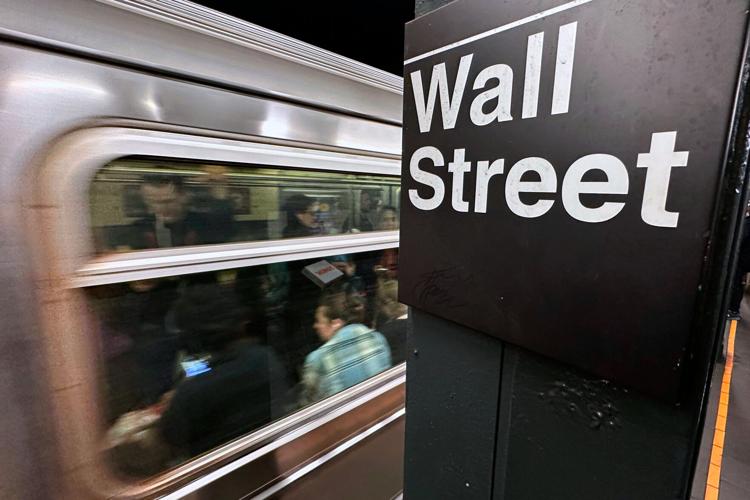



NEW YORK (AP) — Most of Wall Street rose Tuesday, even as stocks of computer chipmakers continued to tumble worldwide. Oil prices, meanwhile, eased further from the two-month high they hit last week.
The S&P 500 added 0.2%, but the modest move masked big swings underneath the surface. The Dow Jones Industrial Average jumped 537 points, or 1%, while the Nasdaq composite slipped 0.2% after briefly dropping 9.3% below its record set last month.
The majority of the U.S. market rose after more companies delivered stronger profits for the spring than analysts expected. Coca-Cola climbed 5% after its revenue rose 7% despite what CEO Henrique Braun called “a dynamic consumer landscape.”
Sherwin-Williams rallied 8.3%, and Illinois Tool Works rose 3.6% after both likewise reported stronger earnings for the latest quarter than analysts expected. Stock prices generally follow the trend of corporate profits over the long term, and expectations are high for this most recent round of reports with the U.S. stock market still near its all-time high.
Such expectations are weighing particularly heavily on stocks of chipmakers and other companies that have been huge winners from the boom in artificial-intelligence technology.
Micron Technology’s stock came into the day having more than tripled for the year following gangbuster growth, for example. During the three months through May 28, its revenue more than quadrupled from a year earlier.
But worries are rising about whether such growth is sustainable. Big spenders on computer memory could pull back on investments if AI does not produce as much profit or productivity as promised. Lower-cost AI models from China could also mean less demand for memory and computing power than earlier expected.
Micron dropped 8.9% and was the heaviest weight on the S&P 500. Others also helping to keep the market in check were Advanced Micro Devices, down 8.1%, and Applied Materials, down 7.8%.
All told, the S&P 500 rose 15.60 points to 7,428.78. The Dow Jones Industrial Average jumped 537.24 to 52,747.32, and the Nasdaq composite fell 55.17 to 24,876.91.
The losses for chip stocks were even worse earlier in the day in other markets worldwide.
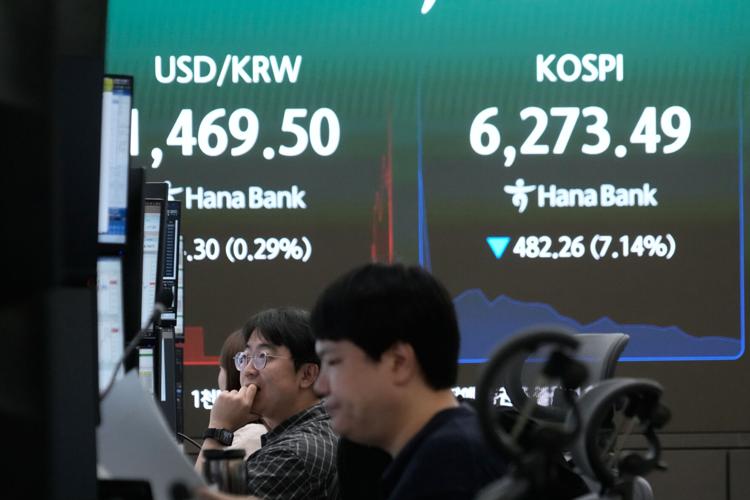
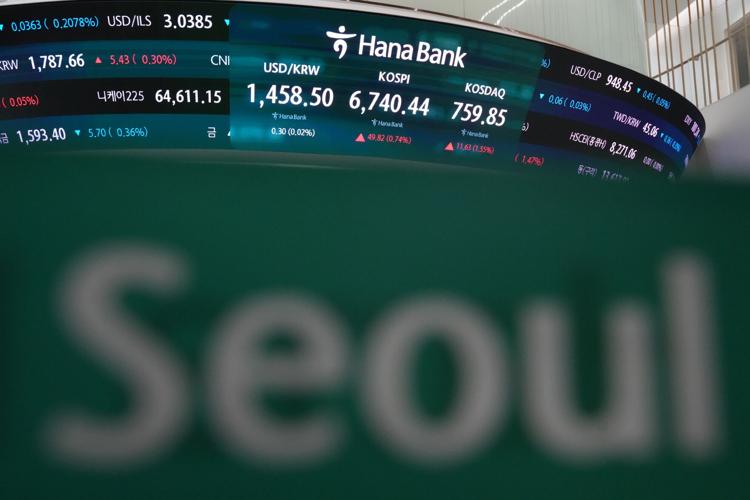
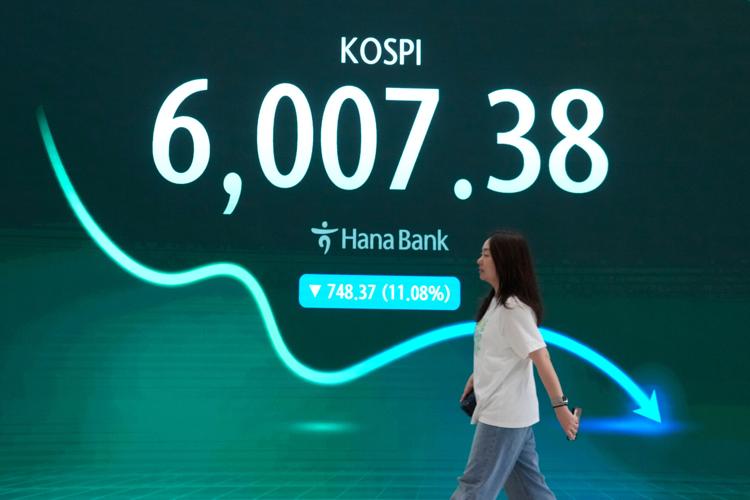
Sharp drops for SK Hynix and Samsung Electronics dragged South Korea’s Kospi index down 10.8%. The market’s losses were so big that trading was temporarily halted at times in Seoul.
“We believe the market was likely spooked by the progress of China’s chipmaking equipment capabilities, and was worried that this progress would threaten the competitive position of global chipmaking and chip equipment leaders,” said equity analyst Jing Jie Yu of Morningstar.
“That said, we believe the sell-off today is largely a knee-jerk reaction and overdone,” he said. The dominant position of global chipmaking leaders is unlikely to be threatened meaningfully, he said.
Several huge spenders on AI chips and data centers are scheduled to report their latest quarterly results this week, which could offer updates on how much they’re planning to invest. Meta Platforms and Microsoft are reporting on Wednesday, while Amazon is due on Thursday.
Because AI superstar stocks have grown so big, their movements carry more weight on the S&P 500 and other indexes than many other companies. But the broad U.S. market could hold up despite their swings if other, less-loved areas are able to keep rising. It’s a rotation that some strategists have suggested could be healthy for the overall stock market.
In the oil market, the price for a barrel of Brent crude to be delivered in October fell 4.4% to settle at $82.08.
It’s been falling since late last week, when the price for a barrel to be delivered in September briefly shot as high as $102.
Pushing up on prices have been worries that worsening fighting in the Middle East could slow the global flow of oil. On the other side, though, are hopes that the United States and Iran could still negotiate something to allow oil tankers to use the Strait of Hormuz to move crude.
Lower oil prices helped to ease Treasury yields in the bond market. The yield on the 10-year Treasury fell to 4.60% from 4.65% late Monday.
A weaker-than-expected reading on confidence among U.S. consumers also weighed on yields. Fewer consumers are saying they feel good about current business conditions, according to the latest survey released by the Conference Board Tuesday.
The drop in oil prices helped push traders to trim their bets that the Federal Reserve could announce a hike to interest rates following its latest meeting on Wednesday. They’re forecasting a 31.5% probability, down from more than 36% a day before, according to data from CME Group.
Higher rates could keep a lid on inflation, but they would also slow the economy by making it more expensive for U.S. households and businesses to borrow. Long-term mortgage rates have already hit their highest level in nearly a year, chilling the housing industry.
AP Business Writers Chan Ho-him, Elaine Kurtenbach and Matt Ott contributed.