


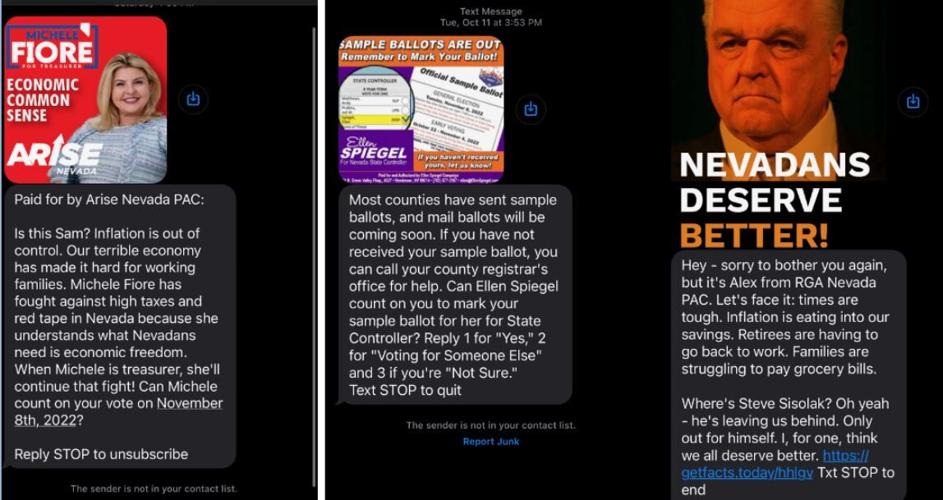
“They are a pain,” said Susie DelPorto of Fernley. “I've lost count how many I get a day.”
"That's all they want is your money,” said David Dane of Reno. “They won't want to talk to me the day after the election."
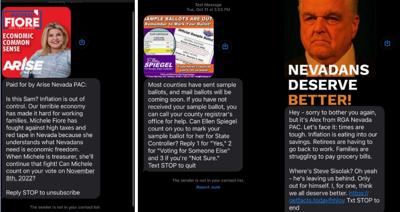
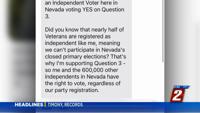
Texts from the left, the right, for Governor, for Senate, for ballot questions and more. If it is on the ballot, chances are it is also on your phone.
"I’m exhausted,” said Dane. “I'm tired of it. I'll be happy when the election is over.”
Many wonder how campaigns know a voter’s cellphone number. One way is if you have ever signed a petition or made a campaign donation and provided your number.
“Those lists can be purchased and used,” said Fred Lokken, Professor of Political Science at Truckee Meadows Community College. “The Holy Grail right now is cell numbers.”
However, the easiest way campaigns get your information is when you register to vote. Some think their voter information is private, however, that is not the case.
“Many could be surprised to know that voter registration is not protected,” said Lokken.
"Voter data is public data,” said Jaime Rodriquez, Interim Registrar of Voters of Washoe County.
Political parties frequently reach out to county registrar's offices for voter data including Washoe County. The office must provide the information. It's the law.
“Through statute, parties are entitled to a certain number of free voter lists per year,” said Rodriquez.
Campaigns often exceed the number of free voter lists so they will ask for more. That comes at a cost.
"It is a penny per name because those lists can be quite cumbersome for us to pull,” said Rodriguez.
If you want to protect your information at least here in Washoe County you can be a 'confidential voter'. However, it will take some effort from you to make that happen.
"They would have to come into our office and fill out the form or they can contact us and we can send them the form and they can send it back to us,” said Rodriguez. “It is not something on the voter registration application."
As for the texts, Lokken says they are the most direct way to reach a voter. However, similar to TV advertisements, most people don't like them.
"95% of Americans hate all of it,” he said. "Whether it's political or telemarketing, they see it as the same. It's invasive and it's not what they have a cellphone for."
Regarding of these texts messages, voters have a message of their own.
"Please, stop,” said DelPorto. “Please stop."