

Reno continues to see a housing shortage, and the cost of housing is too high.
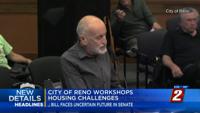
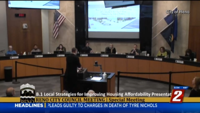
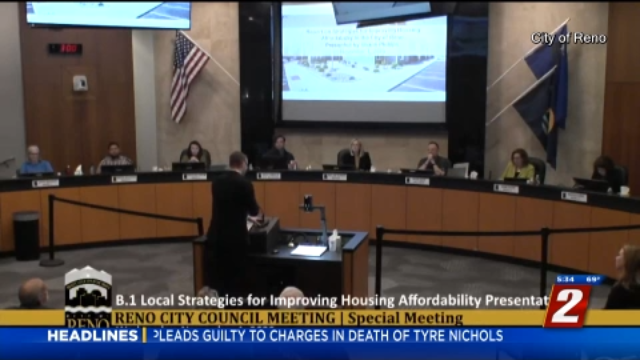
To address the continuing housing challenges, the Reno City Council hosted a workshop with urban planning and policy experts on Wednesday.
According to the city's urban planning expert, the housing problem in Reno results from a perfect storm of pressures brought on by COVID-19, low housing inventory, high cost of materials, and inflation. Reno Vice Mayor Devon Reese says these conversations are essential for developing strategies to provide more housing to moderate to low-income earners.
"We want to make the region where people can come and live. We want to make sure that our teachers and our nurses and our hospitality workers have stable housing," said City of Reno Vice Mayor and at large City Councilmember Devon Reese.
Reno has diverse, complex housing challenges that were raised during the public comment periods during Wednesday's meeting.
"People my age who have owned their homes for many years want current low density dominated by single families to continue indefinitely, yet 54% of our neighbors rent. We can't continue to take away housing from them," said a Reno resident.
Residents at the meeting expressed their opposition to changing zoning laws to provide more affordable housing.
"Single family zoning is a promise from the city that the neighborhood will not be densified with apartment buildings and ADU's," said another Reno resident.
"Urban infill" is a potential solution that can help moderate earners gain better access to viable housing options. This approach involves the insertion of new housing units into existing and already approved subdivisions. It's one of the many strategies that the Reno City Council is considering to address the ongoing housing challenges.

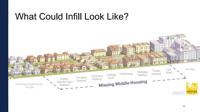
"Right now each of the areas has particular zoning. Some of it is single family, so really one unit per plot of land. Other areas is much higher density, so we're just talking about what is the right density mix for our region," explained Reese.
The city's Housing and Neighborhood Development Director Monica Cochran Kirch has pointed out that housing prices have been rising at a faster pace than income levels. As a result, a growing number of renters are experiencing a significant burden, with over 60% of them now paying more than 30% of their income towards housing costs. This is a significant jump from the 46% reported just six years ago
To assist with the city's ongoing efforts to address the housing challenges in Reno, the City Council invited urban planner and policy expert Shane Phillips from UCLA to provide recommendations on zoning changes.
Phillips is the author of “The Affordable City: Strategies for Putting Housing Within Reach (and Keeping it There)"
"This is really about identifying high level barriers for affordability and then opportunities for reform and emphasizing local action as much as possible," said UCLA Lewis Center for Regional Policy Studies Housing Initiative Project Manager Shane Phillips.
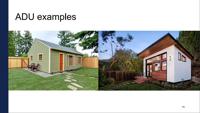
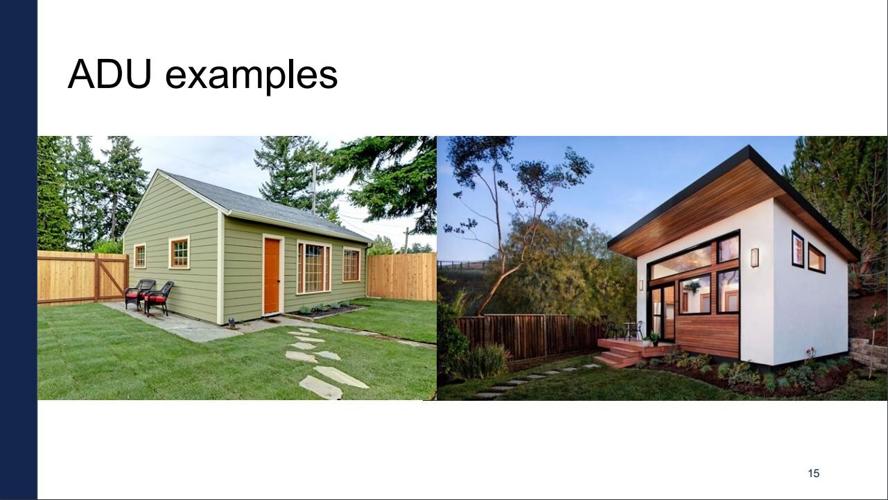
Another idea discussed to address the housing challenges in the city is to allow more accessory dwelling units (ADUs). ADUs are small living quarters that can be built on a property and are colloquially referred to as "granny houses." By allowing more ADUs, homeowners can generate additional rental income while simultaneously providing more affordable housing options for low to moderate-income earners.
"Where they would be appropriate, whether or not a neighborhood wants them or not is a big concern," said Reese.
On a positive note, Reno leads the state with most affordable housing units in the pipeline to be built.