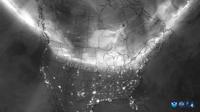
For the first time in roughly twenty years, a severe geomagnetic storm took place last week, producing an impressive light show from the Aurora Borealis. While not quite as impressive as in person, NOAA’s JPSS Satellite Program was able to capture the aurora on May 11th from space. These satellites are called polar satellites and are crucial in weather analysis and prediction. Both NASA and NOAA play a role in their orbit.

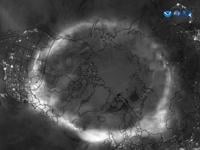
The aurora is seen as a ring, and is bright white on the satellite images above. The aurora could be seen much further south than usual last week, thanks to the severity of the storm. In fact, the aurora was even reported in Florida and Mexico. A rare event indeed. Auroras were also reported in the southern hemisphere.

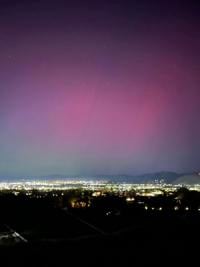
The sun released multiple coronal mass ejections from May7th-8th. They reached the earth’s atmosphere on May 10th. The chemical reaction between the sun’s particles and oxygen and nitrogen creates all of the pretty colors. As the sun’s particles reaches the earth’s atmosphere, they are deflected toward the poles.