















The ongoing American-Israeli war with Iran, for all its complexity and global effects, boils down to a single question: Who can take the pain the longest? A surge in oil prices points to what may be Iran’s most effective weapon and the United States’ biggest vulnerability in continuing the campaign: Damaging the world economy.
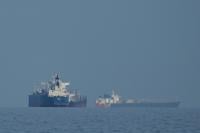
Wednesday’s major developments include Iranian attacks against commercial ships around the Strait of Hormuz and Dubai International Airport, escalating a campaign of squeezing the oil-rich Gulf region as global energy concerns mount.
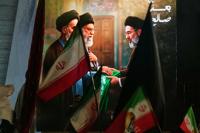
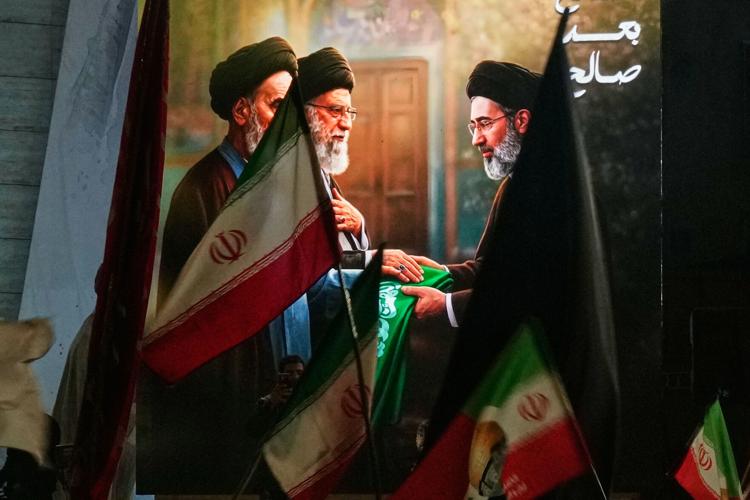
The U.S. campaign of airstrikes in Iran is now in its 12th day with no end in sight. A U.S. commander says artificial intelligence has helped the military hit more than 5,500 targets in the country. An Israeli intelligence assessment also indicates that Iran’s new supreme leader, Ayatollah Mojtaba Khamenei, was wounded at the start of the war.
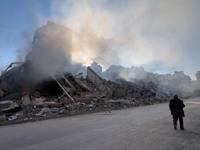
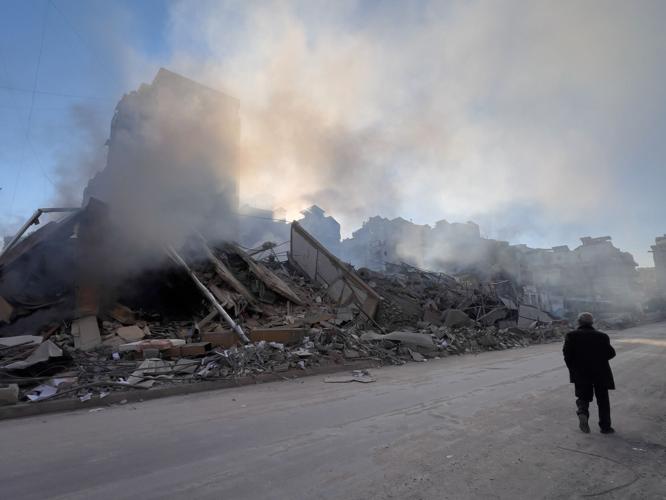
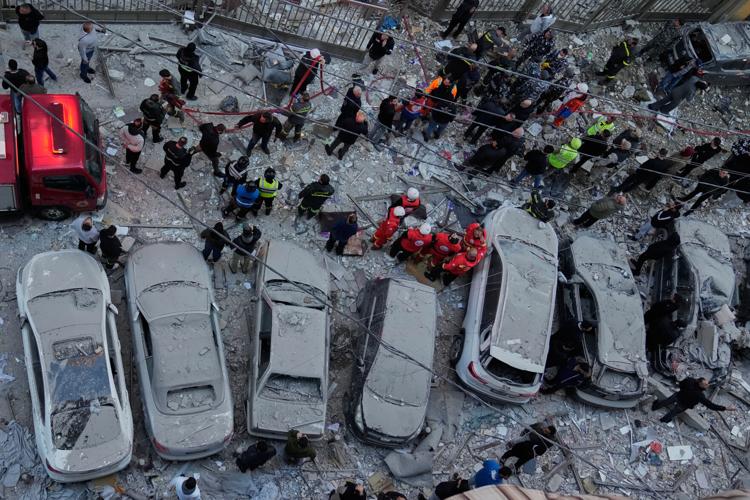
Witnesses in Tehran said they heard loud airstrikes and heavy anti-aircraft fire Wednesday, and columns of smoke made the sky overcast as a layer of gray dust settled over the city. The air is filled with the distinctive smell of burnt powder and gasoline. They spoke on condition of anonymity to avoid reprisal.
The Israeli military is also striking Iran and its militant ally Hezbollah in Lebanon, where more than 800,000 people have been displaced by the fighting.
The war has killed more than 1,300 people in Iran, at least 600 in Lebanon and 12 in Israel, according to officials in those countries. The Pentagon said Tuesday that about 140 U.S. service members have been wounded, eight of them severely, and seven soldiers killed.
Here's the latest:
UN Security Council demands Iran halt ‘egregious attacks’ on its Gulf neighbors
The 13-0 vote in the U.N.’s most powerful body reflects the isolated position Iran finds itself in, as it fires missiles and drones in retaliation for the ongoing U.S.-Israeli strikes.
China and Russia — two Iranian allies — abstained from the Wednesday’s vote, allowing it to be approved without using their powerful veto block it.
The draft resolution, supported by more than 130 member states, condemns Iran’s attacks on Bahrain, Jordan, Kuwait, Oman, Qatar, Saudi Arabia and the United Arab Emirates as a violation of international law and “a serious threat to international peace and security.”
“The message is clear,” said Bahrain’s U.N. Ambassador Janal Alrowaiei. “The international community is resolute in rejecting these Iranian attacks against sovereign countries that are threatening the stability of the peoples, especially in a region of strategic importance to global economy, energy, security, and security of global trade.”
Trump says of Iran’s new leadership: ‘Let’s see what happens to them’
The U.S. president said to reporters while making a stop in Ohio that the U.S. “knocked out twice their leadership” in Iran, and added: “Now they have a new group coming up. Let’s see what happens to them.”
Hezbollah and Israel trade nighttime attacks
Hezbollah launched dozens of rockets at Israel on Wednesday night, the Israeli military said. One rocket hit a house near the town of Karmiel, lightly injuring two people, according to Israeli rescue services.
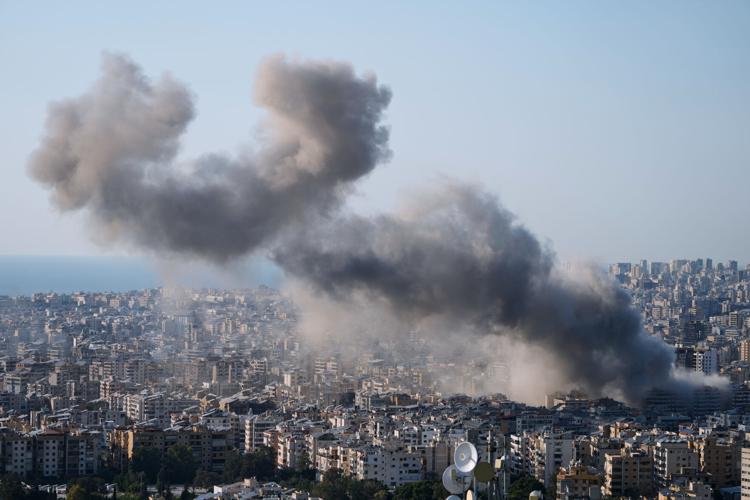
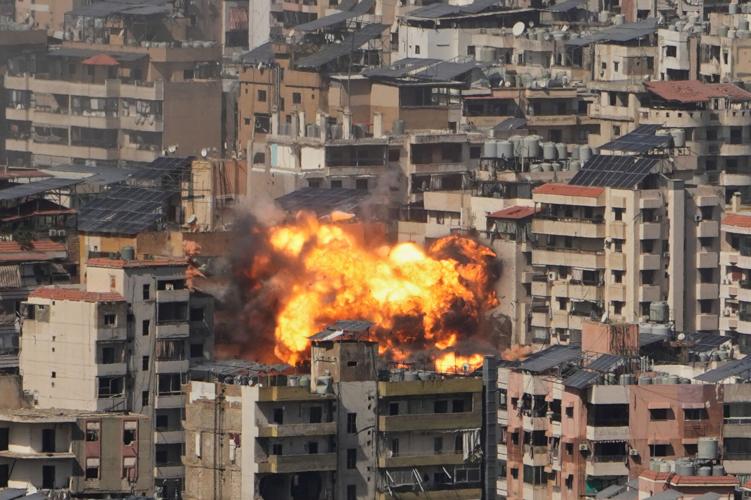
The Israeli military said it responded with a large wave of strikes targeting Hezbollah in the densely populated southern Beirut neighborhood of Dahiya.
Iran war tests US ability to combat cheap attack drones
The war with Iran has quickly tested America’s ability to combat the swarms of cheap drones that have become a staple of the modern battlefield after Ukraine and Russia demonstrated how effective they could be.
Experts and defense leaders stress that the U.S. military has been able to shoot down the majority of Iran’s drones and take out much of its drone capabilities. But critics said too often missiles that cost millions of dollars were used to down small drones that cost tens of thousands.
The U.S. is bringing an anti-drone system to the Middle East that has been tested in Ukraine, which had proposed a deal with the U.S. last year to offer its drone expertise. Such an agreement is yet to be made.
American forces are facing a steep learning curve as they scramble to deploy more cost-efficient defenses against Iran’s Shahed drones, which fly low and buzz like mopeds before smashing into their targets.
Republican senator says Iran school strike ‘looks like it’s our missiles’
Louisiana Sen. John Kennedy said that all indications point to the U.S. being responsible for a strike near a school in Iran that killed more than 165 people. He added that he has faith that the Trump administration “will take the appropriate steps.”
“This was a terrible thing that happened,” said Kennedy. “And it looks like it’s our missiles.”
Kennedy added that no matter the response from the U.S. if they are responsible for the strike, “the kids are still dead.”
“And I’m really sorry. But we will learn from it,” said Kennedy.
Smoke blankets Tehran as the smell of airstrikes lingers
An eyewitness driving to Tehran described columns of smoke from bomb and missile explosions rising into the air across different parts of the capital, making the sky overcast, with a distinctive smell of burnt powder and gasoline.
Along the highway, people in civilian vehicles stopped cars for inspections. The witness spoke on condition of anonymity because of concern over repercussions.
A layer of gray dust has settled over the city and vehicle traffic was unusually light.
Nearly 30 countries say they back Lebanon’s sovereignty
With Lebanon engulfed in another Israeli-Hezbollah conflict, the 29 nations condemned “in the strongest terms Hezbollah’s reckless decision to join the Iranian attacks against Israel.”
The statement also urged Israel “to abstain from attacks against civilian infrastructure and heavily populated areas and to respect the Lebanese sovereignty and its territorial integrity.” The countries called on all sides to uphold international law protecting civilians.
France’s U.N. Ambassador Jerome Bonnafont read the statement, surrounded by diplomats supporting it, mostly from European countries. The U.S., Russia and China did not sign.
Lebanon won’t accept ‘return to the past,’ its UN envoy says
Ambassador Ahmad Arafa told an emergency meeting of the U.N. Security Council that Israel “shows no respect for the laws of war and persists in its attacks on Lebanon” while Hezbollah also keeps attacking despite a government ban on its illegal military and security activities.
“We will not accept a return to the past,” he said. “The Lebanese people do not want war, and the Lebanese government is moving forward in implementing its decisions and will not backtrack.”
But Arafa said the priority today is stopping the war and protecting the Lebanese people, and he reiterated the government’s readiness to enter negotiations with Israel under international auspices for a truce, a halt to all its military operations and the withdrawal of its forces to internationally recognized borders.
Saying Lebanon is facing “an extremely dangerous moment and a humanitarian catastrophe,” Arafa urged international support and assistance “to help ease the burden of this crisis.”
US diplomat says Washington stands with the Lebanese people dragged into war by Hezbollah ‘at the behest of Iran’
U.N. Ambassador Mike Waltz told an emergency meeting of the U.N. Security Council that the United States supports the Lebanese government’s decision to prohibit Hezbollah’s military and security activities, and the government’s order for the group to immediately disarm.
The U.S. also welcomes Lebanon’s ban on all activities of Iran’s Islamic Revolutionary Guard Corps, he said.
“The world must come together now in supporting Lebanon’s efforts to exercise its sovereignty across every inch of Lebanese territory,” Waltz said.
He said the U.S. is responding to Hezbollah’s “recklessness” by providing humanitarian aid to hundreds of thousands of displaced Lebanese.
Republican Sen. Tillis says US must not pretend Iran school strike didn’t happen
The retiring North Carolina senator told reporters Wednesday that he still wants to see the outcome of an investigation into who was responsible for a strike near a school in Iran that killed more than 165 people, mostly kids.
But he added that “the worst thing we can do, if, in fact, it was a horrible outcome from an American strike, is to try to pretend that it didn’t happen.”
“We shouldn’t gloss over it if we made a mistake,” Tillis said. “We should admit it and move on.”
Tillis added, however, that Iran bore responsibility for the school’s location, which was next to a Revolutionary Guard base and close to barracks for a naval unit.
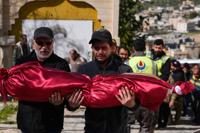
Death toll in Lebanon climbs over 600 in the spiraling Israel-Hezbollah conflict
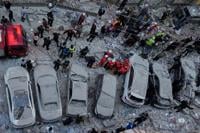
Ninety-one children — nearly one in seven dead — were among the 634 people killed by Israeli fire since fighting broke out last week, Lebanon’s Health Ministry said. At least 47 women have been killed and more than 1,500 people wounded.
That’s up from 570 people the ministry reported killed as of Tuesday.
More than 800,000 people have been displaced, mostly from southern Lebanon and the capital’s southern suburbs, according to the Lebanese government, which is strapped for cash and has struggled to secure adequate shelter and aid for evacuees.
Israel’s widespread strikes in Lebanon are intensifying, while Iran-backed Hezbollah vows to keep firing missiles and drones into Israel and refuses to disarm.
UN peacekeeping chief says more than 4,000 weapons fired so far in Lebanon
Some 2,733 of these “trajectories” came from Israel along with 323 air attacks, while 1,387 came from Lebanon, United Nations peacekeeping chief Jean-Pierre Lacroix told the U.N. Security Council.
Each of those approximately 4,120 firings from both Israel and Hezbollah could represent multiple projectiles, he added.
Lacroix noted several incidents jeopardizing the safety and security of UNIFIL positions and peacekeepers, including serious injuries to a Ghanaian soldier.
Macron praises ‘significant’ oil reserve release backed by the G7
The International Energy Agency’s decision to prop up the world’s oil supply sends “a clear signal aimed at lowering global prices,” French President Emmanuel Macron said after a video meeting by the Group of Seven leaders on the economic impact of the Iran war.
“We will take all necessary measures to encourage maximum production from all producers during this period,” he added.
Paris currently holds the rotating presidency of the G7 — France, the United States, Canada, Germany, Italy, Japan and the United Kingdom — a group of wealthy democracies with large, advanced economies.
UN aid chief warns Lebanon crisis is worsened by ‘out of control’ war
U.N. humanitarian chief Tom Fletcher called this “a moment of grave peril for Lebanon and for the region,” as the conflict disrupts markets, supply chains and aid operations.
Speaking Wednesday at an emergency U.N. Security Council meeting, he said disruptions to sea routes like the Strait of Hormuz are driving up costs and delaying humanitarian supplies by as much as six months.
“And when that happens,” he said “the most vulnerable people in Lebanon and across the region are hit first — and hardest,”
White House says investigation into airstrike at Iranian school is ongoing as Trump denies knowledge
When asked Wednesday if a preliminary determination has been made into responsibility for the strike that killed more than 165 people, mostly children, White House press secretary Karoline Leavitt responded that “the investigation is still ongoing.”
Trump was later asked as he left the White House about a report in The New York Times that a preliminary military probe had found the U.S. was responsible for striking the school because of a targeting mistake.
When asked if he took responsibility for the airstrike as the commander-in-chief of U.S. forces, Trump responded by saying, “I don’t know about it.”
He didn’t say anything more.
Trump says he thinks oil companies should use the Strait of Hormuz amid Iran war
“I think they should,” the president told reporters when asked if he’d spoken to oil companies, as he left the White House for a trip to Ohio and Kentucky.
He added of Iran, “We took out just about all of their mines” and that U.S. forces had also destroyed “just about all of their mine ships in one night.”
The waterway off Iran’s coast is vital for oil and gas but has been effectively closed amid the war.
Iranian forces can target ships using the strait with missiles, drones and mines — and U.S. attempts to limit Iran’s mine-laying capabilities is among Washington’s efforts to try and make the waterway safer to use.
Strikes in Iran
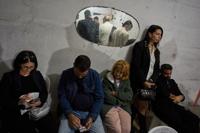
Witnesses in Tehran said they heard loud airstrikes, explosions and heavy fire by anti-aircraft batteries, which sent people running for shelters. They could also hear the buzzing of drones overhead. They spoke on condition of anonymity to avoid reprisal.
Iran’s sports minister says the country can’t take part in the upcoming World Cup in North America
In a video posted on Tuesday, he said Iranian players would not be safe in the United States.
“Due to the wicked acts they have done against Iran — they have imposed two wars on us over just eight or nine months and have killed and martyred thousands of our people – definitely it’s not possible for us to take part in the World Cup” Sports Minister Ahmad Donyamali told Iranian state TV.
US says large numbers of Americans are declining free evacuation flights
The State Department said it had invited nearly 9,000 Americans and their family members for such flights from the United Arab Emirates on Wednesday. It said that 300 seats had been available but the flights departed with seats still open after all those who wanted to fly had boarded.
At least one charter flight in the UAE over the weekend was cancelled after no one showed up for it, officials said.
Many of those declining charter flight seats have opted to make their own travel plans or elected to stay in the Middle East. More than 43,000 Americans have returned to the U.S., most of them commercially, since the start of the war with Iran on Feb. 28.
EU promises more humanitarian flights and cash to Lebanon
The European Union has given Lebanon 100 million euros ($115 million) in humanitarian support, said European Commission President Ursula von der Leyen in a call with Lebanon’s president.
“Yesterday, we delivered over 40 tonnes of supplies and we plan to organise more humanitarian flights,” she said in a post on social media, without providing details on the aid.
The EU is tracking a potential migration crisis in Lebanon and Iran because of the war, and has scrambled to safety return European citizens from the Middle East. Drone attacks in EU-member Cyprus, an island in the Eastern Mediterranean, have drawn statements of support and collective defense from across Europe.
Sri Lanka hikes cooking gas prices by 8% due to soaring global prices
The state-run Litro Gas Lanka announced the cooking gas price increase — the first in 18 months — a day after the government increased fuel prices by 8%.
A former chief economist at the International Monetary Fund said rising fuel costs could lead to significant food shortages in many countries. “The effects are going to be most devastating in low-income countries where agricultural productivity may already be challenged,” said Maurice Obstfeld, now a senior fellow at the Peterson Institute for International Economics.
US official says Baghdad embassy’s airport support center hit by Iranian proxy drone
There were no deaths or injuries reported after a U.S. Embassy operations center at Baghdad’s airport was hit by a drone launched by Iraq-based Iranian proxies, a State Department official said.
The official, speaking on condition of anonymity because an investigation into the attack is still ongoing, said Wednesday that the Baghdad Diplomatic Support Center “was targeted by Iran-backed terrorist militias overnight.” The actual U.S. Embassy compound in Baghdad was not struck in the attack.
The official condemned the strike and said the U.S. was in close contact with Iraqi authorities “regarding steps to protect U.S. personnel and facilities.”
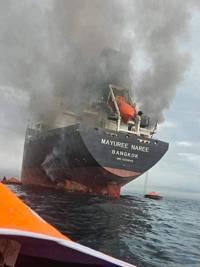
After Iran hits a Thai cargo ship, Bangkok says it’s ‘gravely concerned’
“In such challenging times,” Thailand’s Foreign Ministry said Wednesday, “respect for the Charter of the United Nations and principles of international law, such as the protection of civilians and civilian infrastructure, becomes imperative.” The ministry’s statement also called for immediate de-escalation of tensions and negotiations among all parties.
Authorities were searching for three missing crew members from the Thai cargo ship, which was set ablaze off the coast of Oman, after 20 others were rescued by the Omani navy, according to Thailand’s Marine Department.
At least 12 incidents have been confirmed involving vessels in and around the Strait of Hormuz since the war began, according to two global trackers. The International Maritime Organization says at least seven mariners have been killed.
UN urges support for Lebanon as it demands Hezbollah disarm
U.N. political chief Rosemary DiCarlo urged stronger international support for Lebanon and its armed forces after the government banned Hezbollah’s military activities and ordered the group to hand over its weapons.
At an emergency Security Council meeting, DiCarlo said the U.N. is pressing to end the current conflict sparked by Hezbollah’s attacks on Israel after the killing of Iran’s supreme leader and Israel’s retaliation.
She warned the violence has “largely erased the progress” since a November 2024 ceasefire and is fueling fears of sectarian tensions in Lebanon.
Trump administration sees allies’ use of strategic oil reserves as appropriate
U.S. Interior Secretary Doug Burgum, speaking ahead of the International Energy Agency announcement, told Fox News that it's appropriate for countries to release oil from their strategic reserves because the challenges in the Strait of Hormuz after the start of the war with Iran pose a “temporary transit problem.”
The White House did not immediately comment when asked if the U.S. would draw down from its own strategic stockpile, but Burgum expressed comfort with other nations doing so.
“We’ve got a transit problem which is temporary,” Burgum said on “Fox & Friends.” “When you have a temporary transit problem that we’re resolving militarily and diplomatically, which we can resolve and will resolve, this is the perfect time to think about releasing some of those to take some pressure off the global price.”