
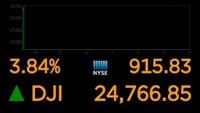

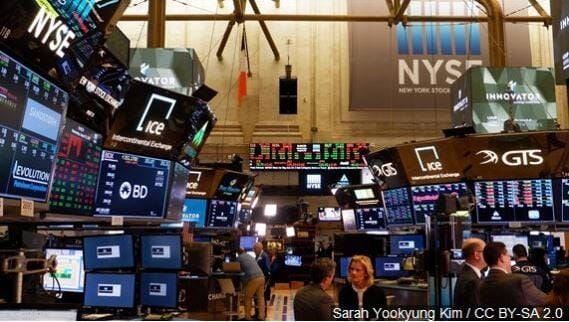
The stock market had its biggest drop since the Black Monday crash of 1987 as fears of economic fallout from the coronavirus crisis deepened.
The Dow industrials plunged more than 2,300 points, or 10%.
The sell-of came despite action from the Federal Reserve and the European Central Bank.
The steep drops over the last month have wiped out most of the big run-up on Wall Street since President Donald Trump's inauguration.
Markets have turned turbulent amid a cascade of shutdowns across the globe and rising worries that the White House and other authorities around the world can’t or won’t help the weakening economy any time soon.
The rout came after President Trump imposed a travel ban on most of Europe and offered few new measures to contain the economic impact of the coronavirus outbreak.
Thursday's slide even triggered an automatic shutdown for the second time this week.
Benchmarks in Europe fell more than 7% even after the European Central Bank announced more stimulus measures.
World markets are enduring violent swings amid uncertainty about how badly the outbreak will hit the economy.
The previous day stocks closed sharply lower on Wall Street, erasing more than 1,400 points from the Dow industrials, as investors wait for a more aggressive response from the U.S. government to economic fallout from the coronavirus.
The Dow has now fallen 20% from its recent high, and the broader S&P 500 nearly as much.
The losses accelerated after health authorities declared the outbreak a pandemic.
The World Health Organization cited “alarming levels of inaction” by governments in corralling the virus.
The market was also weighed down by a continued decline in oil prices, which fell another 4%.
The Bank of England cut rates as an emergency measure, following similar moves by central banks in the U.S. and Canada.
Investors are still waiting for details from the Trump administration about aid promised for the economy.
The stakes keep rising, as global authorities declared the coronavirus crisis a pandemic.
Countries are shifting into damage-control as infections spread, prompting sweeping controls on travel and other public activities.
The Dow Jones Industrial Average jumped more than 1,100 points on Tuesday.
Market watchers say more big swings are likely until the outbreak starts to slow down.
Tuesday's gains follow the market's worst day since 2008.
Trading was temporarily halted on Monday for the first time since 1997 as the Dow sank more 2,000 points, or about 7.8%.
The lower trading set off a circuit breaker that halted trading for 15 minutes.

(The Associated Press contributed to this report.)