
During the warmer months, children are one of the most likely groups to be impacted negatively by heat. Jenny Walters, the Director of Education at REMSA Health says that’s because they have a different physiology than adults.
“Because children have less total body surface area and less blood volume than adults, their ability to regulate body temperature is less efficient, and their body temperature increases at a rate of three to five times faster than an early or middle-aged adults,” said Walters.
This makes kids more likely to develop a heat related illnesses.
Prevention is key to keeping children healthy. Walters says to keep infants under six months old out of direct sunlight, encourage all children to wear a hat, sunglasses, and protective clothing, as well as provide broad spectrum sunscreen with a minimum of 30. Hydration should also be a top priority.
“Make hydration enjoyable for children by giving them fruit with high water content, such as watermelon and strawberries or frozen fruit pops,” she said. “For infants, consider increasing their intake of breast milk or formula throughout the day.”
Symptoms for heat stroke in children can include fussiness, vomiting, and skin that is hot, red and flushed, but not sweaty. Heat stroke can be deadly if not treated rapidly and properly.
“Immediate action should be taken, including calling 911 and working to cool the person by spraying them with a hose, submerging them in a tub of cold water, fanning them and applying ice packs on the head, neck, armpits, and groin,” said Walters.
If the symptoms are not as severe, typically, they can be treated by having the person rest in a cool place and lay on their back with legs elevated higher than the heart.
Walters notes heat stroke doesn't only occur from being out in direct sunlight and exerting a lot of energy.
“Vehicular heat stroke, when infants and small children are left unattended in a hot car, is a particular concern,” said says.
In 2025, 31 children died in hot cars across the United States. 53% of children were forgotten in a car by a caregiver, and 23% of children gained access to the hot car on their own. More than half suffered this type of heat stroke and death at home. Nationally, there have already been five reported deaths this year.
Walters reminds parents and caregivers to “look before they lock.”
“Train yourself to say as you're getting out of your car, look before I lock and establish the behavior of looking in your backseat every time you leave your car, even when you don't have children with you,” said Walters. “Also remind children that vehicles are not play areas. Keep your vehicle locked and keys out of reach at all times.”
Bystanders are encouraged to call 911 if they spot a child alone in a hot car, especially if the child seems to be in distress or showing signs of heat stroke.
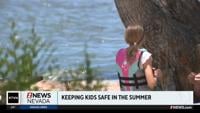
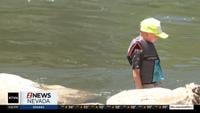
Many parents in the region take to pools or the Truckee River to help kids stay cool while outside, but Walters says they need to be aware of the risks.
“Since January of this year, REMSA Health has had seven calls for drowning or near drowning, four of which were in May alone. Unintentional drowning, most likely in a swimming pool, is the second leading cause of death among children ages 1- to 4-years-old,” she says.
Walters explained that drowning doesn’t look like it’s portrayed in the movies, and those suffering do not have extra energy to breathe, to call out for help, and says they are focused entirely on keeping their head above water. She says this is why it's critical to designate a water watcher. Water watchers should be a capable adult swimmer and remain fully attentive by avoiding alcohol consumption, using cell phones, reading, multitasking, or socializing.
People with pools should make sure to install a pool fence and alarms, as well as make sure children are wearing life jackets. Walters encourages parents and caregivers to become CPR certified as well.
To sign up for classes, go here; EMT and AEMT Training Courses - CPR and First Aid Training | REMSA.