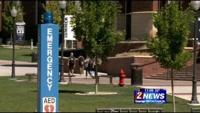
The University of Nevada, Reno and Truckee Meadows Community College will test its on-campus emergency alert system this Thursday at 11 a.m.
Several safety platforms will be activated, including:
• An outdoor, on-campus notification system: this platform will produce an audible alert, tone, or siren and may be followed by a spoken notification on the main Reno campus only. In the event of an emergency, this platform will be used to notify the campus of the event and give instructions. In the event of an alert, those nearby should seek a safe location and monitor media reports, e-mails, computer monitor screens and emergency texts.
• SMS text and/or e-mail alert.
• Posts to the University Twitter page (@unevadareno), University Facebook page, TMCC Twitter (@tmccnevada), TMCC Facebook page, and Police Services Facebook page.
• A scrolling banner on on-campus public monitors and computers University-wide.
• An emergency information banner on the University’s and TMCC’s home page of their main website, www.unr.edu and www.tmcc.edu.
• A voice notification of the test on AM radio station 1670: You are encouraged to pre-program 1670 AM (which broadcasts in the Reno area) on your car and other radios. This station is administered by University Police Services and is one of the platforms the University will use in a large-scale emergency situation to provide information about an event as well as institutional closures.
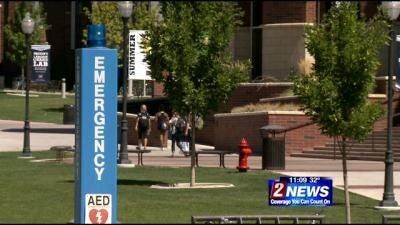
In addition to the above mentioned emergency alert systems, the University provides many safety-related services, including a network of 107 emergency “blue lights” phones in the University’s parking garages, across the main Reno campus and in the Redfield Campus parking lot. Each phone allows quick access to “911” emergency assistance with the push of a button.
“Safety on and around campus is of utmost concern to the University,” University Police Services Director Adam Garcia said. “This test will provide applicable information our community will need during an emergency event and showcase our emergency operations.”
All students, faculty and staff are encouraged to sign up for the University’s Emergency Messaging System. Messages are sent to all enrolled cell phones in the event of an emergency or unexpected campus closure. Those already enrolled in the program will receive a test message through the system during the emergency test.
The SafePack mobile app also includes links for campus map downloads, emergency contacts, emergency plans, report a tip, safe ride access and police and support services. It also includes a personal safety toolbox with a flashlight, an alarm, personal safety tips and the University's network of emergency blue light phones. An important safety feature on the app is one-button 911 calling. Also, “Walk With a Friend” is a one-button option to be instantly connected with a friend while walking. The person using the mobile app lets a friend know they are out walking. When he or she is safe in the car or at home, they let the friend know with a tap, or if something goes wrong, there is a one-tap notification for the friend.
As part of this exercise, Police Services encourages everyone to report incidents and cooperate with investigations when an issue of safety is involved. The “See a Crime, Send a Text” program offers a quick-tip, crime-reporting option. Anyone on the University or TMCC campus can text UNRTIP and a message to 50911. UNRTIP must be first, and all reports are confidential.
“We urge our students and all of the campus community to take advantage of the many services and programs offered to them, such as our Campus Escort Service and Student Cadet Program,” Garcia said.
For more information visit http://www.unr.edu/police/safety-and-training
(University of Nevada, Reno contributed to this report.)