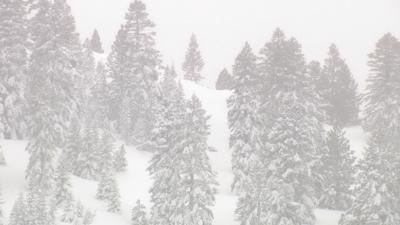

The Washoe County Sheriff's Office (WCSO) Hasty Team trains weekly for emergency response, and most of their focus during the winter is response to avalanches. Several years ago WCSO and REMSA noticed a lack of appropriate response resources to avalanches, so the two combined forces to ensure search teams had proper medical experts on site.
Bill Macaulay is a rescue technician for the hasty team, and says anyone who is out in the backcountry in these conditions should be properly trained on avalanche safety, including how to use the appropriate tools everyone should carry.
"You have to have the avalanche beacon," Macaulay says. "The avalanche probe and the shovel if you want to accomplish anything useful, and you have to have practiced with them."
He says the training class teaches people how to use all three, including the fastest methods for clearing snow, and how to probe the snow for a body that could be several feet deep.
"You want to make sure [the shovel] isn't plastic," Scott Zettelmeyer, REMSA Paramedic and Hasty Team leader for REMSA, says. "The snow can be very hard especially after an avalanche. That stuff sets up like concrete pretty quickly."
He also recommends everyone double checks that their beacons are transmitting before leaving the parking lot.
It's important everyone who explores the backcountry has the tools and knows the skills. An avalanche kills by knocking someone into a hard surface causing fatal trauma, or by suffocating someone. Zettelmeyer says people can survive even if they're buried for hours, but it's unlikely they'll survive even one hour under the snow.
"There have been people who have been found buried in an avalanche after 7 hours. They may have been in cardiac arrest but they were able to be fully resuscitated. So that's kind of that outside chance [we use to] keep our minds like, 'well, it's only been four hours or five hours we may have some time,' but the reality is if you're not dug out in the first twenty minutes or so, your chances for survival are very thin."
Macaulay says in his experiences, they've run into experts who just didn't research conditions well enough or pushed the limits, and they've run into amateurs who just weren't ready for conditions.