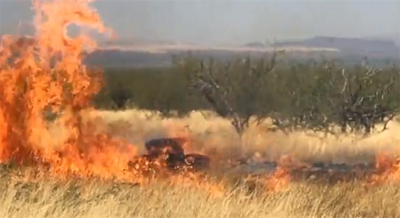
Models show significant wildland fire potential to be normal in Nevada for most of the summer. It shows May and June as below normal in a portion of northern Nevada, and above normal in southern Nevada. Experts say there is always the potential for severe wildland fires, depending on the conditions when they start. Historically, wet winters are followed by dry and active fire seasons. This year's heavy snowpack could delay fire season in higher elevations but that will likely mean more fuel when it melts.
"As that snow melts off and it dries out, the risk obviously becomes greater and we're always going to have a wildfire season," Chief David Cochran, Reno Fire Department said. "The question is how long."
Experts say fire season is longer than it used to be. They say seasonal firefighters used to work for five months. Now they are working seven months thanks to climate change, more invasive grasses, and more people living near wildlands.
"When we get those large water years, those broom grasses tend to take over," Kacey KC, State Forester/Fire Warden for Nevada Division of Forestry said. "They're also very competitive with our natural vegetation, so when we get repeated fire occurrence, primarily what we're seeing come back is those invasive annual grasses."
Governor Steve Sisolak is heading into his first fire season since taking office. He had a briefing with more than a dozen officials from several fire agencies. He says he will take their advice when the time comes. He says communication with other western governors is also critical because so many firefighters help out around the west.
"It's great to know that there's so many people that this is the singular focus to make sure that we're protecting the state, it's assets and most importantly, it's citizens," Sisolak, D-Nevada said.
Sisolak says the wet winter is a double-edged sword because it's vital for our state, but also creates more fuel. Data shows that when the Humboldt River's annual flows are high, so is the acreage burned in Nevada. More than a million acres burned in our state, last year.
"You want the precipitation because you need the water and that helps the growth and at the same time, you get growth in areas you really don't want it, that can be a problem for fires," Sisolak said.
Historically, lightning is the biggest cause of wildland fires but that is changing. Humans caused 56 percent of Nevada's fires in 2018, accounting for 60 percent of the total acres burned. That is a steep increase from 2017, when humans started 46 percent of fires and 36 percent of the total acres.
"The last couple years, we've seen a dramatic increase in human-caused fires that are very devastating in the acres totals," KC said.
"When you enjoy the great outdoors, understand that one careless act can cause hundreds of thousands of acres worth of damage and we need to prevent that," Sisolak said.
Target-shooting, campfires, and the use of power tools have sparks many fires, including some that start along highways.
"The safety chain on the trailer, which you want to use but you want to make sure they don't drag because when they drag, they create sparks and those contribute to fires just as easily as if somebody sets it," Cochran said.
KC says firefighters put out 95 percent of the state's wildfires very quickly. It is the other five percent that grow into large-scale fires. Cochran says those fires are too large for one jurisdiction to handle, so they call other agencies to help attack the fire. He says RFD sent 150 personnel and apparatus to eight different states, last year.
"Generally, out here in the west, we're going to get a huge wildfire season someplace," Cochran said. "It may not be Nevada but it will be a neighboring state if it's not Nevada, and we're going to be there to help."
Fire agencies have fuels reduction programs to clear some forests and wildlands. Homeowners are encouraged to create defensible space around their properties. Experts say developers should also consider fire safety when they build new neighborhoods.
"When you're putting in communities, we're talking about fire-safing the vegetation at that time," KC said. "It's a lot easier and less-expensive to do it when the homes are not in place."
KC says it is hard to predict how serious fire season will be, but that all it takes is about a week of hot weather to dry out the grasses and other fuels in the wildlands.