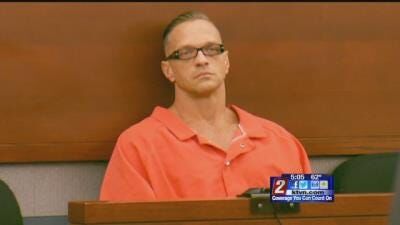




Scott Raymond Dozier, 46, is scheduled to die by lethal injection on November 14. A jury convicted Dozier of the 2002 murder and dismemberment of Jeremiah Miller, 22. Miller's torso was found in a suitcase that had been dumped into a trash bin in Las Vegas. Dozier was also found guilty of second-degree murder of another victim, whose torso was found buried in the Arizona desert.
"We reserve the death penalty for the worst of the worst," Washoe County District Attorney said. "Sometimes people do things that are so vicious, so violent, so horrible that that's the right answer, and that's what the voters have said all these years, and that's why Nevada still supports the death penalty."
Hicks was not a part of Dozier's case since it happened in Clark County, but he is a proponent of capital punishment. Dozier waived his appeals and wants to move forward with his execution.
Nevada state law requires all executions to be done by lethal injection, but no states can buy the traditional drugs needed to complete the sentences. The Nevada Department of Corrections consulted with the Chief Medical Officer and decided to carry out the execution with Diazepam, Fentanyl and Cisatracurium. The American Civil Liberties Union of Nevada says there should be a stay of execution, fearing the potential for cruel and unusual punishment.
"They're experimental," Holly Welborn, Policy Director of the ACLU of Nevada said. "They're using Mr. Dozier as a guinea pig because he's volunteered to have the state put him to death, but that implicates more than Mr. Dozier. That implicates everyone on death row."
"For years, the opponents of the death penalty have campaigned hard against the pharmaceutical companies and they've stopped prescribing the traditionally used drugs," Hicks said. "So now, when they're trying to find alternatives, those same opponents are turning around and saying 'We can't use that. We need the old drugs.'"
Welborn says Dozier's execution could set a precedent, allowing a string of other death row inmates to be put to death. Since Dozier waived his appeals, the state is required to carry-out his sentence.
"There are a lot of unanswered questions that we do not have that would guarantee that Mr. Dozier would undergo a humane death," Wellborn said.
While NDOC says its prison staff is well-trained for executions, the ACLU has questions about staff's preparedness.
"We're very concerned about the training that new Department of Corrections personnel may or may not have had in administering these execution drugs," Welborn said.
"The Department of Corrections is consulting with the appropriate medical people and then I think what can't be lost in this whole argument is what happened to the victims of these murders," Hicks said.
The ACLU is urging Gov. Brian Sandoval to take action regarding Dozier's execution. While Sandoval does not have the authority to pardon or grant a stay of execution, Welborn hopes he can use his influence to grant a stay.
"There's just no guarantee that it would be a pain-free execution, and there are fears that it could be botched and if that's the case, then the state will be in a lot of trouble," Welborn said.
Dozier can still change his mind and appeal his sentence, delaying his execution date. If he goes through with it, he would be the first Nevada inmate to be put to death since Daryl Mack in 2006.
On a related note, Chief Medical Officer John DiMuro has resigned from his post for unknown reasons.