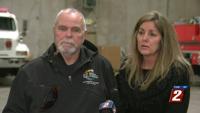



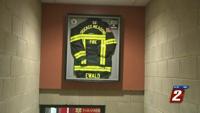

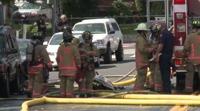
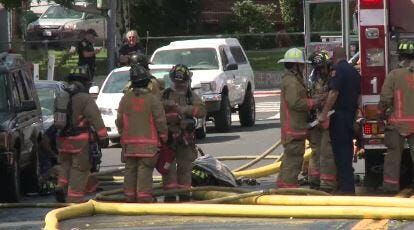
Tyler Ewald was an upcoming firefighter with Truckee Meadows Fire & Rescue in 2019. He was following in his father's footsteps, who also spent his career as a firefighter.
"He was loving, gracious, active, humorous," Peggy Ewald, Tyler's mother said.
"He had life. He had a lot of life," John Ewald, Tyler's father said. "He had an infectious laugh. You can still hear it in the back of your head.">
Tragically, Ewald took his own life on June 10, 2019. In recent years, more firefighters and police officers have died by suicide than in the line of duty.
"When I hear individuals in the community that have taken their lives, that are in public health, public safety, it hurts because we live it every day," John Ewald said.

The Northern Nevada Peer Support Network is a regional organization that provides a safe place for first responders to seek help for things mental illness. Those include firefighters, police officers, EMS, medical professionals, dispatchers and military. The idea is to be proactive by allowing them to talk to people in their profession, confidentially.
"That's one of the main things that we do is to actively listen, hear what they're saying and sometimes that's all that's needed," Derek Reid, President of the Northern Nevada Peer Support Network said.
Statistically, firefighters and police officers are five times more likely to have depression or Post Traumatic Stress Disorder than civilians.
"We're there for people's worst day and sometimes that day carries into our day and once you see that," Danny Kilborn, Peer Support Team Coordinator for the Reno Fire Department said. "You can relate it to your own family and friends, and you start to put the personal touch on that."
Some of the first responders' experiences on the job can impact their mental wellness.
"We have the same brains, we see the same thing," Reid said. "Sometimes, we just react differently. We suppress certain emotions to be able to perform the job at hand."
Sometimes, colleagues do no know someone is struggling with an emotional issue until it is too late. Kilborn says part of that it can be difficult for people to come forward with their problems.
"I think that we're kind of programmed to be the helper, so to admit that you need help can definitely be a weight on you to admit that," Kilborn said. "However, a huge weight lifted off your shoulders if you do admit that, to be able to help yourself."
Reid says when an agency loses someone to suicide, there is a higher likelihood that a second person from that agency will die by suicide within the first year.
"I encourage every first responder out there that may be struggling or feeling a little off-balance to know that there are resources available," Reid said.
Peggy Ewald says it is important that first responders realize that they can talk to someone about their mental health without feeling the stigma associated with it.
"I think it's hard for us to openly identify that and admit that there is something going on and reach out, so we have to break down those barriers," Peggy Ewald said.
"It's extremely important for these guys to have an opportunity to vent, whether it's physical or sitting down and talking to a counselor, a therapist," John Ewald said. "I really pray and hope that these kids use it."
Last May, the U.S. Congress passed two bills regarding mental health for law enforcement. One of them collects suicide data among them. The other one creates requirements for peer counseling services and protects officers who use the services with confidentiality.
The 2019 Nevada State Legislature has made strides to address PTSD among firefighters.
Any first responder who wants help can learn more at www.nnpsn.com. They can also call the Suicide Prevention Lifeline at 1-800-273-8255, Safe Call Now at (206) 459-3020, Or Fire/EMS Help Line at 1-888-731-3472.