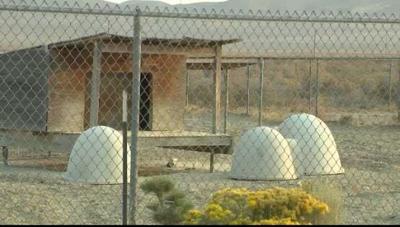

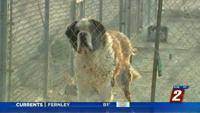

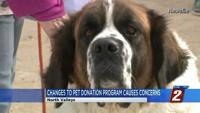

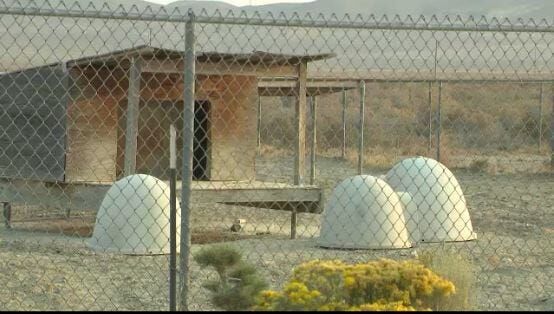
For years, Lori Juenke with St. Bernard rescue Saints of the West has picked up pet donations from the local Chewy warehouse. Those supplies help the dogs here, and through the pet food bank she runs, all over the region. Now, those direct donations have stopped, and she was told she'll have to go through a distribution partner.
"All of a sudden they decided to stop that program, and said it was a corporate decision," Juenke said. "I have now been referred to a rescue food bank in Seattle and if we're approved, we get to go to Sacramento and pick up food. But we have to pay 12 cents per pound, per pallet so that's $160 to $180 dollars per pallet. There's no rescue up here that can afford that."
Now she's faced with the possibility of shutting down for good, and so are other local rescues.
"It makes me feel sick to not help the people that need it in Northern Nevada," she said. "Last week I had to tell an 80-year-old lady dying of cancer that I can't give her food anymore, and that just really made me sick."
Tina Cook relies on the program to help with the cats she cares for.
"I take care of over 125 feral cats daily, so it affects me a great deal," she said. "I'm not wealthy by any means, but my heart is huge. We've fixed and trapped over 600 cats and they just keep coming. If people move or pass away, a lot of the time their pets are left behind and we can't see them go hungry, so we rely on programs like this. I'm afraid that a lot of them will have to shut their doors, which means a lot of animals will end up starving or worse."
Dale Southam delivers dog food to law enforcement agencies.
"For the K-9's, and also for a dog training program at the Utah County Sheriff's Office," he said. "The inmates train the dogs and then they are adopted out; it's a good program."
For many, this local pantry was a lifeline for pet owners that needed it the most
"I've been coming here for over a year," said June Shabsis of Sparks. "I'm disabled and I have a cat, and this has been a God blessing."
Ed Buzzetti helps more than a hundred families through his work with Sierra Safari Zoo and the North Valleys Church of the Nazarene.
"It really is needed," he said. "I have a lot of requests and I don't have any more food at our church to give out. So hopefully we can get the program started again because there is so much demand out there."
A lot of the volunteers that help distribute the food and supplies worry about what will happen in the coming months.
"It's going to be hard on a lot of people, especially with the pandemic going on and everything," said volunteer James Riggs. "People are losing their jobs, pets are going to be put into shelters and euthanized and and that's not something we want to see."
Those affected by the change in Chewy's donation process have been writing letters to the company in hopes of keeping the local distribution going. Some are more hopeful about the possibility than others.
"We're hoping and praying that the Chewy company changes their minds," Juenke said. "It makes no sense to pick up food in Sacramento when I'm 40 minutes away from the distribution center with two trucks."
Asked about the program change, Chewy issued the following statement: "Supporting our non-profit shelter and rescue partners is a top priority for Chewy. This year alone, we've donated more than $19M nationwide in pet food, products, and healthcare needs. As we've continued to scale our operations, we've found that the safest and quickest way to ensure our donations get to the organizations that need them most is to work through our distribution partner. Product donations are still available to any and all non-profit pet shelters and rescues through this process."