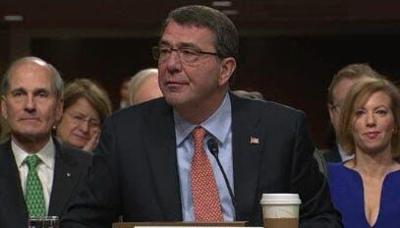
Defense Secretary Ash Carter says the U.S. is expanding the U.S. special operations force in Iraq to help Iraqi and Kurdish forces fight Islamic State militants.
Carter told the House Armed Services Committee on Tuesday that over time, these special operators will be able to conduct raids, free hostages, gather intelligence and capture IS leaders. Carter says that will improve intelligence and generate more targets. He did not offer troop numbers, but said it was being done in cooperation with the Iraqi government.
The defense secretary says the special operators will be focused on defending Iraq's borders and building the capacity of the Iraqi government forces.
He says the forces also will be in a position to conduct unilateral operations into Syria.
Meanwhile, President Barack Obama says he believes Russia will ultimately recognize that the Islamic State group poses a bigger threat to Russia than opposition groups fighting Syrian President Bashar Assad.
Obama spoke at a news conference in Paris a day after meeting with Russian President Vladimir Putin. He says the U.S. and Russia remain at odds over whether Assad can be part of Syria's future government.
Obama says he doesn't expect Russia to change course overnight and stop targeting opposition groups with airstrikes. He says Russia has invested for years in keeping Assad in power.
But Obama says it's possible over the coming months that the U.S. will see a "shift in calculations" by Russia and a recognition that it's time to end Syria's civil war.
And - an opposition monitoring group and a Syrian official say a deal has been reached for thousands of insurgents to leave the last opposition-held neighborhood in the central city of Homs.
The Britain-based Syrian Observatory for Human Rights says some 3,200 fighters will leave the Waer neighborhood for other areas in Syria held by insurgents.
The group says the deal, agreed to by the government and several rebel factions, will also include a cease-fire, release of prisoners and the return of state institutions.
Homs Governor Talal Barrazi told The Associated Press Tuesday that the implementation of the deal will begin early next week.
President Bashar Assad loyalists have been blockading the Waer neighborhood since early 2013, only sporadically allowing in food. The area witnessed sporadic clashes over the past two years. (AP)