
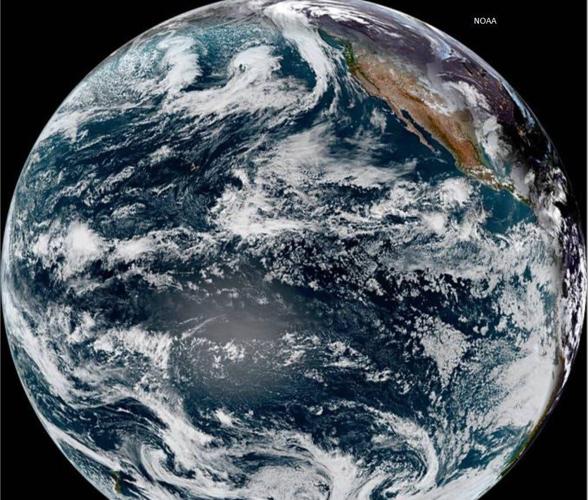
The weather can be fascinating and NOAA has some awesome satellite images the general public can look at. Kids will love it too. The best way to learn is to look outside at the sky and then look at the radar and satellite and see how they compare. Look at a national map to pick out places where it is raining, snowing, or dry. The National Weather Service and Weather Prediction Center are good places to start learning. There you’ll find surface charts with cold fronts and warm fronts. Your child might find it neat to watch the temperature change throughout the country. Models predict the weather going forward, and you can find those online as well. The atmosphere is divided into layers, like a cake. Each layer provides a different peace to the weather puzzle.
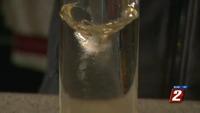
If you're tired of staring at a computer screen you can always do an experiment. A simple one is a tornado in a jar. All you need is water, something to stir it with, dish soap, and a glass. All you have to do is fill a jar with water, add a few drops of dish soap, stir it and see what happens. Turning off the lights and using a flashlight instead, might make the tornado easier to see. You can also try making a cloud and rain with a glass, shaving cream, and food coloring. Just fill the glass with water, spray the shaving cream on top, and then add a few drops of food coloring to the whipping cream. The food coloring adds weight to the whipping cream, causing the food coloring to leak into the glass. Like rain falling from clouds.

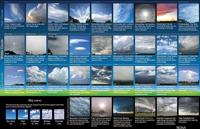
There are so many different clouds to learn about. The National Weather Service has a neat chart, where you can click on the different types of clouds and learn about them. The chart works like flash cards. Clouds are separated by place in the sky and shape. You can also use cotton balls to describe cumulus clouds. One of the great things about the weather is that you can learn about it first hand, so if you need a change of scenery you can learn about the weather right in your back yard. You can also look at webcams to see what the weather is doing.
Cloud Chart
https://www.weather.gov/jetstream/cloudchart#myModalh7
Satellites
https://www.star.nesdis.noaa.gov/GOES/fulldisk.php?sat=G17
Fronts, Surface Analysis
https://www.wpc.ncep.noaa.gov/#page=frt
Models
Vocab and higher learning