





2024 has arrived, and it has brought a host of new Nevada laws with it. Here are some of the highlights.
Increased Marijuana Possession
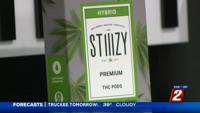
SB277 increased the legal amount of marijuana a person can possess in Nevada from one ounce to two and a half ounces. It also raises the amount of concentrated cannabis allowed from an eighth of an ounce to a quarter ounce.
Fines for Tobacco Sales to Those Under 21
AB53 raises fines for businesses caught selling or distributing tobacco products to under the age of 21, specifically if they are caught repeat offending within a two-year period at the same location. Under the new law a licensee is liable for a penalty of up to $2,500 for a first violation, $5,000 for a second, $7,500 for a third and $10,000 for a fourth and any subsequent violations.
Job Protection for Sexual Assault Victims
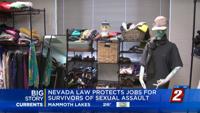
AB163 gives victims of sexual assault the same employment protections as victims of domestic violence. They are allowed to request up to 160 hours of time off (paid or unpaid at the employer's discretion) to handle court proceedings, seek medical care, find counseling, and more. Employers must make reasonable safety accommodations upon request, such as changing the victim's work phone number or moving their schedule. And if a victim must leave their job for safety reasons, they can still claim unemployment benefits.
Health Care
SB330 requires insurance companies to cover imaging tests that screen for breast cancer, with few exceptions.
SB280 requires hospitals to provide long-acting reversible contraception (like IUDs) to patients who request it after giving birth.
SB132 strengthens laws that prohibit life and health insurance providers from discriminating against living organ donors.
AB45 allows healthcare providers in underserved areas to apply for student loan repayment through the state.
Elections
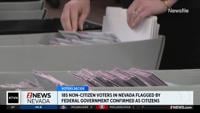
AB192 makes changes to how elections are run state-wide. It removes a requirement for county clerks to conduct a risk-limiting audit prior to certifying the results of an election. (The risk-limiting audit is still required, but clerks may certify election results before completing the audit.) It reinforces the requirement that mail ballots be uniform across the state. It sets a series of deadlines for presidential candidates to demand a recount, pay for that recount, take a contest to court, and for the court to set a hearing. And the definition of "uniformed service voters" is changed to include members of U.S. Space Force.
Solitary Confinement
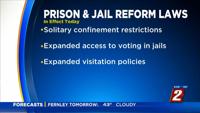
SB307 places a limit on how long the Nevada Department of Corrections can keep offenders in solitary confinement. With limited exceptions the law prevents the DOC from putting someone in solitary for longer than 15 consecutive days or within 90 days of when an offender is set for release. The law also blocks offenders with serious mental illnesses from being put in solitary unless ordered by a health care provider.
Offender Visitation
AB452 requires the Director of the Department of Corrections to create regulations and set up a program for the visitation of offenders. New regulations need to allow offenders to see visitors in person regardless of whether electronic means of visitation are available. It must also allow electronic visitation as an additional option. The regulations must also create a procedure for a visitor to appeal a warden’s decision over denying or suspending visiting privileges.
Voting Access in Jail
AB286 expands access for registering to vote and for voting in elections to certain offenders while in jail. Jails are required to create policies to allow registration and voting to happen safely, including ensuring the safety of election board officers and ensuring the offender can register to vote without coercion. They must also ensure the secrecy of the ballot and establish a process for same day voter registration.
Paid Family Leave
AB376 entitles state employees to eight weeks of paid family leave over a 12-month period. Leave can be used to bond with a newborn or adopted child of either the employee or their domestic partner, recover from or undergo treatment for a serious illness, care for a seriously ill family member or participate in a qualifying event resulting from military deployment to a foreign country of an immediate family member of the employee. Employees must meet certain requirements to be eligible.
Human Composting
AB289 authorizes the use of natural organic reduction, or human composting, for the disposition of human remains.