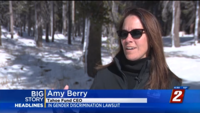


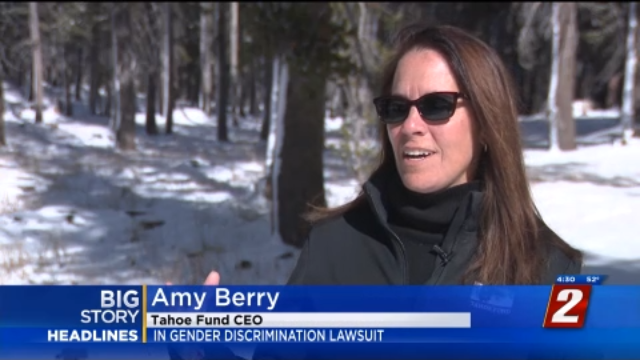
Tahoe Fund is an environmental group committed to improving the environment around Lake Tahoe through various projects. Their top priority right now is cutting down trees, which they believe is essential for saving forests in the Tahoe Basin as well as across the West.
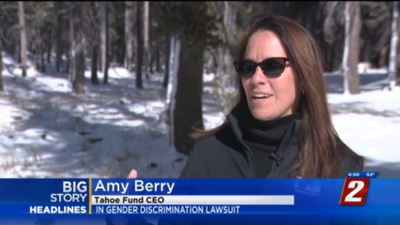
"If you love the forest, and I think everyone around here does, you have to start thinking differently. So, hug some of the big trees, but be ok with the idea that we need fewer trees in our forests," explained Tahoe Fund CEO Amy Berry.
Amy Berry, the CEO of Tahoe Fund, recently published an Op-Ed in the Daily Tahoe Tribune titled 'Losing the trees for the forest,' in which she emphasizes that the high density of trees in forests is causing them to die. Berry argues that a significant shift has occurred in the views of scientists, environmentalists, and land managers on the issue of forest density since the advent of the notion of 'tree hugger'.
"It's such a huge paradigm shift. I mean forever if you love nature, right, what are you called? You're called a tree huger; hug trees, save trees. But. we're at a situation right now where Tahoe and really in the whole western region where we have too many trees, and if we don't figure out how to very carefully thin the forest,' we're not going to lose some trees we're going to lose all of the trees," said Berry.
During the 1800s, early settlers took over the land from the Washoe people and clear-cut the forests to fuel industries such as the gold and silver mines in Virginia City. This led to an unnatural regrowth of forests. In the 1900s, the U.S. Forest Service implemented a policy of preventing fires on the landscape. However, this caused a build-up of underbrush, and forest fires were not allowed to clear it out naturally.
"Fire is actually really good for the landscape. Trees like fire. So, now we have so much fuel in the forest. So many trees. We have climate change. We have drought where the trees are getting dryer and dryer and dying out. So, instead of the fire just rushing at the bottom of the trees and moving through, they hit this wall of trees and the flames can't go through, they go up and we get what is called crown fires," explained Berry.
"It came through Eldorado National Forest and there were just too many trees. There was nothing the firefighters could really do to control it. The flames were over a hundred feet high. You're not going to put fire fighters in front of that it's just too dangerous. As the fire came into South Lake Tahoe, it hit the area of forest that had been treated, that had been thinned, and the flames actually dropped down to about ten to twelve feet. The firefighters were able to better manage and control that fire, and they were able to push it out away from the community," explained Berry.
Lake Tahoe Community College has recently launched a new forestry fund, and all 34 first-year students in the program were awarded scholarships by Tahoe Fund.
For those interested in contributing to creating healthier forests, Tahoe Fund has introduced the Smartest Forest Fund.